Holocaust Photo Album Play Confronts the Banality of Evil in New Docudrama
A harrowing and thought-provoking new theatrical production, 'Here There Are Blueberries', is currently captivating audiences at the Theatre Royal in Stratford East. This compelling docudrama, conceived by the acclaimed director Moises Kaufman, re-examines the chilling concept of the banality of evil, a term famously coined by the American historian Hannah Arendt to describe how ordinary people can commit atrocities by simply following orders.
Unearthing Historical Evidence Through Photography
The play centres on a real-life album of photographs that was anonymously sent to the Holocaust Museum in Washington DC in 2007. These images depict Nazi staff, including secretaries and SS officers, engaging in everyday activities and leisure pursuits within the vicinity of the Auschwitz death camp. One particularly haunting caption, from which the play derives its title, reads 'Here There Are Blueberries', accompanying a photo of secretaries enjoying berries at a purpose-built holiday resort near the camp.
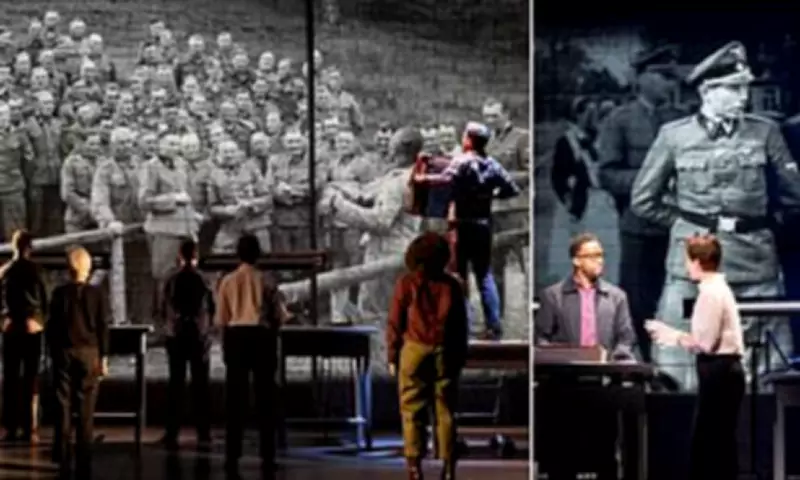
In a stark and disturbing scene, the production highlights a photograph showing SS officers gathered for a sing-along, led by an accordionist. It is later revealed that this gathering was a celebration marking the murder of 350,000 Hungarian Jews over the preceding two months. This juxtaposition of normal life with industrialised mass murder echoes themes explored in recent media, such as the 2023 film 'The Zone of Interest', which focused on Auschwitz architect Rudolf Hoss and his family.

A Riveting Detective Story Unfolds
The narrative transforms into a gripping detective story as archivists and researchers analyse the photographs. The album, compiled by Karl Hocker, the adjutant to the camp's final commandant, Richard Baer, holds vital historical evidence. Notably, it contains the only known image placing the notorious 'doctor' Josef Mengele at Auschwitz. The play presents this investigation with a neutral tone, allowing the stark facts to resonate powerfully with the audience.
Projected photographs take centre stage during the performance, with key figures and faces highlighted for emphasis. Actors portray the team of museum investigators, with Philippine Velge delivering a particularly poignant performance as the young researcher who first receives the photos. Her role expands to include narrating the story of an Auschwitz survivor who arrived at the camp on the same day as Hocker, a career accountant who was later tracked down and tried in his old age.
Finding Hope Amidst the Horror
Despite the overwhelming horror of its subject matter, the 90-minute production manages to infuse a sense of hope through the compassion and dedication of those seeking justice. This element prevents the story from becoming unbearable, making it a crucial and necessary narrative that deserves to be told repeatedly. The play's run continues until March 7, offering audiences a profound and educational experience.
Contrasting with 'The Battle': The Banality of Britpop
In stark contrast, another production, 'The Battle' at Birmingham Rep, explores what might be termed the banality of Britpop. This comedy revisits the lad-mag culture of the Cool Britannia era, dramatising the chart rivalry between Blur and Oasis in the summer of 1995. However, the play has been criticised for its excessive use of profanity and a seemingly pointless narrative that spans over two hours.
Characters are portrayed with exaggerated flaws: Liam Gallagher is shown as a vile homophobe, while his brother Noel exhibits overt sexism. Damon Albarn is depicted as an intellectual snob. The production, directed by Matthew Dunster, features poor sightlines and bland set design, with cartoon projections of DJs like Chris Evans and Danny Baker between scenes. A tasteless climax involving a machete does little to redeem the show, which runs until March 7 before moving to Manchester Opera House.

Also Playing: 'The Unlikely Pilgrimage of Harold Fry'
Meanwhile, at the Theatre Royal in Haymarket, 'The Unlikely Pilgrimage of Harold Fry' offers a different theatrical journey. Originally a radio play, novel, and film, Rachel Joyce's story about inexpressible grief has been adapted into a musical with a score by folk singer Passenger. Mark Addy stars as Harold, a man who embarks on a walking pilgrimage from Devon to Berwick on Tweed upon learning that an old acquaintance, Queenie, is dying.
The production, directed by Katy Rudd, features stirring musical numbers that deepen audience engagement. Jenna Russell delivers a moving performance as Harold's wife, Maureen, left behind during his journey. Despite initial whimsy, the story builds to an emotional climax where Harold's pent-up grief finally surfaces, making the theatrical journey well worth the experience. The show runs until April 18.