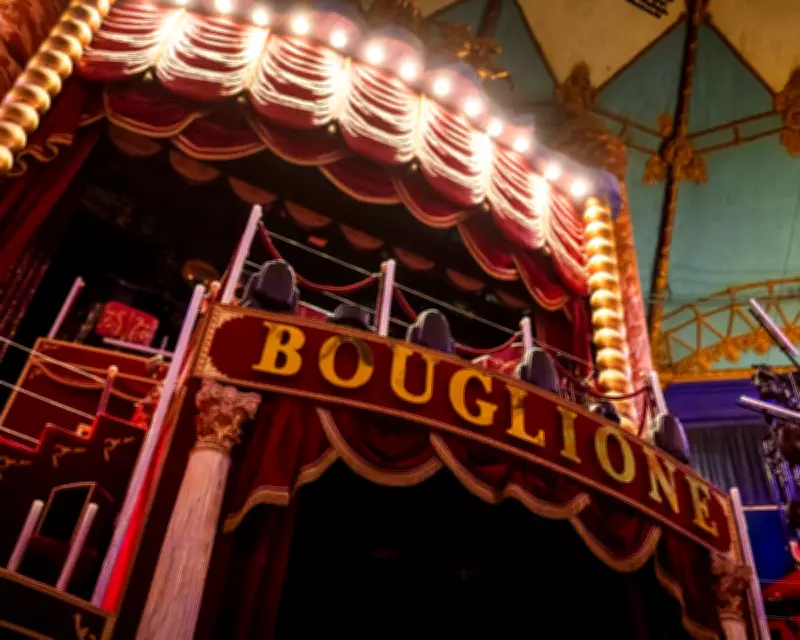
Paris's Historic Cirque d'Hiver to Undergo Major Restoration Project
The Cirque d'Hiver in Paris, recognized as the world's oldest circus, is poised for a comprehensive restoration that will return the iconic venue to its original 19th-century splendor. This ambitious project follows the remarkable discovery of painted canvas panels that had been concealed for over seven decades.
A Legacy of Spectacle and History
Since its grand opening in 1852 under the name Cirque Napoléon, the Cirque d'Hiver has hosted countless legendary performances. In 1859, gymnast Jules Léotard captivated audiences by performing the first public trapeze act without a safety net, an innovation that would immortalize his name through the leotard garment. The circus building itself, a distinctive 20-sided structure in Paris's 11th arrondissement, later served as a filming location for the 1955 Hollywood movie Trapeze, starring Burt Lancaster, Tony Curtis, and Gina Lollobrigida.
Literary giant Alexandre Dumas was among the early admirers, reportedly inspired by the venue's beauty and writing about performances so popular that crowds had to be turned away. The circus has remained a beloved Parisian institution, evolving from its origins featuring former cavalry officers to contemporary shows that, since 2017, no longer include wild animals.

The Hidden Treasures Revealed
The restoration initiative gained momentum after workers uncovered extraordinary panorama paintings that had been hidden since the 1950s. These twenty panels, each six meters wide and nearly two meters high, were created by celebrated 19th-century painters Nicolas Gosse and Félix-Joseph Barrias. They depict warriors on horseback and scenes dedicated to equestrian arts, mirroring the bas-relief panels on the building's exterior that were renovated in 2007.
Louis-Sampion Bouglione, whose family has owned the circus since 1934 and serves as its co-director and historian, expressed both relief and excitement about the discovery. "We knew they once existed because my father remembers seeing them, and we always hoped to rediscover them one day," Bouglione said. "What's really exciting is it's one of the few legacies of the circus from that era in painting."
Ambitious Restoration Plans
Originally, plans called for simply replacing the red seating around the ring. However, architect Stéphane Millet, who is also renovating the stage at the Opéra Garnier, proposed a more extensive project. "What started with seats has become a global project that includes everything; a renovation from bottom to top," Millet explained. "When you have heritage like this you have to showcase it."
The restoration, expected to cost several million euros and take approximately four years, will begin in July when the paintings are carefully removed for conservation. The canvas panels had been covered with blue-painted wooden boards after being dulled by smoke from original oil lamps and potentially damaged by leaking windows and subsequent decorative layers. "Until we remove everything we won't know exactly what is there and how much damage there is," Millet noted, adding that the survival of the panels "is testament to the quality of the painting."
A Family Affair and Cultural Institution
The Bouglione family's deep connection to the circus spans generations. When matriarch Rosa Bouglione died in 2018 at age 107, she left 55 descendants, with 20 family members still actively involved in the Cirque d'Hiver today. The oldest is Émilien Bouglione at 91, while the youngest participants are just three years old.
"It's family and everyone is involved in one way or another," Louis-Sampion Bouglione emphasized. The venue continues to host the winter circus spectacular featuring a nine-musician orchestra, along with private events and political rallies during other seasons.
The restoration work will be carefully scheduled during the circus's two-month summer break to avoid disrupting winter performances. "We will do the work during what we call the dead season," Bouglione explained. "It will take longer but we can't close down. It's a business and so it has to work. Besides, people are passionate about the circus. They come when they're children, then come with their own children and grandchildren. It's a tradition."

This meticulous balancing act symbolizes the Cirque d'Hiver's dual role as both a working entertainment venue and an invaluable piece of cultural heritage, now poised to reveal hidden artistic treasures while maintaining its place in Parisian life for generations to come.