Artist Henrike Naumann Dies at 41, Leaving Legacy of Furniture-Based Political Art
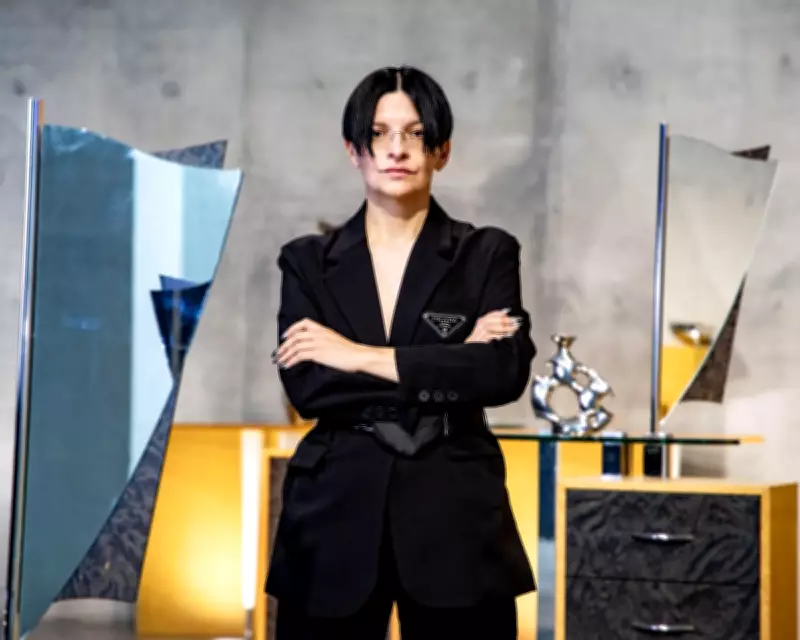
The East German-born artist Henrike Naumann, who gained international recognition for using sofas, chairs, and coffee tables to interrogate a divided Germany, has died at the age of 41. Naumann passed away on February 14 after a late cancer diagnosis, just months before her work was scheduled to appear at the German pavilion at the Venice Biennale.
Exploring German Division Through Domestic Objects
Born in Zwickau in 1984 in what was then the German Democratic Republic, Naumann came of age in a unified yet deeply dysfunctional landscape. She used furniture installations to reveal the schisms masked by German unification, treating design history as social history and redefining political art. Her 2019 installation Ostalgie featured an East German living room rotated 90 degrees, with sofas climbing walls and carpets becoming vertical, physically representing the collapse of the GDR.
Few artists examined the emotional infrastructure of German reunification with such power and clarity, according to art critics. Naumann sourced many pieces from eBay, transforming wardrobes, sofas, and armchairs into historical documents that carried the biographies of former owners. Her work demonstrated that history doesn't just hang on walls but sits in the room with you.

International Recognition and Broader Political Inquiry
Naumann emerged as one of the most distinctive voices of her generation, winning numerous awards and exhibiting in museums, galleries, and biennales worldwide. After studying stage and costume design at the Dresden Academy of Fine Arts and scenography at the Film University Babelsberg Konrad Wolf, she worked as an artist for more than a decade.
Her installations became walk-in analyses of specific historical moments. At Munich's Haus der Kunst, she placed armchairs from the Hitler era alongside post-reunification wall units, revealing unsettling aesthetic continuities across modern German history. At Documenta in 2022, she presented a temple to the 1990s trance subculture, exploring the convergence of radicalisation and hedonism.
From German Context to Global Resonances
While her East German background served as a starting point, Naumann's work transcended local contexts. She understood the 1990s as a laboratory for examining how societies metabolise rupture. In 2022 at New York's SculptureCenter, she extended her inquiry to examine furniture's role in the storming of the US Capitol in 2021.
"I think I like furniture because it's something that everybody has," Naumann once explained. "It's not so abstract – it's something everyone can relate to." Her installations made visible what bubbles beneath the surface of everyday life, not only in Germany but globally.
Venice Biennale and Unfinished Work
Naumann had conceived the German pavilion at the Venice Biennale in tandem with artist Sung Tieu but will never see it in situ. The pavilion, rebuilt by the Nazis in 1938 and long controversial, would have positioned her within Germany's national artistic lineage. Last year, she examined the role of state artists in the GDR and under National Socialism while remaining conscious of her own position within that history.
In one of her recent lectures, Naumann compared art to chocolate – neither essential for survival but both carrying memory and emotion through taste and aesthetic experience. Her art altered how we look at rooms, objects, and the seemingly quiet surfaces of daily life, tracing connections between violent ruptures and regime changes along a historical continuum.