The Mysterious Life of the Woman Who Designed the World's Most Famous Tarot Deck
If you have ever consulted tarot cards to glimpse the future, you were likely gazing upon the iconic illustrations of the Rider-Waite deck. Yet, the creator of these globally recognised images has been largely forgotten by history. Novelist Jill Dawson delves into the extraordinary life of Pamela Colman Smith, the artist behind the cards that have sold over 100 million copies worldwide.
A Personal Journey into Tarot
My first tarot reading occurred nearly 40 years ago, in 1986, when I was 24 years old. Living in a Hackney squat and grappling with a broken relationship, I visited a reader in Clapham who called herself the High Priestess. She revealed cards like the Tower, symbolising collapse, and Death, indicating endings. Skeptical of her interpretations, I resolved to learn tarot myself, starting with the Motherpeace deck popular in the 1980s.
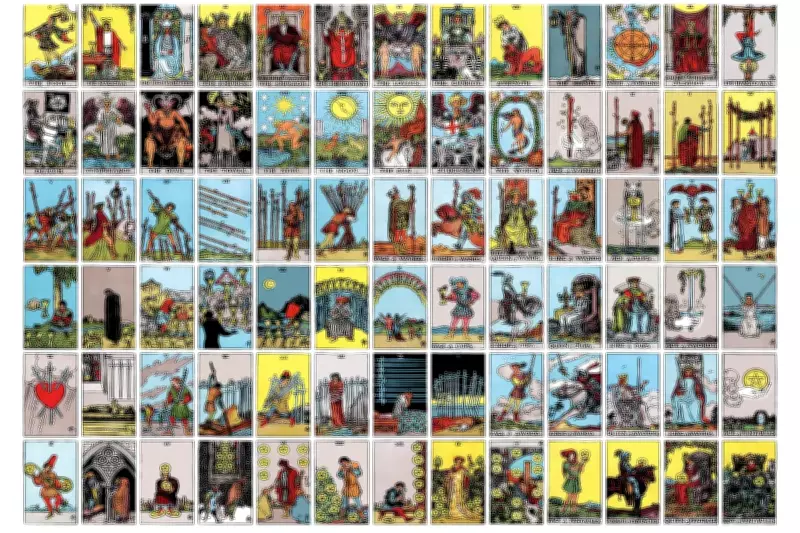
However, the deck most envision when thinking of tarot is the Rider-Waite: the Moon card with its celestial gaze, Death as a skeletal rider, and the Fool poised at a cliff's edge. For years, I never considered the artist who crafted these powerful symbols. That artist was Corinne Pamela Colman Smith, whose contributions have been overshadowed, as noted by author Pam Grossman, who highlights the injustice of her minimal compensation and lack of recognition.

Early Life and Artistic Rebellion
Born in Pimlico, London, in 1878 to American parents, Pamela led a peripatetic childhood, moving between London, Manchester, New York, and Jamaica. She enrolled at the Pratt Institute in New York at just 15, becoming its youngest student, but never graduated. Her tutors observed her fierce independence, noting she was determined to forge her own path.
After losing both parents in her early twenties, Pamela was taken under the wing of actress Ellen Terry, who nicknamed her Pixie for her mischievous spirit. Terry introduced her to a bohemian circle including W.B. Yeats, Bram Stoker, and Henry Irving, though Pamela often found them unimpressive, describing Yeats as a rummy critter.
Prolific Creativity and Occult Connections
Pamela's talents were prodigious: she designed theatre programmes, costumes, and sets for the Lyceum, edited her own magazine, authored children's books, and held sold-out art shows in New York. She also hosted salons in Chelsea, where writer Arthur Ransome dubbed her goddaughter to a witch and sister to a fairy.
In 1901, she joined the Hermetic Order of the Golden Dawn, a secretive occult society. There, she met esoteric scholar Arthur Edward Waite, who commissioned her to illustrate a tarot deck. Waite later downplayed her role, referring to her merely as a draughtswoman working under his supervision. Yet, Pamela conducted her own research, studying Sola Busca drawings at the British Museum and infusing the cards with personal touches, such as including a friend's dog on the Fool card.
Obscurity and Posthumous Recognition
The Rider-Waite deck, published in 1910, received a dismissive review from Aleister Crowley, who misspelled Pamela's name and focused on his rivalry with Waite. Despite the deck's eventual global success, Pamela gained little fame or wealth in her lifetime. She died in Bude, Cornwall, in 1951, leaving her estate to her life-partner Nora, with most assets sold to settle tax debts.
Feminist movements have since worked to reclaim Pamela's legacy. In 2018, the Pratt Institute hosted a wildly popular exhibition of her work, stunning curators with its reception. Today, tarot enjoys a resurgence, especially among younger generations, and Pamela is increasingly honoured, with many now calling it the Rider-Waite-Smith deck. Her designs continue to inspire, revealing hidden details like the snail in the Nine of Pentacles.
Reflecting on my own journey, I recall asking the High Priestess of Clapham if I would ever publish a novel. I wish I had recorded the card she drew in response. Now, I am publishing my twelfth book, a biography of Pamela Colman Smith, celebrating the artist who shaped tarot history yet remained invisible for too long.