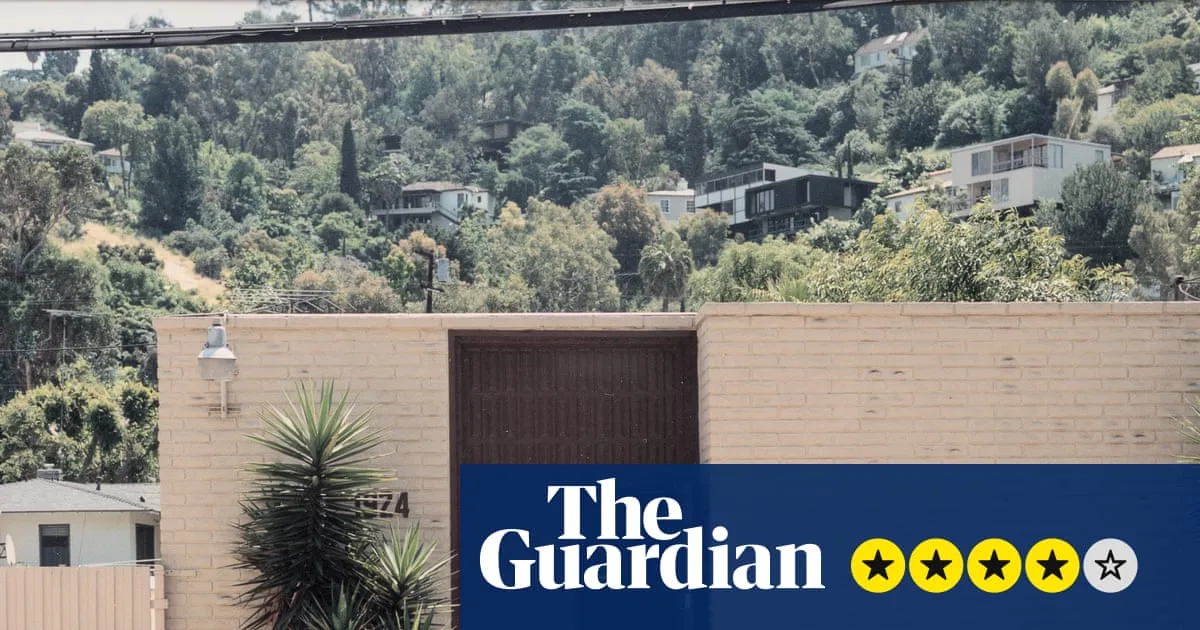
At first glance, the photographs appear to depict ordinary buildings, each shot formally from across the street, framed by thick black utility cables, poles, barbed wire fences, graffiti and flyposters. There are no people in sight, and the streets are clean except for a few oil stains in a parking lot. The images are strangely silent, yet they tease the deepest voyeuristic desires.
None of the buildings have windows; if they do, they are boarded up, shuttered or blacked out. Only the titles reveal what went on inside: “12 stalls, 1 leather bunk bed, outdoor garden, 1 water fountain, 1 barber’s chair, glory-hole platform, Chinese decor” reads one. These are photographs by American artist Dean Sameshima, part of a series titled Wonderland, taken between 1995 and 1997. They depict Silver Lake’s queer sex clubs and bathhouses – illegal safe spaces hidden in plain sight where the community could meet and hook up.
Sameshima was in his early 20s when he took the pictures, and the Aids pandemic had already devastated Silver Lake’s queer community. His images seem shaped by a sharpened sense of precarity and wistfulness, a foreboding that these buildings would be effaced, disappearing like the bodies that once occupied them. The titles indicate that at least three of these clubs closed in 1995. He photographs them to mitigate grief and loss.

In daylight, these places of illicit nocturnal activities – warehouses, industrial spaces and stores – are unremarkable. A sign for a bakery rises behind one; the club formerly at 1800 Hyperion sits nestled beside residential homes. Did the neighbours know? One is painted sludgy grey, with no sign or markings at all. You could easily walk past them, unless you were there, like Sameshima himself, a devoted observer-participant. These pictures are devotional documents, anchored to a specific time and place, but they also resist the prying eyes of outsiders and the shaming gaze of heteronormative society. These places have been subjected to surveillance and police raids – a reminder that sometimes visibility is dangerous, and anonymity can be a strategy for survival.
There are seven sex club pictures on show, hung at intervals along white walls, with long pauses between them – a pacing akin to driving between spots in a sprawling city like Los Angeles. The prints stretch horizontally, giving a wide, panning vista, the impression of looking from a car window. They cut a series of blank spaces, parentheses in the urban landscape, a part of the city’s architecture and history concealed and sequestered by necessity.
Hidden around the corner is a suite of photographs documenting famous spots for cruising after dark in two public parks (Griffith Park and Harbor City Recreational Park). Shot in warm daylight, there are no people in these pictures. Rather than sylvan sex, it’s the quiet, natural solace of these small open spaces, shrouded by shrubbery and dappled light, that you notice. They might even make for a good picnic spot. But they also bristle with tension between being seen and being safe, being caught out and being concealed. By taking the sex out of cruising, these sites simply exist, embedded in the everyday. And on the ground in one picture, among the stones, a tiny detail: a discarded blue condom wrapper.