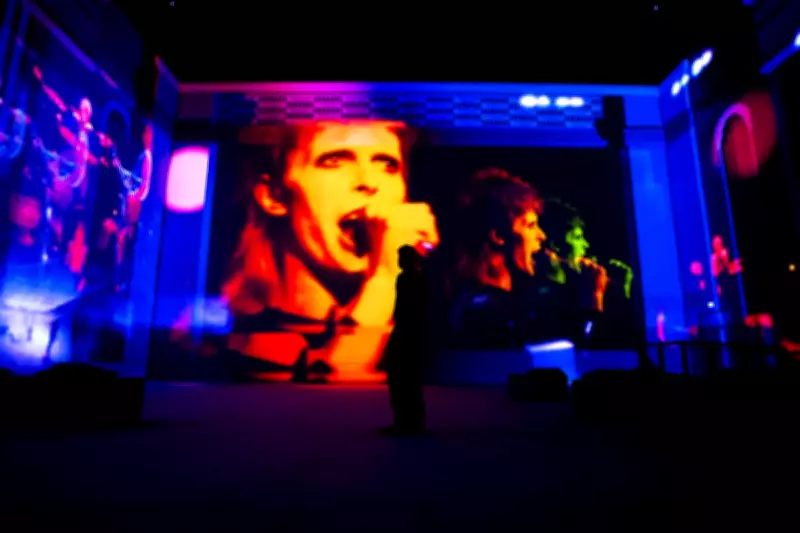
David Bowie Immersive Exhibition: A Bum-Shaking Yet Sanitised Journey
The posthumous David Bowie industry continues to thrive unabated, with reissues, documentaries, and merchandise flooding the market for a decade. Amid concerns of potential fan fatigue, the appetite for Bowie's legacy remains insatiable. This demand has birthed You're Not Alone, an hour-long, 360-degree immersive film directed by Mark Grimmer, showcased at London's Lightroom exhibition space.
A Balancing Act for Fans and New Audiences
While much Bowie content targets diehard enthusiasts, You're Not Alone ambitiously aims to retain core fans while appealing to younger generations less familiar with his imperial phases. This strategy is evident in its focus on Bowie's biggest-streaming hits, such as Let's Dance, while omitting classics like Ashes to Ashes or Sound and Vision.
For long-time devotees, the highlight is unseen footage from Bowie's 1978 Earls Court performance. The show cleverly utilises multiple camera feeds from DA Pennebaker's film of the final Ziggy Stardust concert in 1973, magnified to an impressive scale. This allows viewers to catch subtle details, like bassist Trevor Boulder's filthy glare during Rock'n'Roll Suicide, as Bowie tacitly dismisses him before thousands.

Sanitised Career Narrative and Artistic Omissions
Estate-approved, the film presents a distinctly cleaned-up version of Bowie's career. Key chapters are glossed over, including:
- The scrabbling pre-Ziggy years, excluding Hunky Dory and The Laughing Gnome.
- No direct references to bisexuality, save for Bowie's camp eyelash fluttering on Top of the Pops.
- Omissions of his flirtation with fascism, the Glass Spider era, and Tin Machine membership.
An interview addressing Bowie's artistic tailspin post-Let's Dance suggests redemption with 1993's Black Tie White Noise, a claim that may raise eyebrows. However, the surround sound elevates his undervalued 90s work, giving tracks like I'm Afraid of Americans and Little Wonder a literally bum-shaking power.
Immersive Highlights and Emotional Depth
Despite omissions, the spectacle is undeniable. The film immerses viewers in the aborted 1974 Diamond Dogs tour audience, with interactive elements like lyric fragments littering the floor during discussions of William Burroughs' cut-up technique. Similarly, Brian Eno's influence is highlighted through handwritten Oblique Strategies cards surrounding the audience.
The Berlin years section authentically evokes a grubby, chilly atmosphere, rescuing Heroes from its modern celebratory montage fate and restoring its ambiguous essence. Bowie's prescient views on the internet and pop music's demystification are featured, including his lament that artists now need to "accompany the audience."
Conclusion: A Tear-Jerking Finale
The film concludes with an emotional reading of The Loneliest Guy from Bowie's 2004 final performance, prefaced by clips on ageing and mortality. While Bowie often concealed himself behind theatricality, this moment is presented as a soulful glimpse, disarming quibbles with a tear-jerking punch. You're Not Alone may be pick-apart-able, but its immersive power sweeps audiences away, proving Bowie's enduring allure.