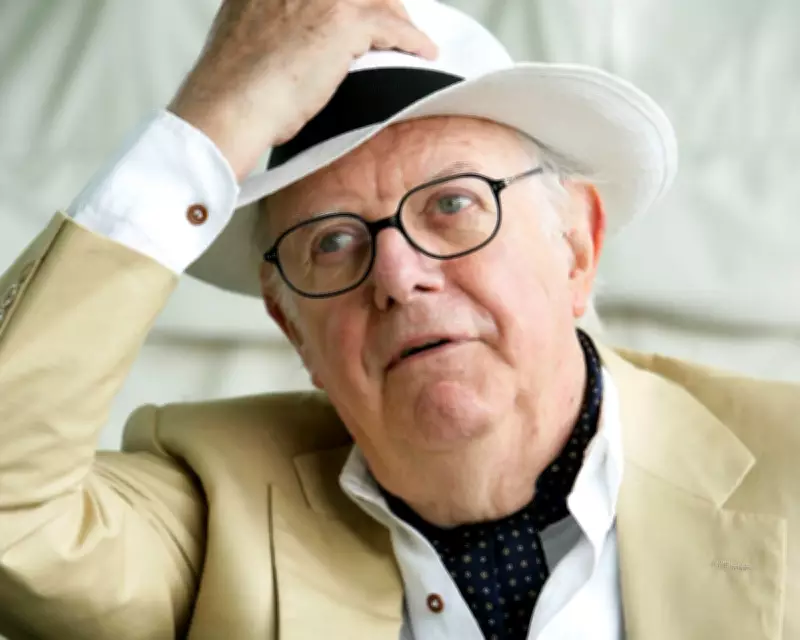
Blending comedy and ideology, Dario Fo in 2005. Photograph: Murdo Macleod/The Guardian. Dario Fo at 100: a deliriously funny playwright with a deadly serious purpose. The great Italian entertainer's plays, such as Accidental Death of an Anarchist, have not lost their power to make audiences roar with laughter while confronting injustice.
The Fusion of Political and Popular Theatre
In Britain, there is often a clear separation between political theatre and popular entertainment. However, the genius of Dario Fo, born 100 years ago on Tuesday, lies in his ability to merge these realms seamlessly. As a dramatist, actor, director, and designer, Fo, alongside his wife Franca Rame, brought satire directly to the masses. Through iconic works like Accidental Death of an Anarchist and Can't Pay? Won't Pay!, he achieved a global impact that rightfully earned him the Nobel Prize for Literature in 1997.
Roots in Resistance and Early Fame
Protest and performance were deeply ingrained in Fo's heritage. His father, a stationmaster and part-time actor, involved him in wartime resistance against the Nazis in northern Italy, aiding in smuggling Allied soldiers to Switzerland. Fo rose to prominence in 1962 when he and Rame hosted a weekly TV variety show that drew massive audiences. This engagement was abruptly terminated after they rejected censors' demands for cuts, showcasing their commitment to artistic freedom.

Alan Cumming as The Madman in Accidental Death of an Anarchist in 1991. Photograph: Tristram Kenton/The Guardian. Eventually, they founded their own theatre company, Nuova Scena, which premiered Mistero Buffo in 1969. This widely toured one-man show, inspired by medieval texts, satirised the Catholic church's ceremony, hierarchy, and mysticism. In a notable sketch, Christ was depicted kicking Pope Boniface VIII for his decadence and corruption. When Fo performed Mistero Buffo on television, the Vatican condemned it as "the most blasphemous show in the history of television."
Revitalising Political Theatre
Fo's plays injected new vitality into political theatre, with Accidental Death of an Anarchist remaining his most famous work. Based on the real-life case of a Milanese railway worker falsely accused of planting bombs, who "fell" from a fourth-floor window at police headquarters, the play retains its relevance. The first London production featured Alfred Molina delivering a brilliant performance as a revolutionary posing as a magistrate. In a 2023 revival at Sheffield Crucible, later transferred to the West End, Daniel Rigby was equally breathlessly funny, and the play's themes remained timely, highlighting that over 3,000 people have died in police custody in the UK since its 1970 premiere.
Juicy Roles and Political Farce
One of Fo's great talents was creating rich roles for actors, seamlessly blending comedy and ideology. In Trumpets and Raspberries, which reached the West End via Watford, Griff Rhys Jones gave a virtuoso performance as a communist shop-steward who becomes facially identical to Fiat boss Gianni Agnelli after plastic surgery. The play featured sharp verbal gags, such as Agnelli's line, "At 14, I was given a cowboy outfit – and I've been running it ever since." Rhys Jones's transformation from a wide-eyed worker to a mummified tycoon evoked a politicised Feydeau farce, demonstrating Fo's skill in using humour to critique power structures.
Harassment and the Purpose of Comedy
From an interview with Fo in London in 1983, two key points emerge. First, despite their popularity, Fo and Rame faced significant harassment over the years, including wrath from both the Catholic church and the Communist party, physical intimidation, and 45 prosecutions by Italian police. Second, for Fo, who passed away in 2016, comedy served a political end. He stated, "At the root of everything I write is tragedy. One must never forget that Accidental Death involves a man thrown out of a window, and Can't Pay? Won't Pay! hinges on a starving man. The laughter is simply a means of making the audience confront the problem."
This serves as a salutary reminder that Fo, while a master entertainer, was driven by a mission to confront cruelty, injustice, and oppression in all forms. His legacy continues to inspire, proving that theatre can be both uproariously funny and profoundly serious.