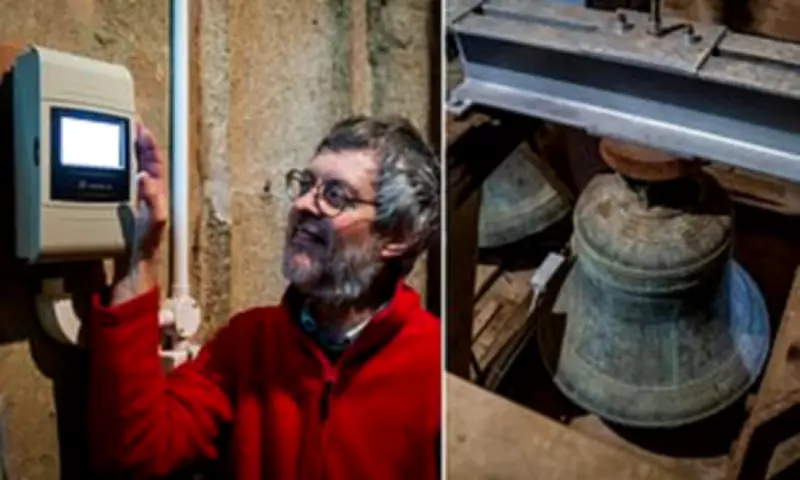
In a modern twist on ancient tradition, a medieval church in north Cornwall has abandoned human bellringers in favour of a sophisticated £30,000 touchscreen system. The decision came after experts determined that the historic bells were too delicate to be rung using conventional methods.
Half a Century of Silence
The five bells at St Sampson's Church in South Hill, near Callington, had remained silent for fifty years after being removed due to serious safety fears. Church officials worried that the aging bells might literally fall from the tower if traditional ringing continued.
A Cost-Effective Solution
After years of dedicated fundraising by local volunteers, church wardens faced a difficult choice. A full restoration using traditional methods would have cost nearly £200,000, an astronomical sum for the small congregation. Instead, they raised £30,000 to implement an innovative electronic solution.

Each bell inside the church tower now features an electromagnetic hammer installed within its structure. The system allows the bells to produce a series of pre-programmed peals suitable for all church occasions including weddings, regular services, and funerals.
Historic Bells Get New Life
The bells themselves represent centuries of history, with four dating back to 1698 and one to 1831. Despite their age, they now chime at the touch of a button on a wall-mounted screen.
Churchwarden Judith Ayres described the emotional moment when the bells returned: "It was just amazing to see them come back on the lorry, see them hoisted back in the tower, and hear them again for the first time in 50 years. It was something very special."
Preservation Challenges
Ayres explained the technical limitations that led to the electronic solution: "They're now electronically static chimed, not full circle swung, because the bells are listed. They can't be returned because they're too thin and they would break, and they can't be sold."
The church had initially worried whether they would ever raise sufficient funds to restore the bells at all. "We did wonder when they were taken down if we'd ever raise enough to get them back again, but we did," Ayres noted with evident pride.
Community Effort
The restoration project became a true community endeavour. Two professionals from Taylors Bellfoundry worked alongside a team of local volunteers during the week-long installation process.
"We had different people on different days helping, which was great," Ayres recalled. "The community involvement has been huge and really supportive. We're all thrilled to have the bells back whether we go to church or not."
Emotional Return
For congregation member and unofficial church historian Miranda Lawrance-Owen, hearing the bells again proved an intensely moving experience. "It was so exciting. It was wonderful and made me want to cry," she confessed.
The new system allows the bells to be programmed in advance for Sunday services, weddings, and funerals, ensuring their continued role in community life while preserving their fragile structure for future generations.