Cecily Brown's Triumphant Return to London's Art Scene
Cecily Brown, the acclaimed painter, has made a highly anticipated return to London with a blockbuster exhibition at the Serpentine Gallery. This marks her first major museum show in her hometown, a significant moment for an artist who once felt out of sync with the dominant Young British Artists (YBAs) movement of the early 1990s.
From London Outsider to International Acclaim
In the early 1990s, Brown departed London, not out of disdain for the YBAs, but because she felt her traditional painting style was hopelessly unfashionable compared to the provocative works of figures like Damien Hirst and Sarah Lucas. "There was this feeling in London at the time that if you were a painter, you were a loser," she recalls. In contrast, New York offered a more welcoming environment where she could flourish without such labels.
Her move proved fruitful. By her 20s, she was represented by the mega-gallery Gagosian, and her works now reside in prestigious institutions such as MoMA and the Tate. Recent surveys include a notable exhibition at the Met in New York. Her paintings, characterized by their slippery, complex canvases rich with allusion, command millions at auction, positioning her as one of the most valuable living female artists globally.

Nerves and Nostalgia Ahead of the Serpentine Show
Despite her success, Brown admits to feeling a bag of nerves ahead of the Serpentine exhibition. "The thing I'm really afraid of is critics, because they'll say it's overhyped. I feel I've got to prove myself," she confesses. The show, titled Picture Making, features a mix of new and old paintings, alongside recent monotypes and drawings, all inspired by the green landscapes of her youth in Surrey.
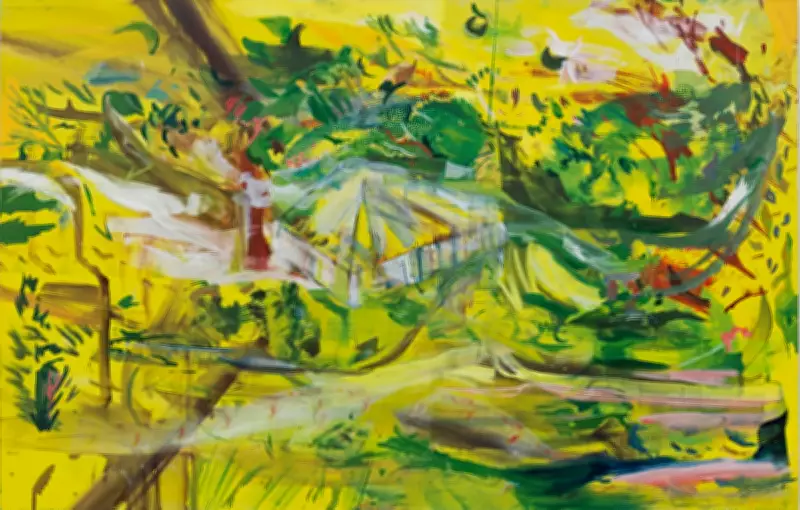
The exhibition includes meandering canvases inspired by Kensington Gardens, bursting with energy and movement through streaks of sunshine yellow, mud brown, and spring green. In her signature style, recognisable details like dogs, trees, and bird boxes emerge from abstract strokes before melting away. "It's celebrating nature, colour, and light," Brown explains, "but at the same time, inevitably, there's instability."
Personal Influences and Artistic Borrowing
Born in London and raised in Surrey, Brown's idyllic childhood was contrasted by a revelation at age 21: her biological father was the influential art critic David Sylvester, who had mentored her and introduced her to artists like Francis Bacon. This connection fueled her confidence to borrow from past masters, pilfering colours and details to create something new. "When I started looking at art seriously, looking just wasn't enough. I wanted to copy it as a way of understanding it," she says.
Her early career saw her dabble in video and photo-based works in New York, but she soon returned to painting, gaining recognition with hedonistic imagery and classical themes. Over time, the English landscape became a central focus, reflecting her roots and evolving style.
Reflections on the Art World and Identity
Brown reflects on her initial shyness in London, feeling too posh or not posh enough in the class-conscious environment. "I was too shy to talk to all these super cool kids like Sarah and Damien," she admits, also conscious of being perceived as a "nepo baby" due to her father's prominence. In New York, she found a confidence that allowed her to thrive.
Today, she critiques the commercialisation of the art world, noting, "greed has overtaken creativity." Despite benefiting from the system, she laments that many artists now create work directly for the market, sometimes forgetting what art truly is. As for returning to London permanently, she harbors a fantasy but acknowledges the practicalities, having spent too many rainy days at bus stops in her youth.
The Serpentine exhibition represents a full-circle moment for Brown, who no longer feels shy at openings. "I don't feel shy walking into an opening any more," she smiles, underscoring her journey from outsider to celebrated artist. Cecily Brown: Picture Making runs at Serpentine South, London, from 27 March to 6 September, offering a profound exploration of her artistic evolution and enduring impact.