Rio Carnival Samba Parades Spotlight Marginalised Black Brazilian Women Writers
In a powerful fusion of cultural celebration and social commentary, Rio de Janeiro's world-famous Carnival has transformed its samba parades into platforms honouring Black Brazilian female authors who have long been overlooked in mainstream recognition. Two prominent samba schools dedicated their elaborate performances to literary figures Conceição Evaristo and Carolina Maria de Jesus, creating an unprecedented intersection between Brazil's most vibrant cultural expression and its often-marginalised literary voices.
Historical Recognition Through Carnival Spectacle
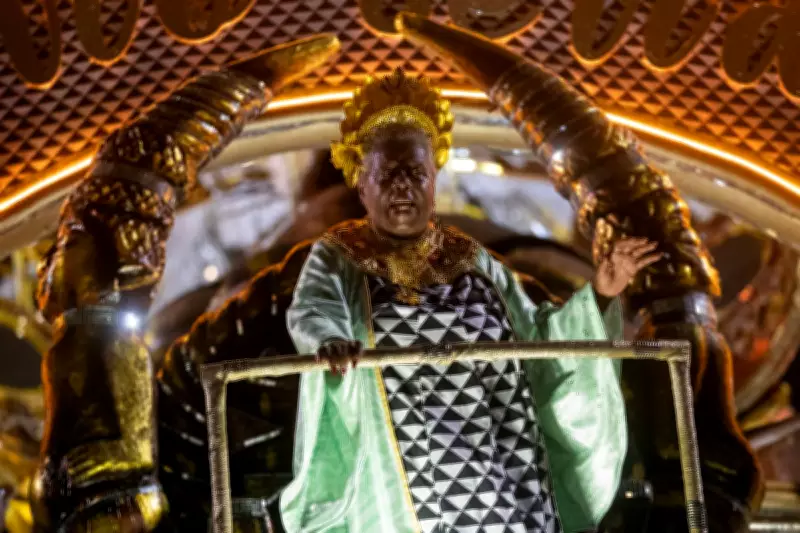
On Saturday, 79-year-old writer Conceição Evaristo, renowned for her profound works exploring Black women's experiences in Brazil, presided majestically atop an elaborate float created by the Imperio Serrano samba school at Rio's iconic Sambodrome. Just two days later, the Unidos da Tijuca samba school devoted its entire parade to commemorating the legacy of Carolina Maria de Jesus, the favela-based diarist who died in relative obscurity nearly five decades ago, while also featuring Evaristo's contributions.
"For Black women in Brazil everything is very difficult," Evaristo remarked during preparations at the school's warehouse. She emphasised that the parade "presents other forms of knowledge that are born in Black communities" while celebrating the nation's rich cultural diversity.

Samba as Political Expression
Samba, the rhythmic music and dance genre rooted in Afro-Brazilian traditions, serves as more than mere entertainment during Carnival. Annually, samba schools from low-income neighbourhoods invest months crafting intricate parades complete with original samba songs, towering floats, and dazzling costumes for competitive judging. These spectacles frequently incorporate pointed political messaging alongside their artistic displays.
This year's thematic focus continues a tradition of social commentary through Carnival. While Porto da Pedra samba school advocated for enhanced rights for sex workers, previous years have seen schools criticise former President Jair Bolsonaro or highlight the struggles of Indigenous Yanomami communities.
Literary Legacies Celebrated
In the early hours of Tuesday morning, Unidos da Tijuca's procession of dancers, performers, and percussionists moved down the Sambodrome's central alley while songs honouring Carolina Maria de Jesus resonated throughout the venue. Floats and costumes prominently featured books of various shapes, sizes, and colours, creating a moving tribute to literary achievement.
Event materials described the parade as "an act of historical reparation," noting that de Jesus died impoverished and largely forgotten in 1977 despite her significant literary contributions.
From Humble Origins to Literary Recognition
Both honoured authors emerged from modest backgrounds to achieve literary distinction. During the 1950s, Carolina Maria de Jesus maintained a diary documenting her daily struggles to earn income and feed her three children in a São Paulo favela. Since its 1960 publication, her diary has sold over one million copies according to the Instituto Moreira Salles museum's dedicated website.
While some critics have dismissed de Jesus' writing style as simplistic, Conceição Evaristo vigorously defends her unconventional approach. "The Brazilian model cannot choose a single language model ... based, for example, on European cultures," stated Evaristo, whose acclaimed works include the 2003 novel "Poncia Vivencio" about a Black woman's migration from rural Brazil to urban life, and the 2014 short story collection "Water Eyes."
Contemporary Relevance and Systemic Challenges
For actor Maria Gal, who portrays de Jesus in an upcoming film and during the parade, the late author's focus on education, gender equality, and sustainable development maintains profound relevance in contemporary Brazil. "We are a country that often ends up forgetting our own history. And yet we have an incredibly rich cultural history. Carolina illustrates this very powerfully," Gal observed.

Despite such recognition, Black women in Brazil continue confronting systemic discrimination. Statistical disparities reveal they experience higher rates of poverty, illiteracy, food insecurity, and gender-based violence compared to white women. Last year marked a milestone when Ana Maria Gonçalves became the first Black woman elected to the prestigious Brazilian Academy of Letters, yet scholars argue racial and gender biases persist within the institution's history.
"I have no doubt about the fact that if Conceição Evaristo were a white man, she would already be a part of the Brazilian Academy of Letters," asserted Felipe Fanuel Xavier Rodrigues, a literature professor at the Federal University of Rio de Janeiro.
Carnival as Transformative Political Space
Professor Rodrigues characterised the parades as transformative political acts, explaining that "Carnival suspends everyday rules, including those of a structurally racist society like ours. It's when a crack appears." This temporary suspension of social norms creates unique opportunities for challenging historical narratives and elevating marginalised voices through Brazil's most celebrated cultural expression.
The convergence of samba and literature at this year's Carnival represents more than artistic innovation—it constitutes a deliberate reclamation of cultural space and historical memory. By centring Black Brazilian women's literary contributions within the nation's most visible cultural celebration, samba schools have created a powerful platform for addressing historical erasure while celebrating the rich diversity of Brazilian storytelling traditions.