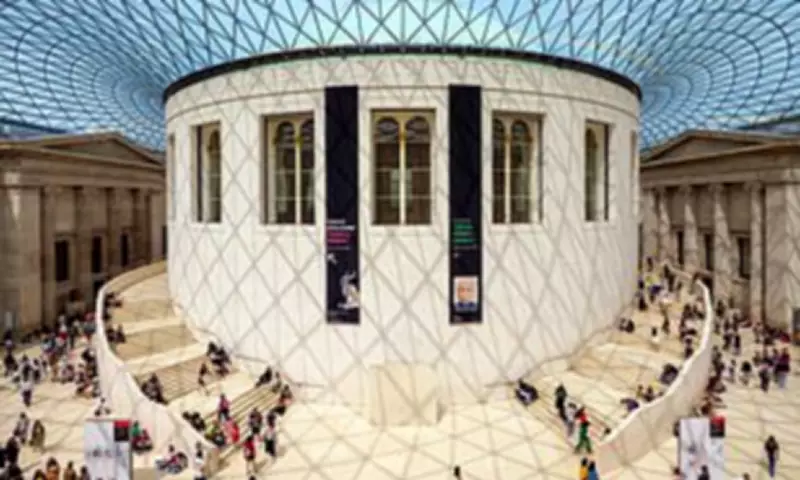
The British Museum has made significant changes to its displays in the ancient Middle East galleries, removing references to the term 'Palestine' from historical contexts. This decision follows formal complaints raised by the pro-Israel advocacy group UK Lawyers for Israel (UKLFI), who argued that using 'Palestine' for periods before the name existed was historically inaccurate.
Historical Accuracy Concerns Prompt Review
Information boards that previously described the eastern Mediterranean region as Palestine during ancient periods have been revised. Specifically, displays covering the era from 1500BC to 1700BC that referred to individuals as being 'of Palestinian descent' have been updated. UKLFI contended that these references risked 'obscuring the history of Israel and the Jewish people' by applying modern terminology retrospectively.
Museum Implements Terminology Changes
The museum has now replaced 'Palestine' with 'Canaan' in several exhibits, aligning with what UKLFI described as more historically accurate names for the region. The group had suggested alternatives such as Canaan, the kingdoms of Israel and Judah, or Judea, noting that texts from around 1500BC refer to the area as Canaan, while the Kingdom of Israel first appeared in Egyptian inscriptions around 1200BC. The name Palestine did not emerge until approximately the fifth century BC.

UKLFI emphasized that applying a single name across millennia 'erases historical changes' and creates a 'false impression of continuity.' They also objected to a display featuring a doll described as wearing 'Palestinian traditional dress,' arguing it implied an uninterrupted cultural lineage. The museum responded that this exhibit was intended to explore cultural identity rather than suggest direct historical continuity.
Museum and Group Statements
A spokesperson for UK Lawyers for Israel welcomed the changes, stating: 'We welcome the British Museum's willingness to review and amend terminology which is inaccurate or liable to convey an incorrect meaning today. Museums play a vital role in public education, and it is essential that descriptions reflect the historical record with precision and neutrality.'
However, the British Museum denied that the alterations were made in response to UKLFI's letter. A source explained that the term 'Canaan' is more relevant for the southern Levant in the later second millennium BC. The museum continues to use UN terminology on maps showing modern boundaries, including Gaza, West Bank, Israel, and Jordan, and refers to 'Palestinian' as a cultural or ethnographic identifier in other contexts.
A British Museum spokesperson clarified: 'It has been reported that the British Museum has removed the term Palestine from displays. It is simply not true. We continue to use Palestine across a series of galleries, both contemporary and historic.' The museum maintains that the updates were made independently as part of ongoing review processes.