Brad Rimmer's Photographic Journey Through WA's Declining Wheatbelt Halls
Over the past two decades, photographer Brad Rimmer has traversed the gravel roads of Western Australia's once-thriving agricultural region, witnessing the gradual disappearance of its small community halls. These buildings, in their heyday, served as vital social hubs for isolated farming communities, hosting dances, celebrations, and gatherings that knit people together. In 1954, Rimmer's own parents had their first dance and fell in love in one such hall, highlighting their personal and communal significance.
Today, Rimmer notes that most of these towns have either vanished or are desperately depleted of youth and opportunity. Of the halls that remain, few are still used for their original purposes. Some have been repurposed, while others stand abandoned, decaying monuments to a colonial past. His exhibition, Brad Rimmer: Loom of the Land, at the Fremantle Arts Centre until 19 April as part of Perth Festival, captures this fading legacy through evocative images.
North Baandee Hall: A Time Capsule of Memories
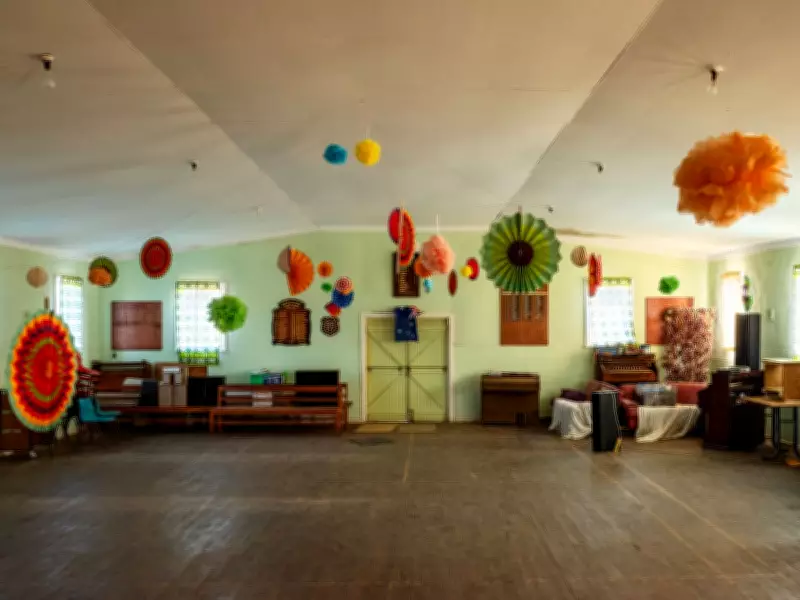
In spring 2021, Rimmer photographed the North Baandee hall, a corrugated structure resembling a shearing shed, alongside a one-room school converted into a house owned by Jenny and Peter. Inside, paper decorations from Jenny's birthday party five years earlier remain, surrounded by Peter's collection of hi-fi components, speakers, and modified electric organs. Rimmer discovered this hall only after a local tipped him off during his project Nowhere Near, which focuses on documenting the region's halls.

Bencubbin Town Hall: From Social Hub to Makeshift Supermarket
Bencubbin, or 'Benny' to locals, holds personal history for Rimmer as where his grandparents first lived after marrying in 1930. His grandfather started a mechanic business there to service eastern wheatbelt farmers. Today, it's a struggling town with a population under 250. In 2006, after the local supermarket was destroyed by fire, the town hall was repurposed as a makeshift supermarket. Though the temporary store is gone, the hall now stands empty, symbolizing the town's decline.
Pingaring Hall: Glimmers of Festivity Amidst Loss
Rimmer describes most of his first encounters with hall interiors as opening into spaces loaded with memory, from dances and football wind-ups to wakes and Christmas parties. At Pingaring hall in summer 2020, glowing Christmas decorations against a red curtain initially seduce, but soon give way to a sense of loss for a bygone era.
Shackleton Memorial Hall: A Museum of Art Deco Splendour
Named after the Antarctic explorer, the tiny town of Shackleton has around 100 residents. Its hall, now used as a museum, required Rimmer to move display panels to reveal spectacular art deco features and bold paint choices, showcasing how some halls have found new life.
Kununoppin Hall: A Town's Resilience Tested
Rimmer has a soft spot for 'Kuno', where he was patched up as a boy by longtime GP Dr John Radunovich at the small hospital. While the hospital remains, other services in this town of 150 have vanished. Locals say that after the pub burnt down, the town gave up, reflecting broader struggles.
Nungarin Town Hall: Hidden Treasures Behind Golden Drapes
With a population of around 140, Nungarin's little hall surprised Rimmer with three pianos hidden behind golden drapes at the back of the stage, hinting at past musical gatherings.
Mukinbudin Town Hall: A Stage Set for Mystery
Photographed during his book Nature Boy project in spring 2016, this hall features spectacular golden drapes and an arrangement of chairs on stage, left exactly as found, inviting viewers to ponder what events had taken place.
Corrigin Town Hall: A Model of Preservation
Corrigin shire takes pride in its hall, receiving a grant to renovate the ceiling while maintaining its original integrity. Rimmer highlights this as an example of successful preservation, contrasting with other halls where unfortunate renovations added quirkiness.

Broomehill Agricultural Hall: Unexpected Details
Entering Broomehill's hall for the first time, Rimmer was struck by walls and ceiling lined with traditional pressed tin, red and blue exercise mats in front of a gold curtain, and the odd addition of sound-absorbing bubble wrap above.
Trayning Town Hall: From Celebration to Biohazard
As the closest town south of where Rimmer grew up, Trayning holds memories of a grand wedding he attended at 17, with the hall full and the bridal party on stage. Over 40 years later, when allowed in to photograph it, he found it termite-ridden and a biohazard, facing possible demolition due to lack of repair funds.
Through these images, Rimmer's work not only documents architectural decay but also evokes the social histories and emotional landscapes of Western Australia's wheatbelt, urging reflection on community loss and preservation efforts.