Jewish museums and cultural institutions throughout Amsterdam have documented a substantial decrease in visitor numbers since 2023, with officials asserting they are being unfairly associated with a geopolitical conflict in which they have no direct involvement. Four prominent cultural hubs located within Amsterdam's historic Jewish Quarter have felt the repercussions of the ongoing Middle East conflict, which intensified following Hamas's attacks on Israel on October 7, 2023.
Significant Declines Across Key Institutions
The affected institutions include the Jewish Museum, the National Holocaust Museum, the Hollandse Schouwburg—a Holocaust Memorial and Dutch Theatre—and the Portuguese Synagogue. The Jewish Museum has experienced the most pronounced decline, welcoming approximately 105,000 visitors in 2023, which dropped to around 86,000 in 2024 and further decreased to 65,000 in 2025.
Similarly, the National Holocaust Museum reported an 11 percent reduction in attendance between 2024 and 2025. The Hollandse Schouwburg and the previously popular Portuguese Synagogue have also faced comparable declines in visitor numbers, as reported by the Dutch publication Het Parool.
Directors Cite Geopolitical Tensions and Security Fears
Emile Schrijver, director of the Jewish Cultural Quarter, emphasized to Het Parool that while the institutions are not on the verge of collapse, their financial sustainability is at risk under current conditions. He explained the rationale behind the declining figures, stating, 'We are being linked to a geopolitical conflict over which we ourselves have absolutely no influence.'
Schrijver also highlighted that visitors in the Netherlands are increasingly apprehensive about attending these museums due to heightened security concerns. Additionally, protests related to the Israel-Palestine conflict in Amsterdam and across the country have further deterred potential visitors.
Protests and Public Unrest Exacerbate the Situation
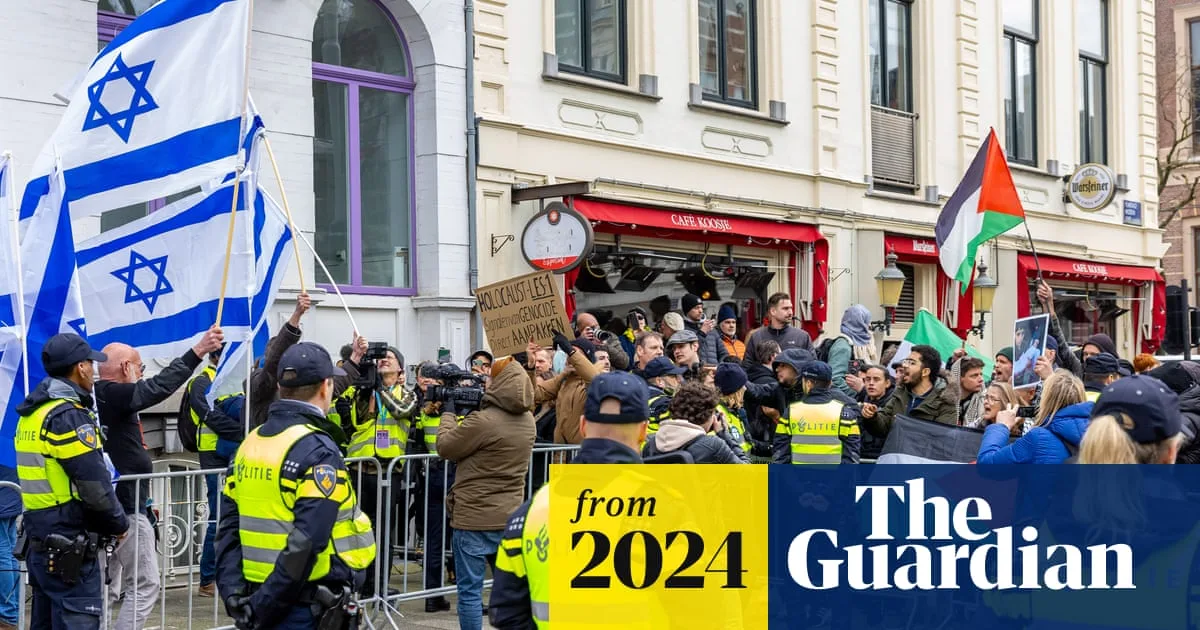
In 2024, for instance, chaos erupted in Amsterdam when pro-Palestine protesters clashed with Dutch police after officers intervened in a banned demonstration. This unrest followed attacks on Israeli football fans in the city. Police in riot gear confronted protesters at Dam Square who were chanting slogans such as 'Free Palestine' and holding placards with messages like 'We want our streets back.' Dozens of arrests were made during these events.
While no official statistics definitively confirm the conflict as the direct cause of the visitor drop, museum staff express little doubt regarding the connection. Public manager Kiki Stoffels remarked, 'It can hardly be anything other than the geopolitical context.'
Exhibitions and Educational Visits Also Affected
Exhibitions at the Jewish Museum, despite having no relation to the war, have seen markedly lower attendance compared to previous shows. For example, the current exhibition, Judy Chicago: Revelations, focuses on themes of gender, power, and social justice through the lens of the artist's Jewish heritage, with no ties to Middle Eastern politics. Described on the museum's website as Chicago's first solo presentation in the Netherlands, it has nonetheless struggled to attract audiences.
Furthermore, staff members report a decline in school visits, as teachers fear parental concerns over organizing trips to Jewish cultural sites amid the current tensions. Schrijver added, 'Initially, we didn't want to do anything related to the war in our programming. After all, we are not an Israel museum. But we are a museum about Jews and Judaism in the Netherlands, and by now you can say that the discussion about Israel is part of that.'
Consequently, the museum has initiated discussion meetings on the topic of Israel, yet it remains without influence over the broader conflict, underscoring the complex challenges faced by these cultural institutions in navigating geopolitical fallout while preserving their educational and historical missions.