Frederick Wiseman Dies at 96: Acclaimed Documentary Filmmaker Leaves Lasting Legacy
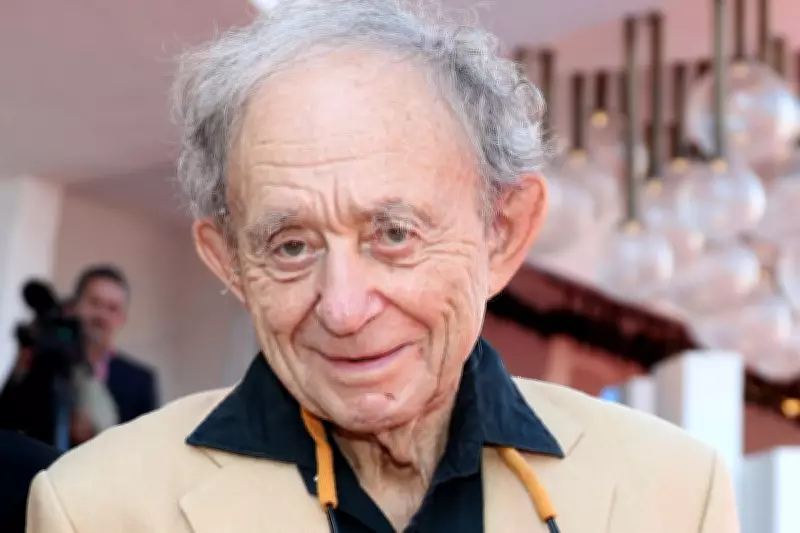
Frederick Wiseman, the celebrated documentary filmmaker whose unadorned and revealing lens captured a distinctive history of American institutions, has died at the age of 96. The director of seminal works including Titicut Follies passed away on Monday, leaving behind a profound legacy that reshaped non-fiction cinema.
His death was confirmed in a joint statement released by his family and his production company, Zipporah Films. Additional details were not immediately provided. The statement expressed: "He will be deeply missed by his family, friends, colleagues, and the countless filmmakers and audiences around the world whose lives and perspectives were shaped by his unique vision."
A Prolific Career and Honorary Academy Award
Widely regarded as one of the world's most admired and influential filmmakers, Wiseman received an honorary Academy Award in 2016. His extensive career spanned more than 35 documentaries, many several hours in length, exploring diverse subjects from suburban high schools to horse racing tracks. His films were broadcast on public television, featured in retrospectives, celebrated at festivals, praised by critics and fellow directors, and preserved by the Library of Congress.

Wiseman began his filmmaking journey in his mid-30s, quickly establishing himself alongside contemporaries like D.A. Pennebaker and Robert Drew in defining the modern documentary as a vital and surprising art form. From early works such as High School and the controversial Titicut Follies, he developed a seamless, distinctive style. Operating with a minimal crew, he often served as his own sound engineer, an approach that garnered both critical acclaim and significant controversy, notably leading to prolonged legal battles over Titicut Follies.
Wiseman's Vision and Approach to Filmmaking
Reflecting on his work, Wiseman told Gawker in 2013: "I don't set out to be confrontational, but I think sometimes the content of the movie runs against people's expectations and fantasies about the subject matter." His overarching goal was to create "as many films as possible about different aspects of American life," often using straightforward titles like Hospital, Public Housing, and Basic Training. Yet, his focus extended beyond institutions themselves, dramatising the human experience within them—from an elderly welfare applicant seeking aid to sales clerks rehearsing smiles.
As he explained to The Associated Press in 2020: "The institution is also just an excuse to observe human behavior in somewhat defined conditions. The films are as much about that as they are about institutions."
Controversial Masterpiece: Titicut Follies
His 1967 film, Titicut Follies, provided a harrowing look inside the Bridgewater State Hospital for the criminally insane in Massachusetts. Wiseman’s camera captured disturbing scenes, including nude men being taunted by guards and an inmate being force-fed through a nasal tube. The raw, unflinching nature of these images led state officials to successfully restrict the film’s release, inadvertently elevating its status among those eager to witness its controversial truths.
High School and Critical Acclaim
A year later, High School (1968) documented the everyday realities within a suburban Philadelphia school. Wiseman’s camera observed a student being questioned over a phone call, an English teacher dissecting Simon & Garfunkel lyrics, and an uncomfortable sex education class. Renowned critic Pauline Kael, writing for The New Yorker, praised its profound impact: "What we see in Fred Wiseman's documentary ... is so familiar and so extraordinarily evocative that a feeling of empathy with the students floods over us," adding that "Wiseman extends our understanding of our common life the way novelists used to."

Distinctive Style and Philosophical Stance
Wiseman’s films were characterised by their lack of narration, prerecorded soundtracks, or title cards. He vehemently rejected association with the 1960s and 70s "cinema verite" movement, dismissing it as a "pompous French term that has absolutely no meaning." He also challenged interpretations of his perspective; despite Oscar-winner Errol Morris labelling him "the undisputed king of misanthropic cinema," Wiseman maintained he was not a muckraker. Instead, he viewed himself as a "subjective, but fair-minded and engaged observer," unearthing stories—both despairing and hopeful—from hundreds of hours of footage. This approach was evident in High School II, where he documented the dedication of teachers in an East Harlem school. Accepting his honorary Oscar, Wiseman stated: "I think it's as important to document kindness, civility and generosity of spirit as it is to show cruelty, banality and indifference."
Later Works and Theatre Career
His adventurous spirit persisted into his 80s and 90s, yielding films such as Crazy Horse, exploring a Parisian dance revue, the four-hour At Berkeley about the California state university, and Monrovia, Indiana, a 2 1/2-hour portrait of an aging rural community. Beyond cinema, Wiseman enjoyed a significant theatre career, directing plays by Samuel Beckett and William Luce, and adapting his film Welfare into an opera. Much of his extensive body of work was produced through Zipporah Films, named after his wife, who passed away in 2021. The couple had two children.
Early Life and Career Beginnings
Born in Boston, Wiseman’s background included a prominent attorney father and a mother who worked in a children’s psychiatric ward and harboured acting ambitions. Despite facing Jewish quotas, he received an elite education at Williams College and Yale Law School, experiences that would later inform his cinematic work. His early career in the 1950s and early 60s saw him in roles ranging from the Massachusetts attorney general’s office to a court reporter and a lecturer at Boston Law School. A stint in the Army in 1955, stationed in Paris, provided his first practical film experience with a Super 8 camera. He told the AP in 2016: "I reached the witching age of 30 and figured I better do something I liked." He noted that the advent of synchronous sound technology "opened up the world for filmmaking. And there were so many good subjects that hadn't been filmed, as there still are."
From Narrative Drama to Documentary Filmmaking
His foray into filmmaking initially involved narrative drama, producing Shirley Clarke’s 1964 adaptation of William Miller’s novel The Cool World. This experience emboldened him to direct his own projects. While teaching at Boston Law School, Wiseman arranged visits to the Bridgewater facility, leading him to propose Titicut Follies in 1965. He envisioned a film that would offer "factual material about a state prison but will also give an imaginative and poetic quality that will set it apart from the cliche documentary about crime and illness." Following its screening at the New York Film Festival, Massachusetts sought an injunction, citing privacy violations. For over two decades, Titicut Follies was restricted to academic and library settings. The ban was eventually eased by Superior Court Judge Andrew Meyer, who initially allowed public screenings with blurred faces, before lifting all restrictions in 1991. In his 1989 opinion, Judge Meyer acknowledged: "I have viewed the film and agree that it is a substantial and significant intrusion into the privacy of the inmates shown in the film. However, I also regarded Titicut Follies as an outstanding film, artistically and thoughtfully edited with great social and historical value. Another observation about the film: It is true."