In a significant move reflecting institutional values, Queen's University Belfast has announced it will sever all formal ties with former US Senator George Mitchell due to his documented connections with the disgraced financier Jeffrey Epstein. The university's decision follows the recent release of court documents related to Epstein's criminal activities, which have prompted widespread re-evaluation of associations with individuals linked to the convicted sex offender.
Institutional Response to Epstein Document Revelations
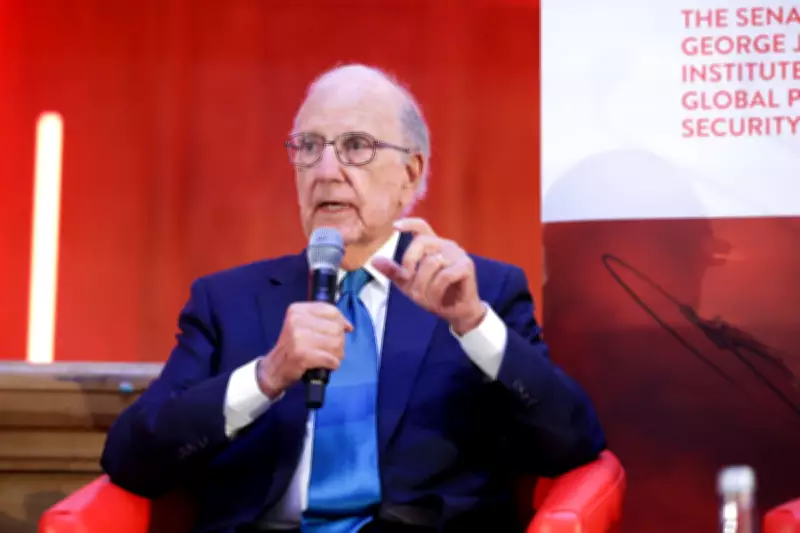
The university confirmed it will remove Mitchell's name from the Institute for Global Peace, Security and Justice, and will also take down a commemorative bust of the former senator from its campus grounds. This decisive action comes after careful consideration of new information contained within the Epstein files released by the Department of Justice last Friday, which includes specific references to Senator Mitchell.
A spokesperson for Queen's University Belfast stated: "Queen's University Belfast has taken the decision to remove the name of its former chancellor, Senator George J Mitchell, from the Institute for Global Peace, Security and Justice, and to remove the bust commemorating him from the University campus."

Balancing Legacy with Institutional Values
The university emphasised that while no formal findings of wrongdoing have been made against Senator Mitchell regarding Epstein's activities, the institution must prioritise its values and responsibilities. The spokesperson elaborated: "While no findings of wrongdoing by senator Mitchell have been made, the university has concluded that, in light of this material, and mindful of the experiences of victims and survivors, it is no longer appropriate for its institutional spaces and entities to continue to bear his name."
This decision reflects the university's position as a civic institution with global standing in peace, reconciliation, and justice studies. The spokesperson added: "As a civic institution with a global reputation for leadership in peace, reconciliation, and justice, Queen's University Belfast must ensure that its honours and symbols reflect the highest standards consistent with its values and responsibilities."
Mitchell's Response and Regret
In response to the university's decision, a spokesperson for George Mitchell told the BBC on Monday: "Senator Mitchell profoundly regrets ever having known Jeffrey Epstein and condemns, without reservation, the horrific harm Epstein inflicted on so many women."
The spokesperson further clarified Mitchell's position regarding Epstein's criminal activities: "The spokesperson said Mitchell did not at any time observe, suspect or have any knowledge of Epstein engaging in 'illegal or inappropriate conduct with underage women'."
Broader Impact on Mitchell's Legacy
The repercussions extend beyond Queen's University Belfast. On Sunday, the US-Ireland Alliance announced that its prestigious George J Mitchell Scholarship Programme would no longer bear his name. This programme, which sends American postgraduate students to universities across Ireland and Northern Ireland, was originally established to honour Mitchell's significant contributions to peace and international relations.
The US-Ireland Alliance confirmed that its board of directors had unanimously agreed to remove Mitchell's name "due to new information that has come to light as part of the release of documents related to Jeffrey Epstein by the Department of Justice on Friday".
Preserving Educational Mission Amid Controversy
Trina Vargo, founder and president of the US-Ireland Alliance, emphasised the organisation's commitment to its core mission despite these developments: "We are extremely proud of the programme and the scholars, and this turn of events in no way diminishes their achievements or our commitment to keeping them connected to the island, the alliance, and each other."
Vargo highlighted the continued importance of the programme's objectives: "This decision allows us to focus on our mission to strengthen the ties between the US and the island of Ireland. Given the current state of the relationship, that is more important than ever."

Historical Context and Mitchell's Contributions
George Mitchell played a pivotal role in Northern Ireland's peace process, chairing the negotiations that led to the historic 1998 Good Friday Agreement. His connection with Queen's University Belfast dates back to 1999 when he became chancellor, serving in this prestigious role until 2009. The removal of his name from university spaces represents a significant reconsideration of how institutions memorialise individuals whose legacies become complicated by later revelations.
The university's decision reflects a growing trend among educational and cultural institutions to reassess honours and commemorations in light of new information about individuals' associations, particularly when those associations conflict with institutional values regarding justice, ethics, and victim support.