Oxford University Abandons Historic Entrance Exams for Standardised Testing System
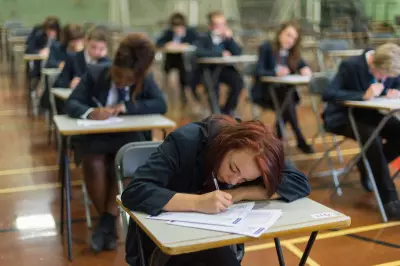
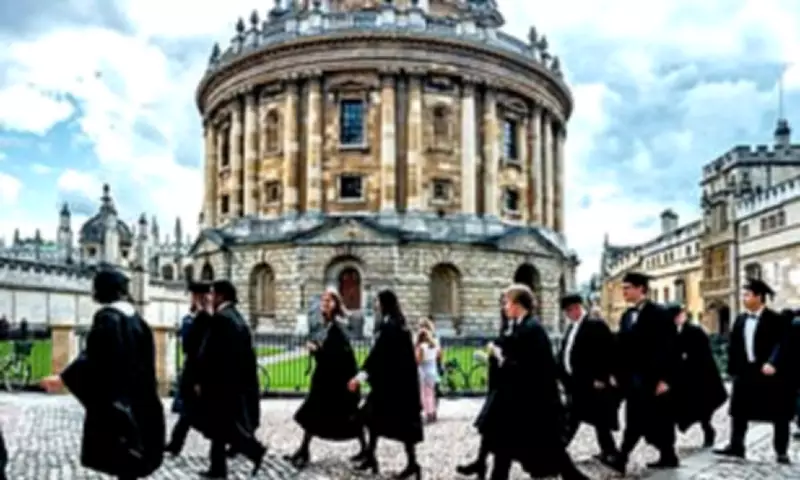
In a significant shift for Britain's oldest university, Oxford has decided to replace its notoriously challenging bespoke entrance examinations with generic tests already used by other higher education institutions. The move, described as an effort to 'streamline' the application process, will see candidates from 2027 onwards taking standardised assessments rather than Oxford-specific papers.
New Testing Framework for Future Applicants
The university has introduced three main examinations that will replace its previous subject-specific tests. Humanities applicants will now take the Test of Academic Reasoning for Admissions (TARA), which evaluates problem-solving abilities and critical thinking skills across disciplines including history, politics, and economics.
Meanwhile, mathematics and science candidates will sit either the Engineering and Science Admissions Test (ESAT) or the Test of Mathematics for University Admission (TMUA). These computerised examinations will be administered by University Admissions Tests UK (UAT UK), a partnership between Imperial College London and Cambridge University.

Driving Inclusivity and Accessibility
Oxford's decision represents part of a broader initiative to become more inclusive and encourage applications from disadvantaged backgrounds. The university's traditional entrance exams have long been perceived as creating barriers for students without access to private school support or extensive preparation resources.
"In our experience, when tests like these are introduced there is a tendency to see standardisation as simplification, which we know isn't the case," commented Evelyn Pike, a specialist in Oxbridge applications at William Clarence Education. "The ESAT, TMUA and particularly the new TARA are designed to test beyond rote learning. They assess a student's intellectual flexibility, capacity to deal with new information, and will push them to use their powers of reasoning."
Mixed Reactions from Education Experts
David Gibbon, director of Oxford and Cambridge Tutors, welcomed aspects of the change, noting that "removing some of the perceived mystique and individuality away from an application will benefit candidates who might be less familiar with the Oxford admissions process." However, he expressed concern about the potential "loss of some highly regarded, subject-specific assessments" that have traditionally provided exceptional challenges for applicants.
More critical perspectives emerged from Professor Anthony Glees, a security expert at Buckingham University who entered Oxford via entrance examination in 1967. "It could well be the end of the specialness of Oxbridge," he warned. "I think it amounts to dumbing down because other universities don't offer what Oxbridge offers, in terms of the tutor relationship. If they're all using the same application process, the uniqueness of Oxbridge has been removed."
Historical Context and Practical Considerations
Oxford's entrance examinations have undergone multiple transformations in recent decades. Originally abolished during the 1990s to create fairer opportunities for state-educated pupils, they were subsequently reintroduced when the university determined that top A-level grades alone couldn't sufficiently distinguish between good and exceptional candidates.
The famous examinations were dramatised in Alan Bennett's nostalgic play The History Boys, later adapted into a 2006 film starring Dominic Cooper and James Corden. Beyond their cultural significance, practical considerations have influenced the current change. Gareth Davies, an adviser at William Clarence Education, noted that administering the old tests had become "an expensive business" for the university.
Public Response and University Assurance
On parenting website Mumsnet, reactions reflected the broader debate. One user welcomed the change as "a move towards equity" that would reduce advantages for pupils from schools with strong Oxford connections. Another expressed disappointment, describing it as a "sad loss" and questioning how Oxford's mathematics department would respond.

A university spokesperson emphasised that "Oxford's undergraduate admissions process is rigorous and designed to identify academic potential." They added that the institution continually reviews its admissions practices to ensure they meet the needs of all stakeholders, and that interviews remain a crucial component where tutors directly assess candidates' abilities to think independently and engage with new ideas.
The spokesperson concluded: "Our approach varies according to subject and considers a range of information as evidence of a candidate's ability to thrive here. All those offered a place to study at Oxford have been interviewed and every year more than 20,000 interviews for approximately 10,000 applicants are conducted."