Ian Abbott says the principle of inclusion for pupils with special educational needs and disabilities will remain illusory as long as private providers are in control. Plus Sarah Lane and Robin Davies on the need for special Send schools.
Privatisation undermines inclusion
I will always regard John Harris highly, persuaded by his convictions for improving provision for children with special educational needs and disabilities (Send), but I cannot agree with his conclusions this time (Labour doesn’t seem to like Send schools for kids like mine – but here’s what we’ll lose if these precious places are forgotten, 7 June).
I worked in a local authority Send service during the 2014 reforms and beyond, seeing children funnelled towards private provision, which was sold to parents on a governmental stance of “state poor, private better”. Providers came and went, sometimes offering little-scrutinised quality or outcomes or specialism. And this alongside rising fees as a spurious proxy for quality. Large companies now work towards monopolisation, and Send funding, inadequate then and now, has gravitated in that direction since.
Perhaps if upwardly trending Send costs were judiciously applied to our local schools, this might reasonably mitigate education funding shortfalls and allow school leaders to, for example, recruit and improve the conditions of teachers and Send support generally; reduce growing class sizes; and improve teacher wellbeing, recruitment and retention.
Inclusion remains the principal Send support mechanism for many top-performing countries such as Finland, Denmark and the Netherlands, which score highly on the Organisation for Economic Co-operation and Development rankings for attainment and especially wellbeing. Teacher specialism and adequate funding also feature.
Inclusion has also run through the core of UK Send codes of practice since Mary Warnock’s pivotal 1978 report. By its very nature, privatisation will only ever drive practice towards exclusion and higher costs/profits.
Ian Abbott, Cirencester, Gloucestershire
Special schools are essential
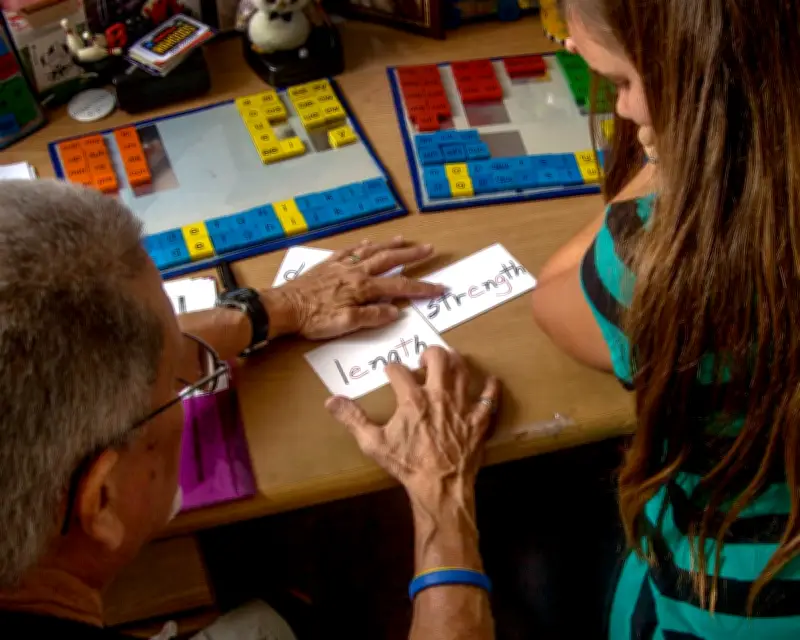
I couldn’t agree more with John Harris’s point that children with Send flourish in special schools. We should build more of these, not less. I teach children with dyslexia, and recently met a young primary-school pupil who is working at three years below her actual age due to multiple factors. She has an education, health and care plan, but is in a class of 32, where the physically disruptive autistic boys take all the oxygen and Send support in the room. She makes no progress, while her self-esteem plummets. The parents will most likely end up paying me, a private tutor, if they can afford it. Labour’s plan for inclusivity sounds great on paper, but in the real world it is doomed to perpetuate suffering. She and the boys deserve better.
Sarah Lane, Townshend, Cornwall
Autism is a spectrum
I have been conducting clinics for neurodivergent children for 20 years and I agree with every word in John Harris’s article. We still need Send schools, as well as encouraging as many neurodivergent children as possible to attend mainstream schools.
The trouble is that autism is not a binary condition, it is a spectrum. There are some children on the further end of that spectrum who simply cannot tolerate mainstream schools, and that intolerance is reciprocated by the schools.
If Bridget Phillipson’s proposals mean a reduction in Send schools, that will be disastrous for many children. Indeed, we probably need more such schools. Her proposals are for England. I trust that the Welsh government will be very wary of these English proposals.
Robin Davies, Tregarth, Gwynedd