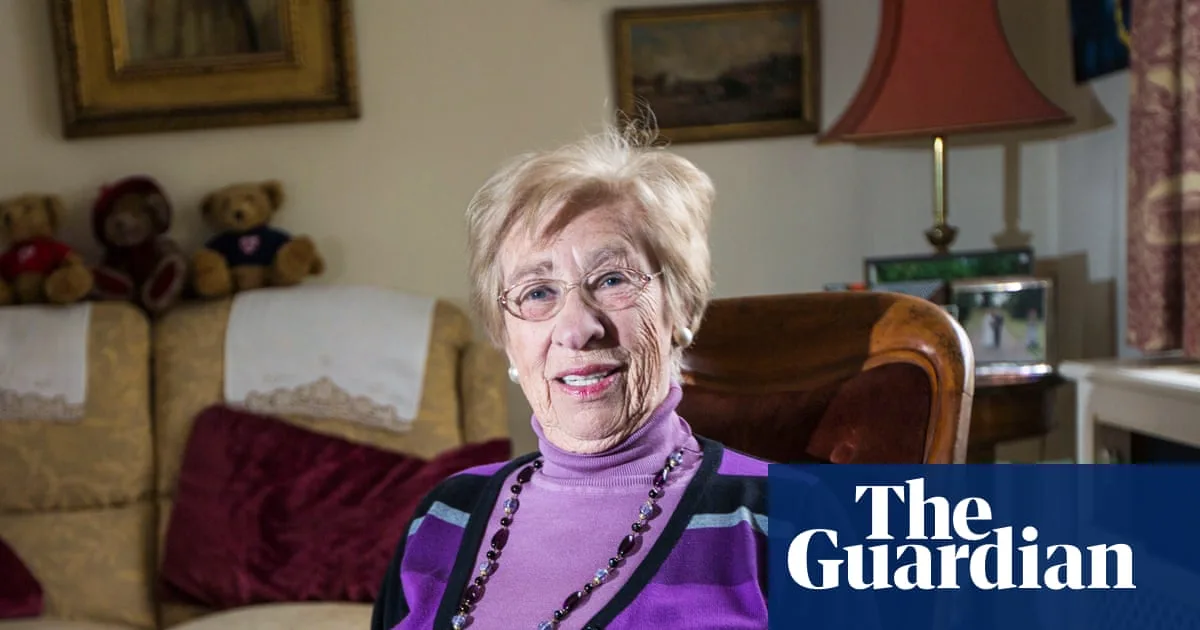
Eva Schloss, Holocaust survivor and Anne Frank's stepsister, dies at 96
Holocaust survivor Eva Schloss dies aged 96

Eva Schloss, a Holocaust survivor who became a posthumous stepsister to Anne Frank and dedicated four decades to educating others about the horrors of the Nazi regime, has died at the age of 96.

From Childhood Playmate to Posthumous Stepsister

In 1940, an 11-year-old Eva Geiringer, newly arrived in Amsterdam from Vienna, played with other children in a grassy square after school. Among them was a girl named Anne Frank. Born just a month apart and living as neighbours on Merwedeplein, they were not close friends. Eva was athletic, while Anne was more interested in fashion and films.

Their lives, and their legacies, would become profoundly linked years later. In 1953, Eva's mother, Fritzi Geiringer, married Otto Frank, Anne's father. This made Eva the posthumous stepsister of the diarist, a connection she would later use as a powerful tool in her educational work.

A Harrowing Journey of Survival

Eva was born in Vienna in 1929 to a secular, middle-class Jewish family. The German annexation of Austria in 1938 shattered their comfortable life. After her older brother, Heinz, was violently attacked at school, the family fled, eventually settling in Amsterdam.

When the Netherlands fell to the Nazis, the Geiringers, like the Franks, were forced into hiding. They moved seven times in two years before being betrayed. On the morning of Eva's 15th birthday in 1944, the Gestapo stormed their hiding place.

The family was deported to Auschwitz-Birkenau. Eva and her mother were separated from her father and brother. Their heads were shaved, and Eva was tattooed with the number A/5272. She endured starvation, brutal beatings, and the constant terror of the gas chambers.

Their survival hinged on an extraordinary stroke of luck. In the camp hospital, Eva's mother recognised her cousin, Minni, working as a nurse. Minni's husband, a dermatologist treating Nazis, had protected status. She provided extra food and, critically, intervened with the notorious Dr Josef Mengele to save Fritzi after she had been selected for death.

"Without Minni, neither Eva nor Fritzi would have survived," historians agree.

Building a New Life and a Powerful Legacy

Liberated by the Soviet army in January 1945, Eva and her mother returned to Amsterdam. They learned from the Red Cross that Heinz had died in Mauthausen and their father had perished just days before the war's end. Otto Frank, grieving the loss of his wife and daughters, became a source of support.

He encouraged a bitter and depressed Eva to let go of her hatred and gifted her the Leica camera he had used to photograph his children. She moved to London to study photography, where she met and married Zvi Schloss in 1952. They had three daughters, and Eva ran an antiques business in Edgware.

Her life as a public educator began unexpectedly in March 1986 at an Anne Frank exhibition in London. Ken Livingstone, then leader of the Greater London Council, spontaneously invited her to speak. Nervously taking the microphone, Eva found her voice—and never stopped using it.

She became a co-founder of the Anne Frank Trust UK, delivering powerful talks in schools, prisons, cathedrals, and civic halls across the country. She tailored her message, telling female prisoners full of hate that she understood their feeling, and explaining to gay inmates the fate of homosexuals in Auschwitz.

She authored several books, including Eva's Story (1988) and the bestselling After Auschwitz (2013). In 2012, she was appointed an MBE for her services to Holocaust education.

Eva often reflected on Anne Frank's famous diary line about people being good at heart, noting, "I cannot help remembering that she wrote this before she experienced Auschwitz and Belsen." Her own enduring message was one of tolerance: "We must learn the lesson that human differences actually enrich our lives."

Eva Schloss is survived by her three daughters and five grandchildren. Her indefatigable spirit and firsthand testimony remain a vital bulwark against hatred and forgetting.