Iranians Protest Mojtaba Khamenei's Appointment as Supreme Leader
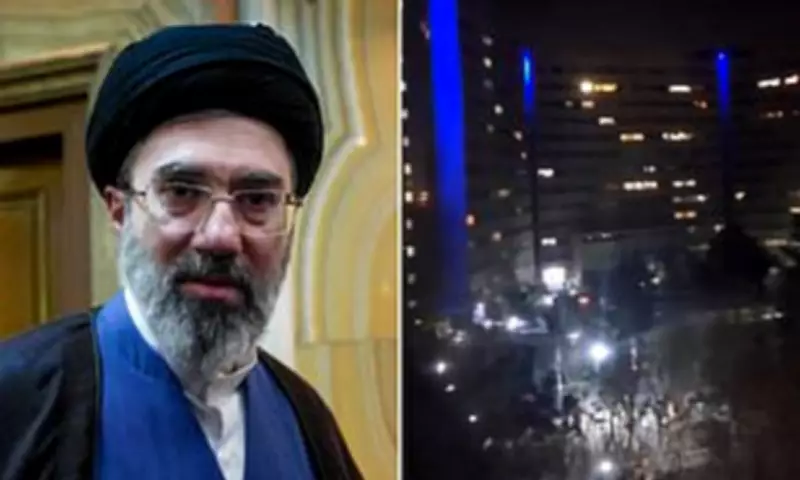
Iran has entered a new era of leadership with the confirmation of Mojtaba Khamenei as the country's Supreme Leader, a development met with both orchestrated regime support and widespread public dissent. The 56-year-old hardline cleric, viewed as even more extreme than his tyrannical father, was officially selected by an 88-person assembly on Sunday, immediately triggering a complex national response.
Public Outcry and Regime Orchestration
Across Iranian cities, a stark contrast emerged between regime-organized displays of loyalty and genuine public opposition. While thousands gathered in major squares and streets on Monday to pledge allegiance to the new leader, including a significant rally at Tehran's Enghelab Square where participants chanted 'Death to America, death to Israel' and 'God is greatest,' a different sentiment echoed from residential buildings.
From balconies and tower blocks, particularly in Tehran, opponents of the regime could be heard shouting 'Death to Mojtaba' – echoing chants used against his father during protests in January. Videos circulating show residents appearing to curse the new dictator from their homes, demonstrating that dissent persists despite brutal state repression.

Controversial Succession and Historical Parallels
The Ayatollah was reportedly opposed to his son's ascension to Supreme Leader because hereditary rule would resemble the US-backed Shah monarchy overthrown in the 1979 Iranian Revolution. This historical irony adds layers to the current political transition, with critics noting the regime's evolution toward dynastic leadership despite revolutionary origins.
Mojtaba's Brutal History and Current Threats
Long before assuming his father's mantle, Mojtaba Khamenei was deeply involved in the merciless crackdown of Iranian people during several major protests. His record includes:
- Alleged control of the Basij paramilitary group during 2009 mass protests
- Accusations of overseeing the slaughter of dozens protesting election results
- Significant involvement in the IRGC and its intelligence operations
- Sanctions by the US in 2019 for acting as Supreme Leader without election
The new leader has close links to the brutal Iranian Revolutionary Guard Corps and has been described as 'vengeful,' with analysts suggesting he may seek revenge on the US or ordinary Iranians following his father and wife's deaths at the beginning of the current conflict.
International Reactions and Security Implications
Israel has marked Mojtaba for assassination, vowing to 'eliminate' whoever succeeded the slain Ayatollah. Iranian state TV has already reported Mojtaba as 'janbaz' (wounded by the enemy) in what Iranian media calls the 'Ramadan war.'
The Israeli Foreign Ministry posted a picture of Mojtaba and his father with blood on their hands, captioned: 'The face may slightly change, the terror regime does not. Mojtaba Khamenei inherits his father's legacy of repression and bloodshed.'
Former US President Donald Trump commented that Mojtaba's appointment is 'going to lead to just more of the same,' reflecting international skepticism about meaningful change under the new leadership.
Continued Repression and Future Outlook
Dissent against the regime continues to be brutally clamped down, with thousands of citizens slaughtered by the state during anti-government protests in January. Mojtaba's historical involvement in suppressing protests suggests this pattern will continue, if not intensify.
His cultivation of deep relationships with military and paramilitary forces, along with decision-making roles in intelligence, positions him to maintain and potentially expand the regime's repressive apparatus. As Iran navigates this leadership transition amid ongoing conflict and domestic unrest, the world watches to see how Mojtaba Khamenei will wield the considerable power he has inherited.