In a stark reversal of its decades-long family planning stance, China has announced it will begin taxing contraceptives for the first time since 1993. The move is a direct attempt to encourage more births as the country grapples with a severe and sustained population decline.
End of an Era: From One-Child Subsidies to a 'Condom Tax'
Starting in January, contraceptive medicines and devices, including condoms, will be subject to a 13% value-added tax (VAT). This ends a three-decade-long exemption that was a cornerstone of the infamous one-child policy era, when Beijing heavily subsidised and promoted birth control.
The tax change is included in the revised Value-Added Tax Law, reported by Bloomberg. It marks a dramatic pivot from a government that once fined couples for having too many children to one now offering financial incentives to start families. Simultaneously, the updated legislation removes VAT on services including childcare providers like nurseries and kindergartens, elder-care institutions, and marriage-related businesses.

A Nation in Demographic Crisis
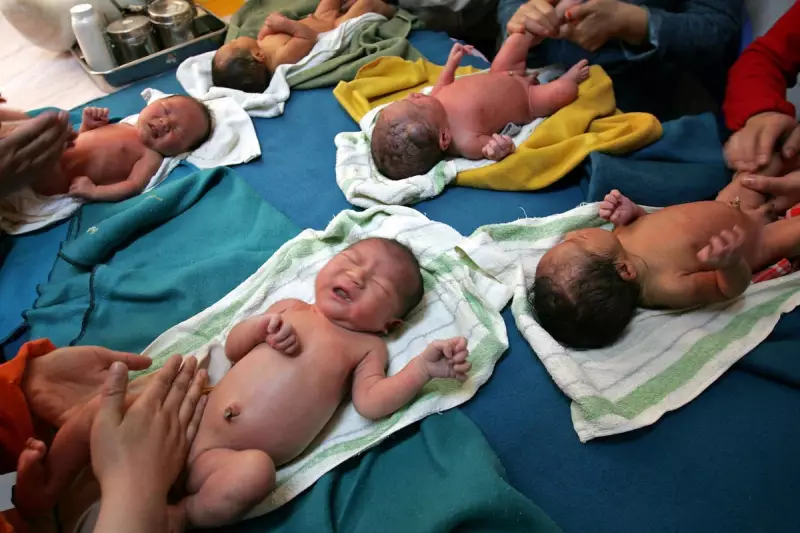
The policy shift comes against a backdrop of alarming demographic data. China's population has shrunk for three consecutive years. In 2024, only 9.54 million babies were born, a figure that is starkly lower than the 18.8 million births recorded in 2016, the first year after the one-child policy was abandoned.
Authorities have rolled out a catalogue of pro-natalist measures in response. Local governments are offering cash rewards for newborns, parental leave has been expanded, and guidelines now discourage abortions deemed not "medically necessary." A report from China's ministry of education highlights the tangible impact of the declining birthrate: in 2023, 14,808 kindergartens closed, a drop of over five per cent, while enrolment fell by 11.55 per cent, or 5.35 million children.
Economic Barriers and Public Backlash
Despite these efforts, profound economic and cultural barriers persist. A study by the YuWa Population Research Institute estimates the cost of raising a child to age 18 in China at over 538,000 yuan (approximately $76,000). Young adults facing uncertain job prospects in a slowing economy are increasingly reluctant to shoulder this financial burden, often prioritising self-growth and career security.
Experts suggest the new contraception tax is unlikely to produce a meaningful spike in childbirth. The move has also triggered heated online debate, with some linking it to a worrying rise in HIV infections attributed to unprotected sex. One Weibo commenter cautioned: "When considering the rising HIV infections among young people, raising prices like this might not be a good idea. It's a poorly considered approach."
The government's focus on promoting family life extends beyond taxation. In June of last year, China's Civil Affairs University announced a new undergraduate programme in marriage-related culture, aiming to cultivate professionals to develop associated industries.
Ultimately, the introduction of the so-called 'condom tax' symbolises the depth of China's demographic challenge. It underscores a government attempting to use every policy lever available—from financial penalties to cultural promotion—to reverse a trend that threatens its long-term economic and social stability.