Fragile US-Iran Ceasefire Hangs in Balance Amid Israeli Bombardment of Lebanon
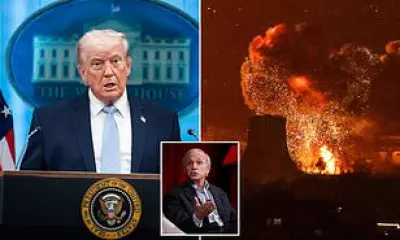
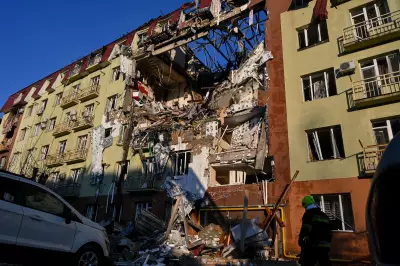
The precarious two-week truce between the United States and Iran was teetering on the brink of collapse on Thursday, as Tehran issued stark warnings of renewed hostilities following a devastating Israeli military assault on Lebanon. According to Lebanon's Civil Defence, the strikes have resulted in the deaths of at least 254 people, casting a dark shadow over the region's fragile peace.
Strait of Hormuz and Hezbollah Retaliation Threaten Escalation
The conditional reopening of the strategically vital Strait of Hormuz now faces extreme jeopardy. Iran has explicitly threatened to seal this critical maritime chokepoint if Israel persists with its offensive operations in Lebanon. This warning came shortly after Hezbollah, the Lebanese militant group, claimed responsibility for launching rocket attacks into northern Israel in the early hours of Thursday, citing alleged violations of the ceasefire agreement.
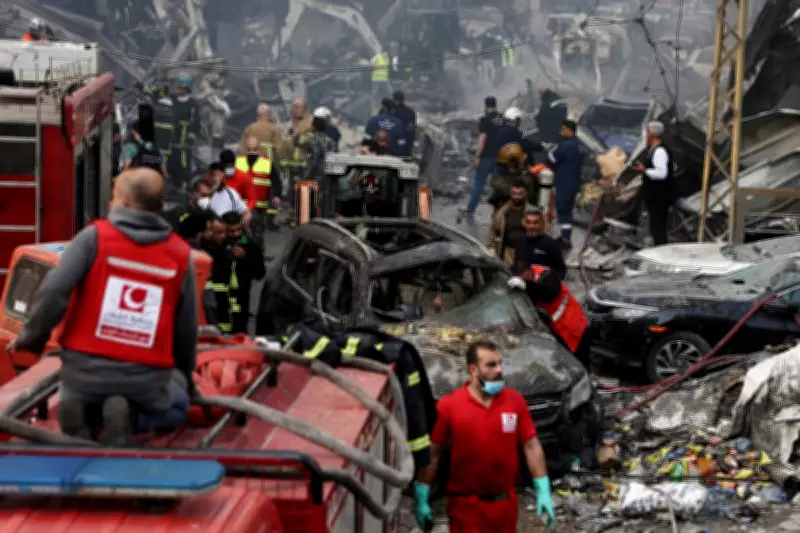
While both Washington and Tehran have publicly declared victory in securing the initial ceasefire, significant fractures emerged almost immediately. Israel executed its most intense bombardment of Lebanon since Hezbollah entered the conflict in early March, with strikes extending into central Beirut. The United Nations human rights chief, Volker Turk, condemned the "horrific" scale of the killing, highlighting that Israeli forces bombarded Beirut without prior warning, leading to widespread scenes of terror and panic among civilians.

The International Committee of the Red Cross expressed its outrage at the "devastating death and destruction" inflicted upon densely populated areas across Lebanon. In a firm response, Iran's Revolutionary Guards vowed to "fulfil our duty and deliver a response" should Israel fail to halt its strikes. Echoing this sentiment, Hezbollah asserted its "right" to retaliate against the attacks.
Political Rhetoric and High-Stakes Diplomacy
Israeli Prime Minister Benjamin Netanyahu stated that the nation remains prepared to confront Iran if necessary, emphasizing that Israel still has "objectives to complete." The Israeli military reiterated its ongoing goal of "disarming" Hezbollah within Lebanon. Concurrently, Pentagon chief Pete Hegseth affirmed that US forces remain on high alert, ready to intervene if the conflict reignites.
This belligerent exchange of rhetoric precedes crucial high-stakes talks scheduled for Friday in Pakistan, where the potential reopening of the Strait of Hormuz is expected to be a central topic of discussion. The diplomatic landscape is further complicated by several key developments:

- Iran announced alternative shipping routes through the Strait of Hormuz, citing risks from sea mines in the primary channel of this essential waterway. Official instructions for an alternative entry and exit passage were disseminated.
- The Trump administration clarified that Lebanon was not included in the US-Iran ceasefire agreement. White House press secretary Karoline Leavitt stated, "that has been relayed to all parties." US Vice-President JD Vance, speaking in Budapest, reinforced this position, noting the US never promised to include Lebanon and suggesting Iran may have labored under a "misunderstanding."
- Israel confirmed on Wednesday that it does not consider Lebanon covered by the truce between the US and Iran.
- Karoline Leavitt also addressed what she termed "misreporting," denying that President Trump is working from an original 10-point plan proposed by Tehran. She claimed Iran's publicly presented plan was "literally thrown in the garbage" by Trump, despite the former president stating on Truth Social that the US received a 10-point proposal from Iran believed to be a "workable basis for negotiation." Leavitt asserted Iran subsequently submitted a "more reasonable and entirely different and condensed plan to the president."
- International calls for inclusion have grown, with French President Emmanuel Macron urging both US and Iranian leaders, Donald Trump and Masoud Pezeshkian, to extend the ceasefire to encompass Lebanon. Australia's foreign minister has issued similar appeals.
Broader Geopolitical Tensions
Amidst this crisis, broader geopolitical strains are evident. Donald Trump reportedly expressed significant frustration with NATO during a private meeting with the alliance's secretary-general, Mark Rutte, as relations within the bloc reach a critical juncture. Rutte, speaking on CNN after a lengthy discussion at the White House, acknowledged, "He is clearly disappointed with many NATO allies, and I can see his point," describing the talks as "a very frank, very open discussion, but also a discussion between two good friends."
On the diplomatic front, UK Labour leader Sir Keir Starmer is continuing his Middle East tour. Following a meeting with Saudi Crown Prince Mohammed Bin Salman, Starmer is engaged in ongoing discussions with regional allies aimed at bolstering the "confidence" of commercial shipping to safely transit through the perilous Strait of Hormuz.