Avenue Q Revival: A Gen-X Time Capsule Struggles for Relevance in 2026
Think back to the turn of the century, when political correctness was often dismissed as having "gone mad," and comedy pushed boundaries to break new taboos. Gen Xers, raised on the ironic wit of shows like The Simpsons, embraced this era of transgression, which gave rise to hits such as Family Guy, South Park, and the stage musical Avenue Q. This production dared to imagine the puppets of Sesame Street as aimless, sexually active young adults, resonating with a cynical, pop-culture-savvy audience. In a surprising upset, Avenue Q even beat the box office giant Wicked for a major Tony Award, cementing its status as a snarky contrarian favourite. However, that was over two decades ago, and the world has evolved significantly since then.
A Dated Return to the Stage
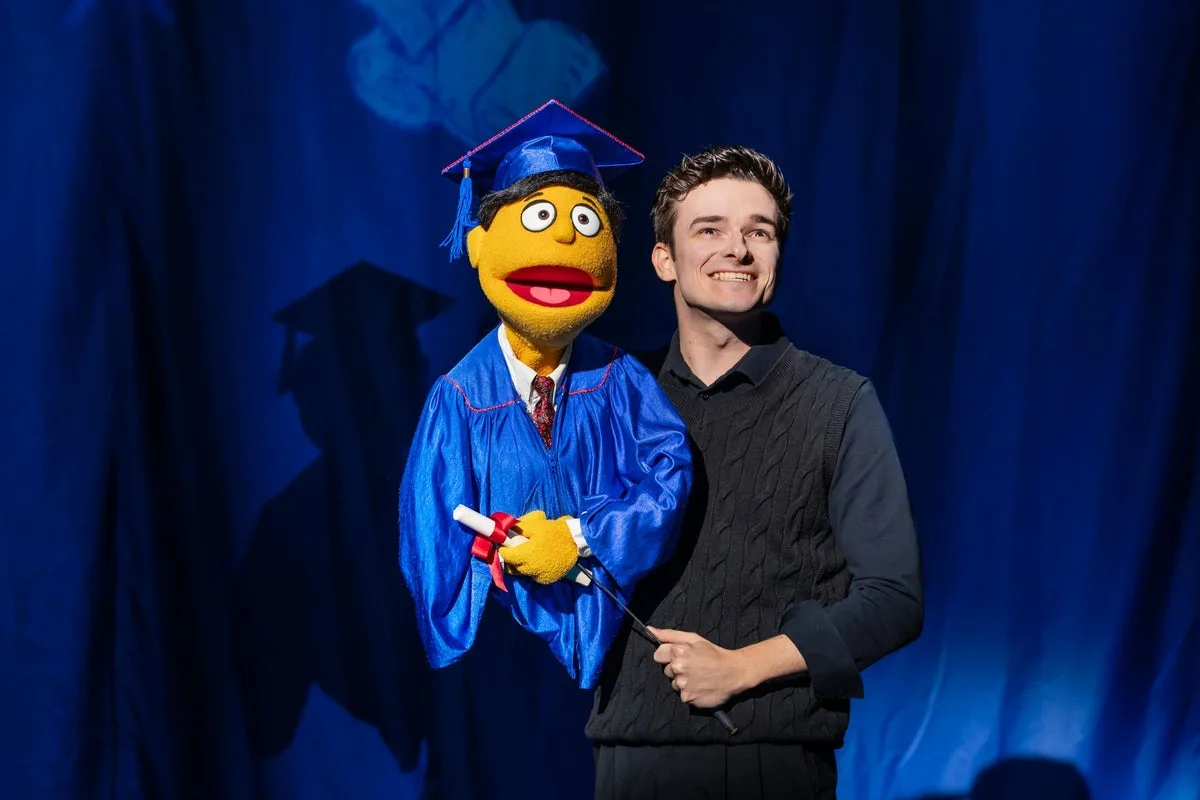
Now, after 23 years since its off-Broadway premiere and 16 years since its West End run ended, Avenue Q has been revived at London's Shaftesbury Theatre. Despite minor updates—such as references to streaming services, jokes about artificial intelligence, and a cheered mention of "TRUMP!"—the show remains largely unchanged. Its crass humour, problematic elements, and distinctively Bush-era sensibilities are preserved like theatrical amber, making it feel out of sync with contemporary society. The core narrative follows Princeton, a felt puppet and directionless college graduate played by Noah Harrison, as he moves to the affordable but shabby Avenue Q neighbourhood. There, he begins a relationship with the spirited Kate Monster, portrayed by Emily Benjamin, and encounters a cast of quirky neighbours.
These include Rod and Nicky, puppets reminiscent of Bert and Ernie but with Rod as a closeted homosexual republican and Nicky as a lusted-after straight slob, both also played by Harrison and Charlie McCullagh. Human characters add to the mix, such as the dismal comedian Brian, played by Oliver Jacobson, and his partner Christmas Eve, a self-possessed Japanese woman with an exaggerated accent, portrayed by Amelia Kinu Muus. Perhaps the most telling example of the show's dated nature is the character Gary Coleman, based on the real-life former child star from Diff'rent Strokes, now a building superintendent fallen on hard times, played by Dionne Ward-Anderson. This spoof, once a wry cultural reference, now lacks relevance, as Coleman has been deceased for 16 years, and few under 30 recognise the source material, highlighting how out-of-time the revival feels.
Problematic Themes and Aging Humour
The issues with Avenue Q extend beyond outdated references to its overall ethos. Songs like "Everyone's a Little Bit Racist," which uses equal-opportunity bigotry to address white guilt, now seem mired in an understanding of racism that society has largely moved beyond. Efforts to soften offensive elements, such as updating Christmas Eve's attire to a fashionable hipster style instead of a kimono, or toning down the character Lucy the Slut, fail to mask the obnoxious and old-fashioned nature of the show's attempts at provocation. There is a pervasive sense of shock at the dialogue, but it's a shock that has dulled over decades, making the humour feel stale and out of touch.
Strengths in Performance and Production
Despite these criticisms, the revival boasts several commendable aspects. The performances are strong, with actors skillfully juggling singing, puppetry, and character-switching. The songs remain bright and catchy, if somewhat superficial, with highlights like "Fantasies Come True," a balladic showstopper in Act One that features a magical bubble effect captivating the audience. The sets are visually impressive, and the puppets, designed by former Sesame Street puppeteer Rick Lyon, continue to be a marvel of craftsmanship. Director Jason Moore returns to helm the production, ensuring it runs as a confident and well-oiled machine, showcasing the slickness that has characterised previous iterations.
Questioning the Revival's Purpose
Yet, this slickness alone cannot justify the revival of Avenue Q in 2026. The fundamental question remains: why bring this show back now? It resembles an old Nineties TV show hastily upscaled to high definition, where enhanced scrutiny reveals wrinkles and rebarbative crevices previously overlooked. While it serves as a time capsule of Gen-X humour and early 2000s sensibilities, it may be better left buried, as its relevance has faded with the changing cultural landscape. Avenue Q is scheduled to run at the Shaftesbury Theatre until 29 August, but its impact feels more nostalgic than groundbreaking in today's context.






