US and Congo Seal Major $1.2 Billion Health Agreement
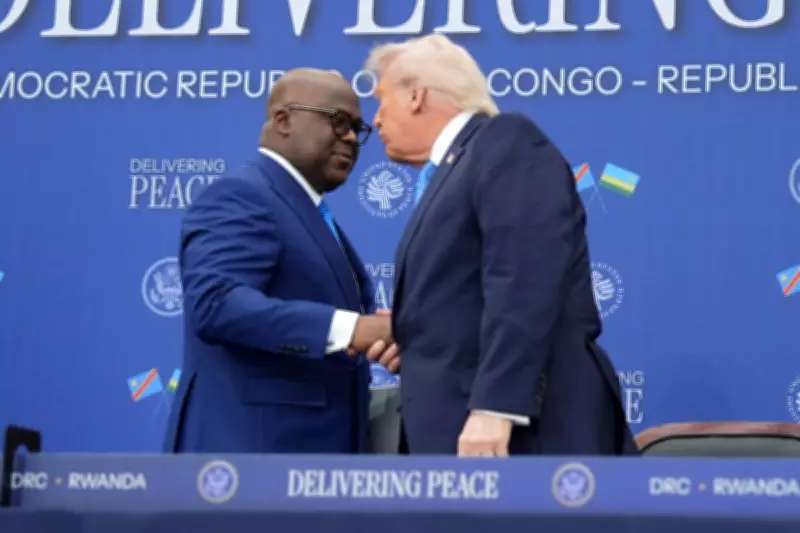
The United States and the Democratic Republic of Congo have officially signed a substantial $1.2 billion health partnership, as confirmed by a joint statement from both governments on Thursday. This landmark deal represents a significant shift in how American global health assistance is structured, moving towards bilateral agreements that emphasize mutual commitments.
Financial Structure and Health Priorities
Under the terms of the agreement, the US Department of State will provide up to $900 million in funding over the next five years. This financial support is specifically earmarked to help Congo combat a range of critical health challenges, including HIV/AIDS, tuberculosis, malaria, maternal and child mortality, and various other infectious diseases that have long burdened the Central African nation.
In a reciprocal arrangement, Congo's government has committed to increasing its own domestic health expenditures by $300 million over the same five-year period. This condition represents a core principle of the Trump administration's "America First" approach to international health funding, which aims to foster greater self-sufficiency among recipient nations while reducing what US officials describe as ideological priorities and wasteful spending in traditional aid programs.

Context of US Aid Cuts and African Partnerships
This Congo agreement is the latest in a series of bilateral health partnerships the United States has established with African nations, now totaling nineteen such agreements as of Thursday. Many of these countries, including Congo, have experienced significant reductions in US aid under the current administration, cuts that have severely strained health systems across the developing world.
African nations have historically relied heavily on American funding for essential health programs, including outbreak response initiatives. The new partnership model replaces the previous patchwork of health agreements administered through the now-dismantled United States Agency for International Development (USAID), reflecting a more transactional approach to foreign relations that aligns with President Donald Trump's broader diplomatic strategy.
Data Sharing Concerns and Regional Implications
The announcement of the US-Congo health partnership coincided with raised concerns from the Africa Centers for Disease Control and Prevention regarding data sharing provisions in some American agreements. Africa CDC director-general Dr. Jean Kaseya expressed "huge concerns regarding data, regarding pathogen sharing" with reporters, noting that certain agreements require countries to share information on viruses that could trigger outbreaks within their borders as a condition for receiving funding.
This issue has already derailed negotiations between the United States and Zimbabwe, whose health funding talks collapsed on Wednesday after the African nation rejected requirements to share sensitive health data. While it remains unclear whether similar data sharing stipulations are included in the Congo agreement, the timing of these developments highlights growing tensions between American funding conditions and African sovereignty concerns.
Analysts observe that this new approach to global health assistance reflects the Trump administration's pattern of dealing with other nations through direct, transactional negotiations designed to advance specific policy agendas abroad. The Congo partnership, while providing substantial resources for pressing health needs, thus emerges within a complex landscape of changing aid dynamics, regional health security concerns, and diplomatic recalibration between the United States and African partners.