Unyielding Spirit in Ukraine's Ghost Towns
Even in Ukraine's most devastated ghost towns, there remain people who steadfastly refuse to abandon their homes. A mother meticulously navigating blackout schedules, an opera performance sung in half-light to conserve electricity, and an abandoned underground bunker school kept immaculately clean for children who are no longer there—these are the enduring images of resilience four years after Russia's full-scale invasion began.
Humanitarian Mission on the Ground
India Hicks, who serves on the executive board of the Global Empowerment Mission (GEM), has returned from her ninth trip to Ukraine since the war started. GEM arrived just three days after the invasion in February 2022, with Hicks following three weeks later. The charity focuses on rapid disaster response and crisis relief through three phases: immediate response with food, water, hygiene kits, and medical supplies; short-term relief with essential goods and temporary shelter; and long-term recovery through rebuilding homes and restoring infrastructure.
Four years into the conflict, GEM remains deeply embedded across Ukraine. Their innovative Farm to Frontline programme moves food directly from local farms to the hardest-hit communities, eliminating delays and ensuring efficient delivery. In January alone, Russia carried out hundreds of long-distance aerial attacks specifically targeting Ukraine's energy infrastructure, resulting in the loss of more than half of the country's energy-producing capacity.

Daily Struggles and Survival
Emergency power cuts now affect 80 percent of Ukraine, occurring during a winter where temperatures have plummeted below -15°C. Residents can depend on electricity for only a few unpredictable hours each day. "You do not know when the electricity is coming," explained Olga, a Kyiv resident. "If the power returns in the middle of the night, you get up to do the washing." In sub-zero darkness, she sleeps in three coats, while mothers lie awake counting each breath, terrified they cannot keep their babies warm until morning.
Across the capital, heated stations have become vital sanctuaries, offering warmth, tea, and the chance to charge battery packs or even conduct meetings. In a city learning to function in cold and darkness, these spaces provide crucial respite. GEM's critical window programme helps Ukrainians repair and secure damaged homes by replacing windows shattered by nearby missile strikes, enabling families to remain in their residences despite daily threats.
Frontline Realities and Abandoned Spaces
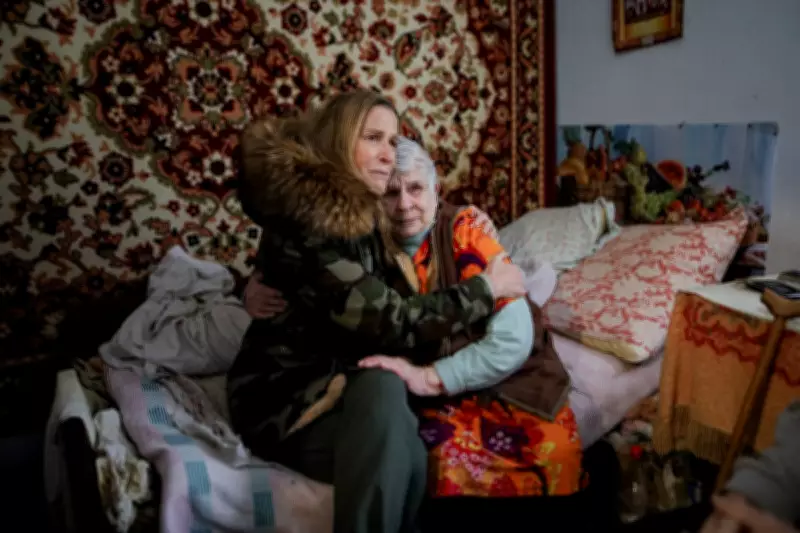
GEM teams distribute family necessity kits filled with food, water, hygiene products, and basic supplies along nearly 600 miles of the frontline. Their trucks travel into hard-to-reach areas where residents might otherwise go months without support. During her latest trip, Hicks met a grandmother living in a small house still vulnerable to daily missile threats who broke down in tears when hugged, describing GEM as her lifeline.
From Kyiv, the journey to Zaporizhzhia passes newly carved trenches slicing through frozen earth and rows of concrete anti-tank teeth waiting for armour that may come. The Russians have pushed forward so significantly that a brand new underground bunker school, built to allow children to return to safe in-person lessons beneath missile threats, now stands completely abandoned. Fluorescent lights still hum over lined-up desks in a facility emptied by the very danger it was meant to defy.
Cultural Resistance and Psychological Toll
Olga and Hicks attended an opera performance in Kyiv, an act that might seem bizarre in wartime but represents the determination to maintain normalcy. The Opera House was only half-lit to conserve electricity, with a cast noticeably older than usual because so many younger men are fighting on the front lines. Still, the audience dressed carefully—lipstick applied, coats brushed, heels clicking softly against stone. "To Olga and her friends, it has become hugely important to keep up appearances even under these circumstances," noted Hicks.

Young graduates describe feeling suspended—educated, ambitious, and thoughtful, yet with lives feeling paused. "How do you plan a wedding or imagine children when the horizon itself feels unstable?" asked one resident. A man who lived under Russian occupation for 142 days after helping neighbours escape described looking into a Russian soldier's eyes and seeing "a pigdog looking back." His friend, who also tried to assist others, was captured and tortured with bleach poured over his hands and metal picks forced beneath his fingernails.
Technological Warfare and Humanitarian Crisis
Military developments have accelerated the role of drones on the battlefield. Some are small first-person-view devices adapted from commercial models for reconnaissance or precision strikes. Others are loitering munitions that hover and wait for targets before diving. There are even drones nicknamed "waiters" that land and sit silently to conserve battery life, activating only when vehicles approach—creating a battlefield of trenches and microchips, mud and algorithms.
At an internally displaced persons (IDP) centre, children forced from their homes lined up politely beside a stark display of shell casings, rocket fragments, and disabled artillery parts gathered nearby. For them, these have become almost ordinary objects—a museum of survival representing their daily reality. Each passing year deepens the humanitarian crisis, with anxiety, depression, and post-traumatic stress becoming daily companions for millions.
Enduring Faith and Unbroken Spirit
"God is everywhere in Ukraine," observed Hicks. "The people believe and the people pray. Churches and faith stand tall in this rubble of war, gold domes glint, and the answer to the question 'What can we bring you, what do you need?' is always, 'We need God to bring us peace.'" Even in the ghost towns, mainly elderly residents who could not or would not leave remain. In cities, there are hundreds; in the countryside, mere handfuls. Everyone is desperate, yet everyone remains grateful.
Some nights bring silence, but most bring sirens. Ukrainians in remote areas burn the pallets and boxes that delivered aid just to stay warm. Their spirit remains unbroken, with the defiant declaration: "We will never be Russian." As the world's attention shifts elsewhere and funding runs out for many organisations, GEM and similar groups continue their long-term commitment. What Hicks carries home is not only the devastation but the extraordinary endurance—the mother navigating blackout schedules, the opera sung in half-light, the volunteer loading trucks before dawn, and the child waiting patiently beside rocket remnants.