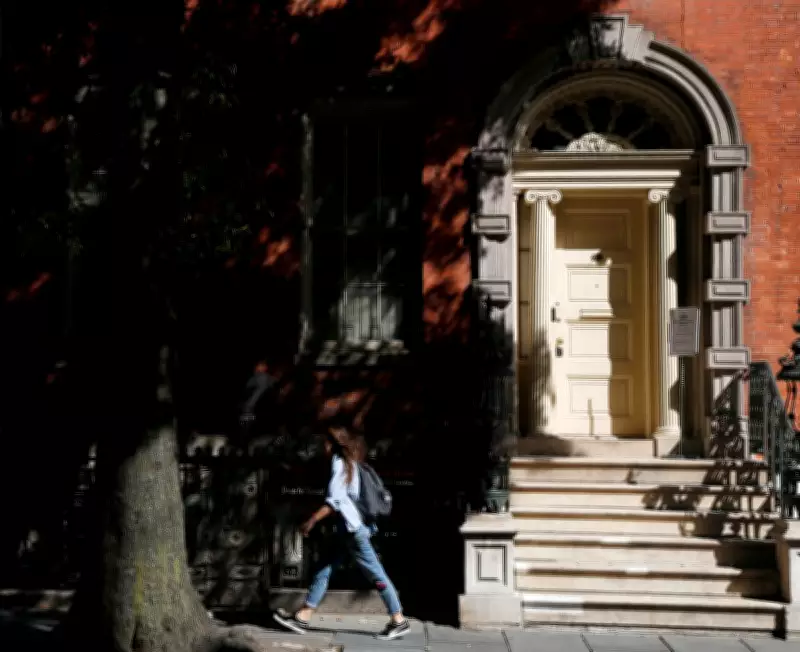
Underground Railroad Passage Uncovered at New York's Merchant's House Museum
A landmark house in Manhattan, preserved as a museum dedicated to New York's 19th-century history, has revealed a profound secret: its previously unknown role as a refuge for people escaping slavery before and during the Civil War. The Merchant's House Museum's connection to the Underground Railroad, a network of abolitionists who facilitated the safe passage of enslaved individuals to freedom, was uncovered during an archaeological investigation.
A Hidden Discovery Beneath the Floorboards
Archaeologists made the remarkable find while examining beneath the drawers of a built-in dresser in a hallway leading to bedrooms on the building's second floor. They discovered a small rectangular opening cut into the floorboards, leading to an enclosed space measuring approximately 2 feet by 2 feet, with a ladder descending to the ground floor. Experts, speaking to NY1 which first reported the discovery, stated that this configuration strongly suggests the house, located in Manhattan's residential NoHo neighborhood north of Houston Street, was likely used as a 'safe house' for enslaved people who had fled bondage in the southern states.
The space and ladder would have provided an emergency hideout and a quick escape route. In the years leading up to the Civil War, gangs of slave hunters, often assisted by sympathetic local residents and law enforcement, actively pursued bounties for capturing fugitives under the authority of the Fugitive Slave Act of 1850.

Historical Significance and Expert Reactions
Camille Czerkowicz, the museum's curator, expressed astonishment at the find, noting, 'We knew it was here, but didn't really know what we were looking at.' Michael Hiller, a preservation attorney and professor at Pratt Institute, hailed it as the most significant discovery in his over 30-year career, calling it a 'generational find' and emphasizing the critical importance of its preservation.
The Merchant's House was originally constructed in 1832 by tradesman Joseph Brewster and sold three years later to the Tredwell family, who resided there for a century before it became a museum following an auction sale. Architectural historian Patrick Ciccone believes the hidden space was installed by Brewster, whom he describes as almost certainly an abolitionist. Ciccone highlighted the rarity of such convictions among wealthy white New Yorkers at the time, stating, 'Being an abolitionist was incredibly rare among white New Yorkers, especially wealthy white New Yorkers. [Brewster] was the builder of the house, and he was able to make these choices and design it.' The extent to which the Tredwells were aware of or utilized the space remains unclear.
Preservation Challenges and Modern Relevance
The building has a storied history of preservation, being recognized as a National Historic Landmark in 1966, just a year after it became the first building designated under Manhattan's Landmarks Preservation law. It was further listed on the National Register of Historic Places in 1977. However, in recent years, the museum has faced financial difficulties and threats to its survival, including from city-approved development plans for an eight-storey building on an adjacent vacant lot.
New York councilman Christopher Marte underscored the building's importance, telling NY1, 'Many New Yorkers forget that we were part of the abolitionist movement, but this is physical evidence of what happened in the South [during] the Civil War, and what's happening today.' This discovery not only enriches our understanding of New York's role in the fight against slavery but also highlights the ongoing need to protect such historic sites for future generations.