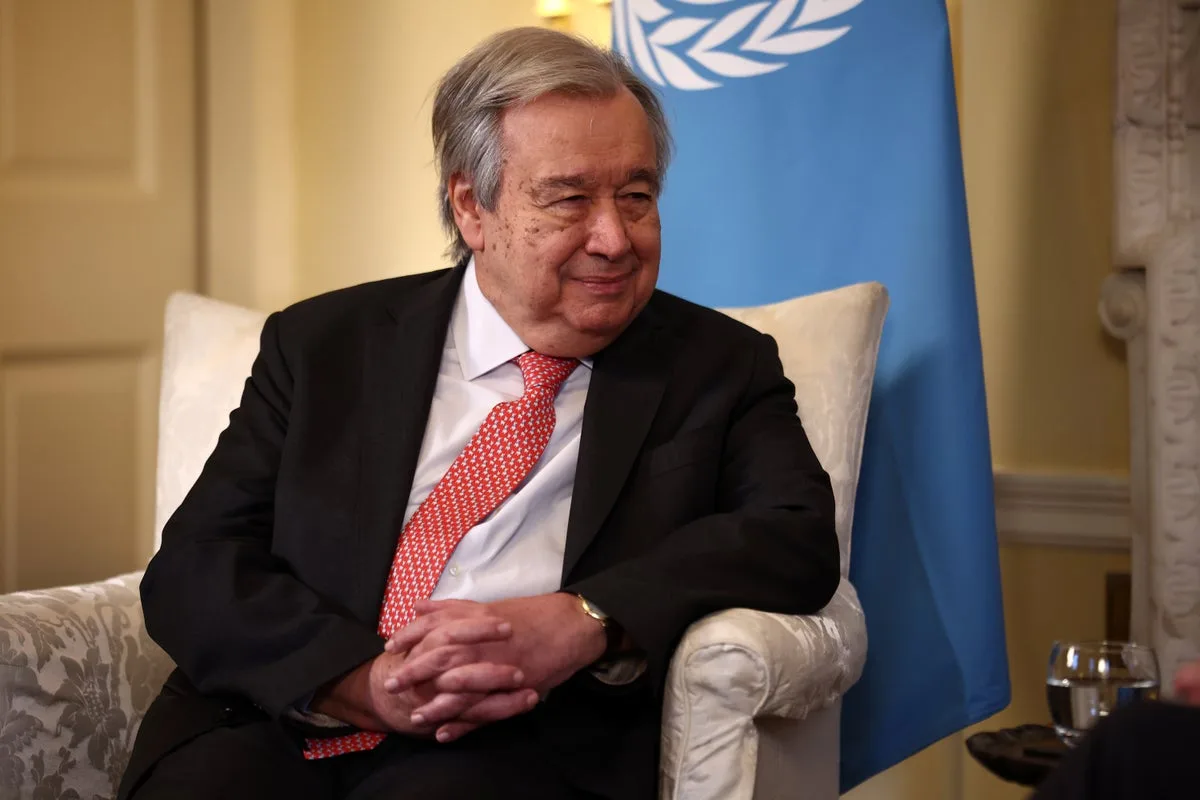
The Secretary-General of the United Nations has issued a stark warning that the global organisation is on the brink of a severe financial crisis. Antonio Guterres has declared that the UN faces "imminent financial collapse" unless immediate and decisive action is taken by its 193 member states.
Dire Financial Strains and a Critical Deadline
In a confidential letter circulated to all member nations and obtained by news agencies, Guterres revealed that cash reserves for the UN's regular operating budget could be completely exhausted as early as July 2026. This depletion would dramatically impair the organisation's global operations and its ability to fulfil its mandated duties.
The Secretary-General presented member states with a binary choice to avert disaster. "Either all member states honour their obligations to pay in full and on time — or member states must fundamentally overhaul our financial rules to prevent an imminent financial collapse," he stated unequivocally.
Mounting Debts and the US Liability
While the letter did not single out any specific country, the financial crisis is acutely tied to outstanding contributions from traditionally the largest donor. According to a senior UN official speaking anonymously, the United States currently owes a staggering $2.196 billion in arrears for the regular budget.
This figure is set to increase, with the US also due to pay a further $767 million for the current year's assessment. Furthermore, the nation owes an additional $1.8 billion for the separate budget funding UN peacekeeping operations across the globe.
A Record Shortfall and Systemic Issues
The scale of the problem has escalated rapidly. Guterres reported that the UN concluded the 2025 financial year with a record $1.568 billion in unpaid dues, more than double the outstanding amount from the end of 2024. The official noted that the previous US administration made no dues payments throughout last year.
This massive shortfall has nearly exhausted the organisation's liquidity reserves. Guterres warned that without a drastic improvement in payments, the UN will be unable to implement the $3.45 billion regular budget for 2026, which was approved unanimously by the General Assembly in December.
A Flawed Financial Rule Exacerbating the Crisis
The Secretary-General highlighted a critical systemic flaw compounding the liquidity crisis. Under current UN financial regulations, the organisation is legally obligated to refund unspent money from its regular budget back to member states—even if it never actually received those funds in the first place.
"I cannot overstate the urgency of the situation we now face," Guterres emphasised. "We cannot execute budgets with uncollected funds, nor return funds we never received." He urgently appealed for member nations to amend this requirement immediately to prevent further financial haemorrhaging.
Other Delinquent States and Consequences
The United States is not alone in its delinquency. The second-largest debtor is Venezuela, which owes $38 million. The South American nation, whose economy was already under severe strain prior to recent political upheaval, has already lost its voting rights in the General Assembly due to being more than two years in arrears.
The US mission to the United Nations did not provide an immediate comment when approached regarding the outstanding billions. The looming financial precipice underscores a profound challenge to multilateralism and the operational viability of the world's foremost international body.