Sudan's War Puts Charity Kitchen Workers at Grave Risk While Feeding Displaced
In Sudan, after nearly three years of devastating conflict, community-led charity kitchens have become a critical lifeline for displaced families. However, these essential operations and their volunteers are increasingly targeted, with workers facing abduction, robbery, brutal beatings, and even execution.
Personal Tragedies Amid Widespread Violence
Enas Arbab fled Sudan's western Darfur region after her hometown fell to paramilitary forces. She escaped with only her infant son and the traumatic memory of her father, Mohamed Arbab, who was killed simply for working at a charity kitchen serving those displaced by fighting. The Rapid Support Forces (RSF), a paramilitary group at war with the Sudanese army since April 2023, besieged el-Fasher in Darfur, starving residents before overrunning the city. United Nations officials report several thousand civilians were killed during the RSF takeover of el-Fasher last October, with only 40% of the city's 260,000 residents managing to flee the onslaught.
During the fighting, RSF fighters seized Mohamed Arbab from his home after beating him in front of his family and demanded a ransom. When the family could not pay, they were informed he had been executed. His body has never been recovered. A month later, when Enas Arbab's husband disappeared, she decided to flee north to Egypt, stating, "We couldn't stay in el-Fasher. It was no longer safe and there was no food or water."

Systematic Targeting of Humanitarian Workers
Enas Arbab's father is among more than 100 charity kitchen workers documented as killed since the war began, according to workers who spoke with The Associated Press and data from the Aid Workers Security database. In areas of intense combat, particularly in Darfur, famine is spreading while food and basic supplies become increasingly scarce. These community-led public kitchens have become indispensable, yet many volunteers have been abducted, robbed, arrested, beaten, or murdered.
Volunteer Salah Semsaya with the Emergency Response Rooms—a local initiative now operating in 13 provinces across Sudan with 26,000 volunteers—acknowledges the extreme dangers faced by kitchen workers. He believes the actual number of workers killed is likely far higher than the estimated 100, as the war has disrupted reliable data collection and record-keeping.
Semsaya shared records indicating that 57% of documented killings of charity kitchen workers occurred in Khartoum, primarily while the Sudanese capital was under RSF control before the army retook it last March. At least 21% of killings were in Darfur, with more than 50 of those killed in Khartoum affiliated with his organization.
Unclear Motivations Behind the Attacks
Sudan's war erupted after tensions between the army and the RSF escalated into nationwide fighting, killing thousands and triggering mass displacement, disease outbreaks, and severe food insecurity. Aid workers have been frequently targeted throughout the conflict.
Dan Teng'o, communications chief at the U.N. office for humanitarian affairs, notes it remains unclear whether charity kitchen workers are targeted specifically for their humanitarian work or due to perceived affiliations with warring factions. Activists explain that kitchen workers become prominent in their communities through their essential work, making them obvious targets. Ransom demands typically range from $2,000 to $5,000, often increasing after families make initial payments.
"A clear deterioration in the security context has significantly affected local communities, including volunteers supporting community kitchens," Teng'o stated.

Survivors' Harrowing Accounts
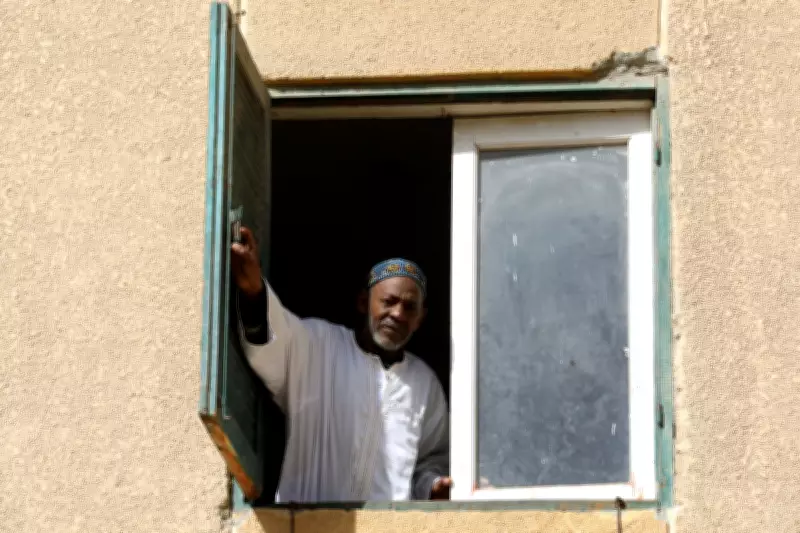
Farouk Abkar, a 60-year-old from el-Fasher, spent a year distributing sacks of grain at a charity kitchen in Zamzam camp, just 15 kilometers south of the city. He survived drone strikes and recalls when RSF fighters attacked his kitchen, with one punching him in the face and knocking out several teeth. Abkar fled el-Fasher at night with his daughter, walking for ten days. During the journey, RSF fighters fired birdshot that struck him in the head, causing chronic headaches. Now in Egypt, he shares an apartment with at least ten other Sudanese refugees and cannot afford medical care. The traumatic images from his hometown continue to haunt him. "Many things happened in el-Fasher," he said. "There was death. There was starvation."
Mustafa Khater, a 28-year-old charity kitchen worker, escaped with his pregnant wife to Egypt just days before el-Fasher fell to the RSF. During the 18-month siege, some residents collaborated with paramilitary forces, identifying kitchen workers. Many subsequently disappeared. "They would take you to an area where there is a dry riverbed and kill you there," Khater reported.
A volunteer working with Semsaya's aid group in Darfur, speaking anonymously for fear of reprisals, said colleagues were beaten, arrested, and interrogated, with attackers accusing them of receiving "illicit funds" for kitchen operations.
Persistent Efforts Amid Overwhelming Challenges
Despite these dangers, many charity kitchens remain the only reliable food source in conflict-ravaged areas and serve as community support hubs, according to Semsaya.
In East Darfur province, the town of Khazan Jedid has three charity kitchens feeding approximately 5,000 people daily, said Haroun Abdelrahman, spokesperson for the local Emergency Response Rooms branch. Abdelrahman has been interrogated by RSF fighters, while several colleagues have been robbed at knifepoint. Despite fear and harassment, many kitchen workers continue volunteering.
In Kassala in eastern Sudan, military agents questioned a volunteer and his colleagues in January 2024 after their kitchen began serving food and providing shelter to people who escaped nearby Wad Madani when RSF forces seized that town. This volunteer also spoke anonymously due to safety concerns.
Mustafa Khater reported hearing from friends that after the RSF takeover of el-Fasher, all charity kitchens in the city closed, with colleagues either "killed or fled."
Teng'o emphasized that closures in combat zones leave "vulnerable households with no viable alternatives," forcing people to rely on local markets where food prices are unaffordable.
Continued Suffering Beyond Sudan's Borders
Enas Arbab, the pregnant 19-year-old who fled with her baby boy, had hoped to rebuild her life in Egypt, according to friends and a humanitarian worker speaking anonymously about the young mother. However, while traveling to Alexandria last month, she and her son were stopped by Egyptian authorities and deported back to Sudan, returning them to the very dangers they sought to escape.