St. Francis of Assisi's Bones Displayed Publicly for First Time
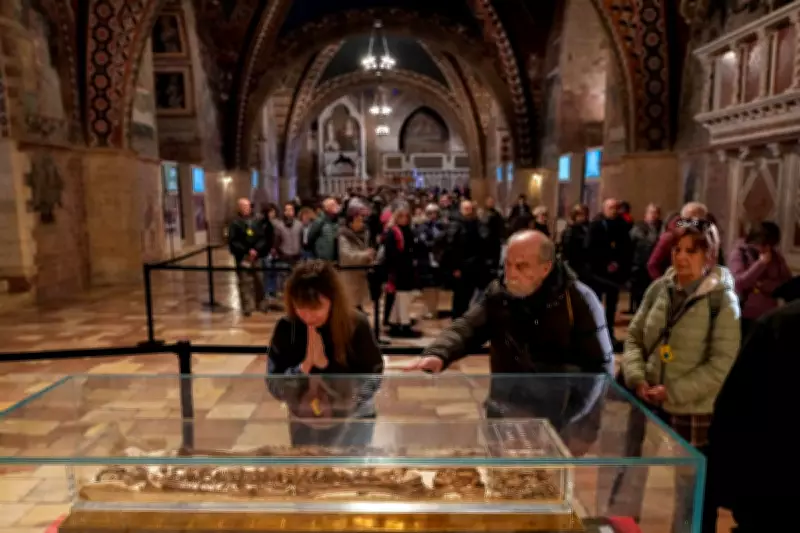
The bones of St. Francis of Assisi have gone on public display for the first time, marking a historic moment that underscores the lasting appeal of relics for Christians worldwide. This exhibition, which began on Sunday, 22 February 2026, concludes an 800-year saga surrounding the saint's bodily remains and reaffirms the deep-rooted tradition of venerating saintly relics within the faith.
Massive Public Interest and Security Measures
Nearly 400,000 people registered in advance to view the bone fragments, which are housed in a slim, bulletproof Plexiglas case located in the lower Basilica of St. Francis in Assisi, the Umbrian hilltop town made famous by the medieval friar. Security was tight but discreet, with measures including metal detectors, extra police officers, sniffer dogs, plain-clothed police, and television cameras to protect the relics. This heightened security is particularly appropriate given the tumultuous history of St. Francis's body, which was once hidden for centuries to prevent theft.
Historical Context and Significance
The Franciscans organized this one-month exhibition, running through 22 March, to commemorate the 800th anniversary of St. Francis's death in 1226. The aim is to revive his message of peace, fraternity, and care for the poor and environment—values that made him one of the most beloved Christian saints and inspired Pope Francis to adopt his name. St. Francis, born in 1182 as the son of a wealthy merchant, renounced all possessions to live as a mendicant friar. At the end of his life, he was said to have acquired the stigmata, the first documented case of a saint bearing the marks of Christ on the cross.

After his death on 3 October 1226, his body was initially buried in the small Assisi church of San Giorgio. Fearing theft during the medieval era's rampant relic disputes, his trusted aide, Brother Elias, secretly moved and buried the body in the basilica, where it remained hidden and unmarked until its rediscovery in 1818. Pope Pius VII later confirmed the bones' authenticity, solidifying their significance.
Enduring Appeal and Modern Perspectives
Brother Giulio Cesareo, spokesman for the Franciscans in Assisi, emphasized that the exposition is not a macabre event but part of a long tradition of Christians venerating physical remains to connect with the saint's spirit. "It is not so much about venerating Francis, but rather encountering Francis by venerating the Holy Spirit who filled that humanity," he explained. This perspective resonates with many believers, such as Fiorella Farina, a devoted follower from Reggio Emilia, who described the display as a once-in-a-lifetime opportunity that gives her goosebumps.
Sean Pilcher, who runs Sacra: Relics of the Saints, noted that while the fascination with relics has led to abuses like thefts and forgeries, it continues to hold a powerful appeal for the faithful. "What the church does is just take this natural desire that we all have for connection and belonging and direct it in a way that leads us toward Christ," he said. Visitors, like Silvanella Tamos from Pordenone, echoed this sentiment, describing the relics as "a body that's alive" with ongoing relevance today.
Broader Implications and Future Outlook
The exhibition also includes a display in the adjacent Franciscan convent, recounting the history of St. Francis's body and the broader context of relic veneration. This event not only draws pilgrims from around the world but also highlights the economic and spiritual significance of relics in Christian history. As Brother William Short, a professor of Christian spirituality, pointed out, "If you have a big saint, a new saint—and this guy had the potential to be a really big saint—whoever gets the body gets the pilgrims." Assisi now benefits from this influx, with visitors scheduled in 10-minute increments to manage the crowds.
In a world often marked by conflict and environmental challenges, the display of St. Francis's bones serves as a poignant reminder of his enduring legacy. As Fiorella Farina noted, "In this historic moment, we need him." This public exhibition not only honors the past but also inspires a renewed commitment to the values of peace and fraternity that St. Francis championed centuries ago.