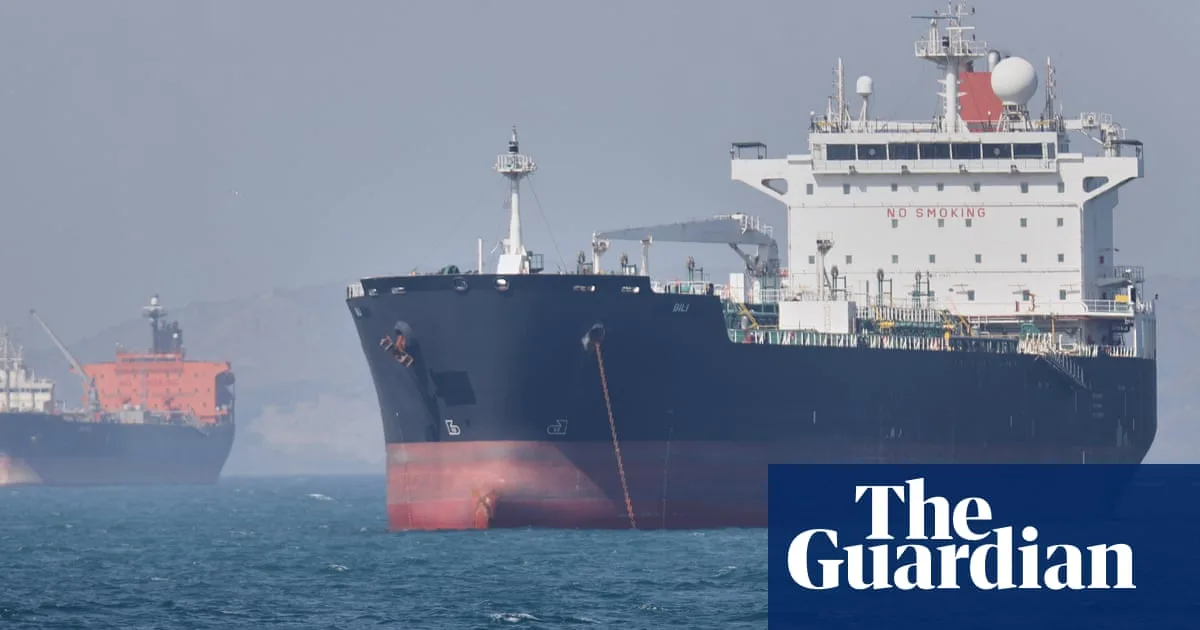
Shadow Fleets Continue Operations in Strait of Hormuz Despite Iranian Threats
While Iran has issued stark warnings to destroy any vessels, including crucial oil tankers, attempting passage through the Strait of Hormuz, a clandestine network of ships continues to navigate these perilous waters. This defiance occurs against a backdrop where conventional oil tanker traffic has plummeted by over 90% since the outbreak of conflict involving the United States, Israel, and Iran on February 28, 2026.
The Collapse of Conventional Shipping
The strategic Strait of Hormuz, a vital global oil shipping choke point, is effectively closed to mainstream maritime traffic. More than 400 tankers remain stranded in the Persian Gulf, as ship owners withhold permission for movement and insurers grapple with war zone coverage decisions. The International Maritime Organization has reinforced crews' rights to refuse sailing into the conflict area, creating a near-total standstill for compliant vessels.
The Shadow Fleet's Covert Operations
Operating outside international regulations, the so-called "shadow fleet" represents vessels that deliberately circumvent trade restrictions, environmental regulations, and monitoring protocols. These ships exploit fundamental weaknesses in maritime governance, where systems rely heavily on voluntary participation rather than enforced compliance.
Key characteristics of shadow fleet operations include:- Frequent transponder deactivation to disappear from tracking systems
- Registration under flags of convenience through shell companies
- Utilization of opaque or unknown insurance providers
- Ship-to-ship transfers of sanctioned cargo on open waters
- Rapid reregistration and identity changes when scrutinized
The Voluntary Nature of Maritime Governance
International shipping operates on a foundation of trust rather than enforcement. While the International Convention for the Safety of Life at Sea requires commercial vessels to carry active transponders, no physical mechanism prevents crews from disabling these devices or broadcasting false positions. When a ship "goes dark," it simply vanishes from global tracking networks without triggering centralized alarms.
National jurisdiction proves equally malleable, with vessel registration often representing commercial transactions rather than genuine regulatory relationships. Ships owned by shell companies in the United Arab Emirates might register under flags from Cameroon, Palau, Liberia, or even landlocked Mongolia, exploiting registries with limited inspection capabilities or incentives.
Insurance as a Fragile Enforcement Mechanism
Maritime insurance represents the closest approximation to enforcement within the current system. Mainstream insurers, predominantly based in London, mandate safety standards, proper documentation, and sanction compliance. However, this mechanism proves vulnerable when ship owners simply opt out entirely.
Approximately two-thirds of vessels carrying Russian oil reportedly utilize "unknown" insurance providers, creating uncertainty about liability for potential spills or collisions. This opacity allows shadow fleet operators to access less reputable ports and conduct offshore transfers, bypassing conventional restrictions that have immobilized compliant ships in the Persian Gulf.
Historical Precedents and Current Implications
The shadow fleet phenomenon didn't emerge from a broken system but rather from one built on voluntary participation that market forces traditionally maintained. For decades, compliance remained more economically viable than circumvention. However, international sanctions have dramatically altered this calculus, making compliance economically ruinous for some nations while creating powerful incentives for parallel systems.
Iran initiated such parallel operations in 2018 following reimposed nuclear-related sanctions, while Russia dramatically expanded shadow fleet activities after 2022 invasion-related restrictions. Maritime intelligence firm Windward estimates approximately 1,100 dark fleet vessels operate globally, representing 17-18% of all liquid cargo tankers, primarily transporting oil.
Surreal Examples of Regulatory Evasion
The voluntary system's limitations produce surreal outcomes, including the United States' December 2025 seizure of the sanctioned tanker Skipper, which flew Guyana's flag despite never being registered there. Another vessel, the Arcusat, took evasion further by altering its International Maritime Organization identification number—the maritime equivalent of removing a vehicle's VIN.
These techniques combine systematically: entities purchase aging tankers destined for scrapping, register them through shell companies, secure flags of convenience, obtain opaque insurance, and disable transponders in sensitive waters. They load sanctioned oil through ship-to-ship transfers and deliver to unquestioning buyers, ready to change identities and registrations if scrutiny arises.
The Broader Message of Maritime Noncompliance
With the Strait of Hormuz effectively closed to conventional trade, shadow fleet movements demonstrate that illegal oil represents the only oil moving during crises. This reality reveals the fundamental nature of maritime regulations as voluntary frameworks that participants can abandon when compliance becomes excessively costly or politically untenable.
The persistence of shadow fleets in conflict zones sends a clear message to compliant operators: opting out of the established system remains a viable, though risky, alternative when conventional channels fail. As international tensions persist, these parallel maritime networks will likely continue exploiting governance gaps that have existed since the system's inception.
Analysis based on reporting by Charles Edward Gehrke, Deputy Division Director of Wargame Design and Adjudication at the US Naval War College. The opinions expressed represent the author's views alone and do not necessarily reflect those of the Department of the Navy or U.S. Naval War College.