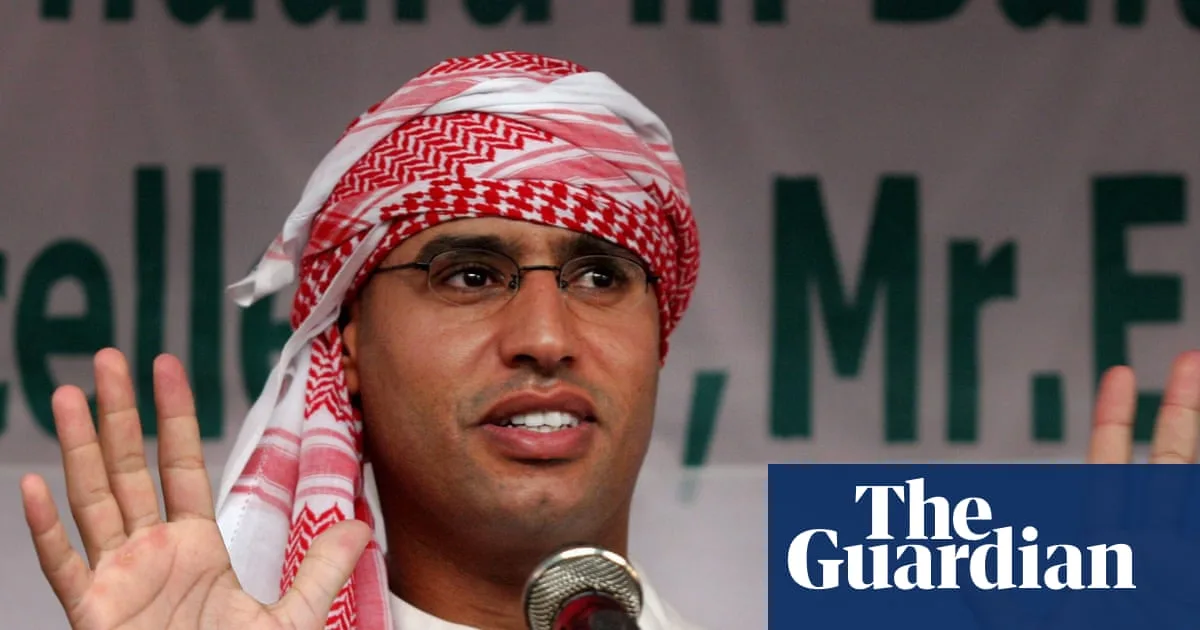
Saif al-Islam Gaddafi, the son of former Libyan dictator Muammar Gaddafi, has been shot dead by four masked assailants at his home in Zintan, western Libya. He was 53. For years considered the heir apparent to his father, Saif remained a potential political force in Libya's fractured landscape despite an international arrest warrant and a domestic conviction for war crimes.
Born in Tripoli, Saif was the eldest of seven children from Muammar Gaddafi's second marriage to Safia Farkash. He studied engineering and architecture at Al-Fateh University, earned an MBA in Vienna, and began a PhD at the London School of Economics. His time at the LSE proved controversial after a charity he founded pledged a £1.5m donation to the school, prompting the resignation of director Howard Davies when Saif's role in the 2011 civil war emerged.
Saif's career had three distinct phases. Initially, he presented himself as a reformist, engaging with Western leaders including Peter Mandelson and helping negotiate compensation for the Lockerbie bombing victims and Libya's abandonment of weapons of mass destruction. However, in February 2011 he shed his reformist stance and backed his father's violent crackdown on rebels, famously vowing to fight 'until the last man standing'. He was captured later that year while trying to flee Libya after his father's death.
Held initially as a prisoner in Zintan, Saif was convicted in absentia by a Libyan court in 2015 and faced a death sentence, later commuted. In 2021, backed by the Gaddafist Popular Front for the Liberation of Libya, he announced his candidacy for presidential elections that ultimately did not take place. In a rare interview with the New York Times, he described Libya's postwar leaders as having 'raped the country' and called the situation 'a fiasco', pledging a slow political comeback 'like a striptease'.
Saif's death also touches on the wider legacy of the Gaddafi era. He had been involved in French allegations that former President Nicolas Sarkozy received €50m from Libya to fund his 2007 election campaign, accusations that led to Sarkozy's corruption conviction in 2025. The assassins who killed Saif have not been identified, and his role in Libya's violent past remains a subject of deep division.