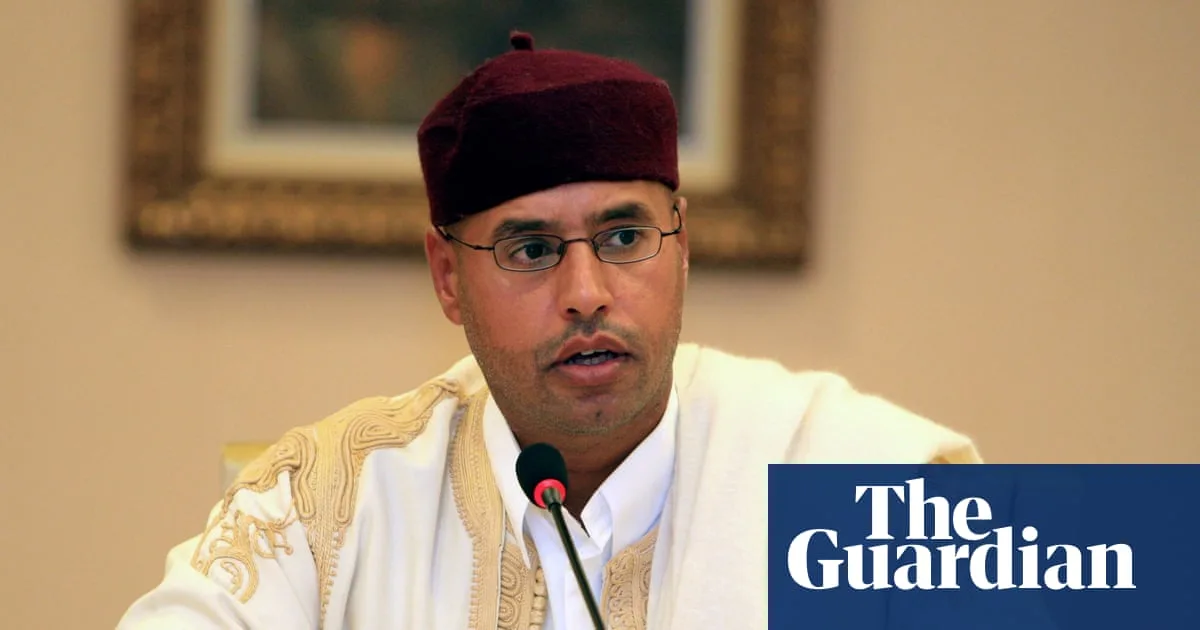
Saif al-Islam Gaddafi, the son of the late Libyan dictator Muammar Gaddafi and a pivotal symbolic figure in the nation's turbulent post-2011 political landscape, has been killed, according to official statements released on Tuesday night. The 53-year-old former heir apparent died from gunshot wounds in the town of Zintan, located approximately 85 miles south-west of the capital Tripoli, as confirmed by the Libyan attorney general's office.
Details of the Assassination
Gaddafi's own office provided a harrowing account of the incident, stating that four masked assailants stormed his residence, disabled security cameras, engaged in a violent clash with him, and ultimately executed him in what was described as a "cowardly and treacherous assassination". However, conflicting reports emerged when his sister claimed on Libyan television that he had perished near the Algerian border, adding a layer of mystery to the circumstances surrounding his death.
Investigation and Political Reactions
The Libyan chief prosecutor's office has launched an investigation into the killing, dispatching forensic experts to the village to gather evidence and identify suspects, though no further specifics have been disclosed. Khaled al-Mishri, the former head of the Tripoli-based High State Council, has called for an "urgent and transparent investigation" into the assassination, highlighting the potential for political unrest.
Analysts have warned that Gaddafi's death could inflame pro-Gaddafi factions across Libya, exacerbating the country's deep-seated divisions. Despite holding no formal political role in recent years, he remained one of the most significant symbolic figures in Libyan politics following the 2011 revolution that overthrew his father's regime.
From Reformer to Controversial Figure
Educated at the London School of Economics and once groomed as a pro-western reformer who might steer Libya towards constitutional change, Saif al-Islam Gaddafi's legacy is marked by stark contradictions. He initially led delegations aimed at dismantling Libya's weapons of mass destruction, presenting himself as a modernising force. However, when nationwide protests erupted against his father in 2011, he swiftly backed the violent crackdown, warning that "We fight here in Libya, we die here in Libya" in a Reuters interview.
The International Criminal Court issued a warrant for his arrest in 2011 for crimes against humanity related to the repression, a charge later echoed by a Tripoli court in 2015, which convicted him of war crimes. This conviction ultimately led to his disqualification from the 2021 presidential elections, which collapsed amid outrage from anti-Gaddafi militias and victims of his father's dictatorship.
Capture, Imprisonment, and Release
In 2011, after attempting to flee to Niger, Gaddafi was captured by a militia in the Sahara, where he was found disguised in flowing khaki robes to blend with nomads. He was then flown to Zintan on an old military transport plane, piloted by Abdullah al-Mehdi, who assured him of his safety despite the brutal fate suffered by his father. Gaddafi spent six years imprisoned in Zintan before being released in 2017 as part of an amnesty deal, only to re-emerge as a presidential candidate four years later.
Libya has remained fractured since Muammar Gaddafi's overthrow and death in 2011, with rival governments controlling different regions and ongoing militia conflicts. The assassination of Saif al-Islam Gaddafi adds another volatile chapter to this protracted instability, raising concerns about further escalation in a nation already consumed by division.