The UN at a Crossroads: Revitalisation vs. Irrelevance
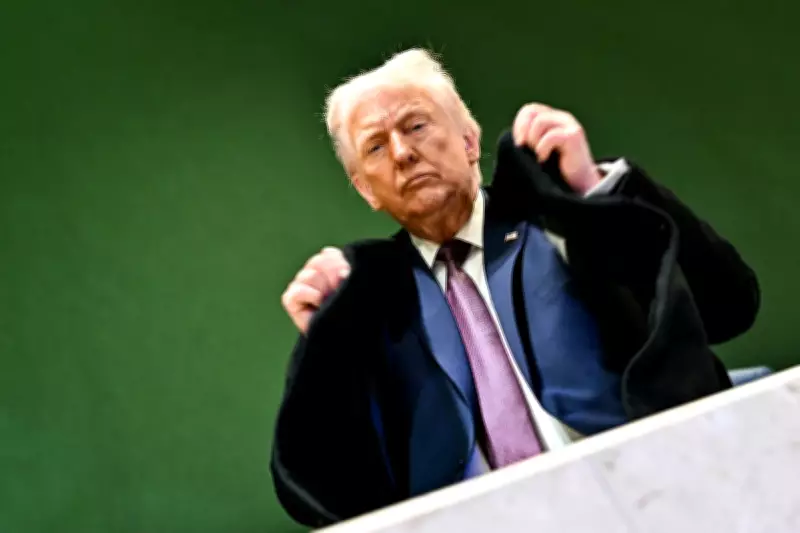
In the tumultuous opening weeks of 2026, global events have starkly highlighted the diminishing power of the United Nations. The abduction of Venezuela's president by the US and threats to annex Greenland have exposed a world where international law is increasingly ignored. Donald Trump has consistently criticised the UN's irrelevance, using it to justify establishing his Board of Peace—a private entity that bypasses and seeks to replace the UN, granting ultimate veto power to its Chair.
This moment echoes Vladimir Lenin's observation about decades happening in weeks, signalling an existential crisis for the post-World War II world order. Leaders like Canadian Prime Minister Mark Carney now openly acknowledge the weaknesses of this system and its potential collapse. Without action, we risk descending into a mercantilist era where might makes right, politics overrules norms, and the safety enjoyed for 80 years fades away.
The UN's Legacy and Failures
The United Nations Charter emerged from the ashes of World War II, envisioned by leaders who sought rules and an institution to prevent future conflicts. Historically, the UN has played a crucial role in preventing nuclear war, overseeing decolonisation, eradicating diseases, advancing human rights, and reducing poverty. It has contributed to significant declines in child and maternal mortality, often using aid from Member States.

However, the institution is far from perfect. As Dag Hammarskjöld noted, it was designed not to bring heaven but to protect from hell. In recent years, it has failed to shield populations in Gaza, Ukraine, Sudan, and elsewhere from suffering. On its current trajectory, the UN risks becoming a hollow shell, with bureaucrats debating meaningless resolutions devoid of power or purpose.
A Path to Renewal Through Charter Review
Thankfully, there is an alternative path. The UN's founders, including US President Harry Truman, recognised the need for evolution, embedding Article 109 in the Charter to allow for a review conference within ten years. Eighty years later, this promise remains unfulfilled, often dismissed as untimely. Yet, as the world order crumbles, we have a unique opportunity to remould the Charter for a new era.
Already endorsed by countries like Brazil and South Africa, along with smaller states feeling underserved, a review conference can be initiated by a two-thirds vote in the General Assembly and support from nine of the 15 Security Council members—bypassing veto power. This process could address critical dysfunctions:
- Abuse of the Veto: Envision a Security Council that prioritises peace over the national interests of permanent members (US, Russia, China, France, UK), with greater accountability to the General Assembly.
- Enforcement Powers: Imagine a UN capable of enforcing international law through universal jurisdiction or stronger binding resolutions from the General Assembly.
- Balancing Sovereignty and Interdependence: Foster collective solutions to global challenges through collaborations between governments, businesses, and civil society, moving beyond inter-governmental negotiations.
Overcoming Skepticism and Seizing the Moment
Some fear that reviewing the Charter during polarisation could worsen outcomes, but the status quo now appears more dangerous. Others doubt that an intergovernmental process can counter major powers acting unilaterally. While economic and military heavyweights may ignore rules, the rest of the world can build collective strength.
Kickstarting a review would empower states representing most of the world's population—many of whom were under colonial rule during the Charter's creation—to co-create a vision for the future. As Carney suggests, we can build something better, stronger, and more just from this fracture. The time for revitalising the UN is now, before it is sidelined into irrelevance.