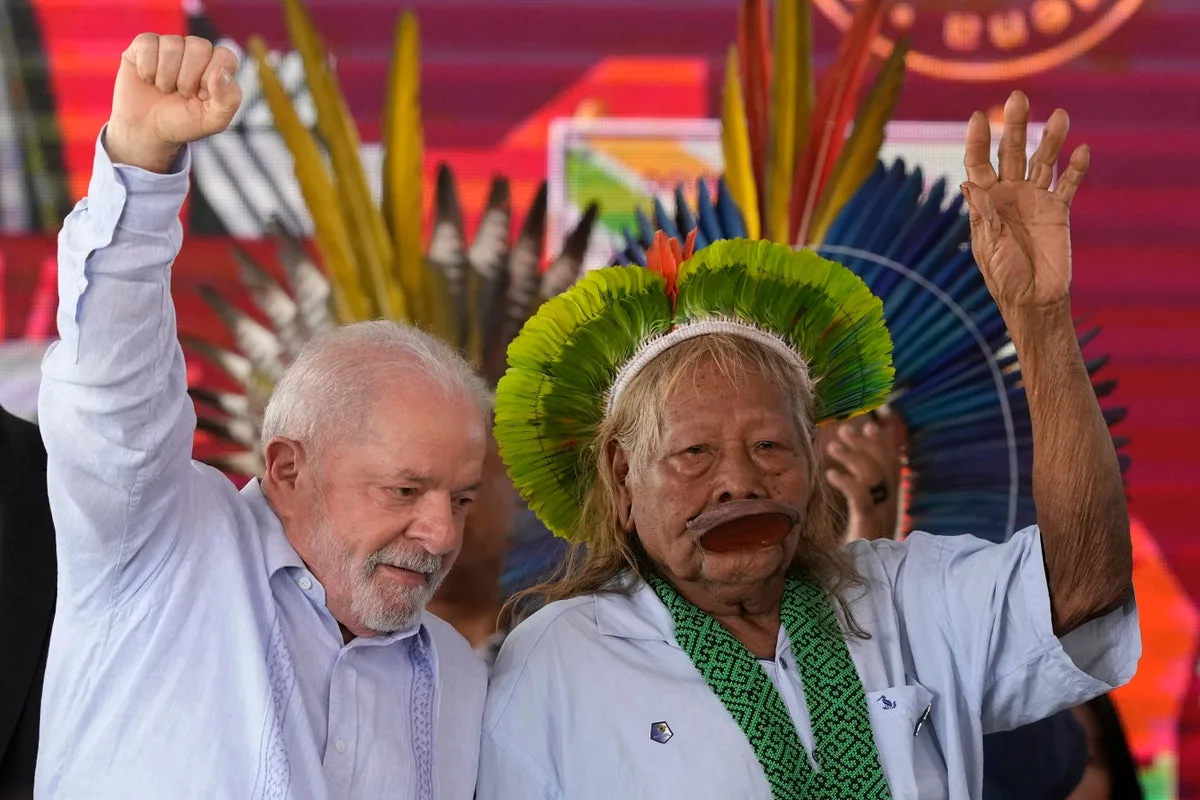
Raoni Metuktire, the Amazon's most internationally famous Indigenous leader, has said he still supports President Luiz Inácio Lula da Silva and will campaign for his re-election in October, despite opposing government-backed projects contested by Indigenous peoples.
The chief's reaffirmation came after he stood beside Brazil's leftist president in January 2023 as he walked into the presidential palace on the first day of his third, non-consecutive term.
“I like his work and am thinking about meeting him so we can address demarcation of Indigenous territories,” Raoni told journalists at the Free Land encampment, Brazil's largest Indigenous mobilization, which has brought together about 7,000 Indigenous people from 200 groups across the country in Brasilia.
One project facing opposition is the Ferrograo railway, which would transport commodities including corn and soybeans nearly 1,000 kilometres across the Amazon rainforest. Indigenous groups have long protested against it, and Raoni said it could cause “great harm.”
The Brazilian government hopes to proceed with the railway once the Supreme Court rules on the legality of changing a national park's borders and a congressional watchdog approves the plans. The trial was expected to resume on Wednesday, with Indigenous protesters, including Raoni, deploying to the court to demonstrate.