Palestinians in Jerusalem Confront Dual Crises as Iran Conflict Unfolds
While Israel's attention is riveted on its escalating conflict with Iran, many Palestinians residing in Jerusalem assert that the war has merely intensified the deep-seated inequalities and grievances that define their everyday existence. According to Donald Macintyre, reporting on Saturday 14 March 2026, the sirens and explosions dominating Israel's news cycle obscure a more persistent reality for these communities.
Daily Realities in the Old City
In Jerusalem's Old City, the streets that would typically bustle with tourists and pilgrims are now desolate. Palestinian-owned stores stand boarded up under police orders, a stark contrast to the Israeli boutiques in the nearby Mamilla Mall, which have reopened despite sparse visitor numbers. This disparity stems from the absence of air-raid shelters in the Muslim and Christian quarters, deemed too hazardous to remain open during missile threats.
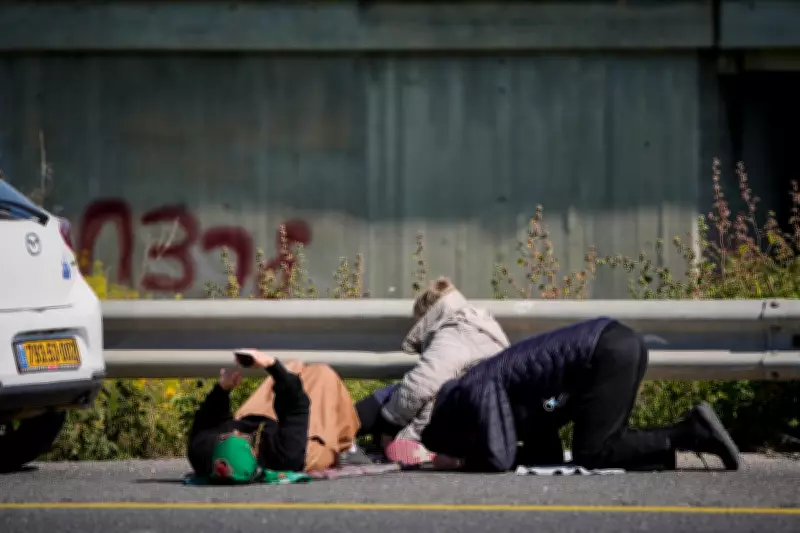
Adele Younan, a 43-year-old Catholic Palestinian who teaches business studies in Beit Hanina, views this lack of infrastructure as emblematic of broader discrimination against Palestinian shop-owners. "We can hardly sleep at the moment," she reveals, highlighting the fear among children and elderly residents due to constant alerts on their phones. These warnings, part of Israel's efficient "Home Front" system, often give residents just 90 seconds to seek cover in shelters or fortified rooms—a luxury many Palestinians lack.

Broader Grievances and Political Sentiments
Adele criticises Prime Minister Netanyahu's motives, suggesting the war serves to distract from his political and legal challenges. She echoes longstanding complaints, including Israel's refusal to establish a Palestinian state and restrictions on Palestinian Christian worshippers during Easter at the Church of the Holy Sepulchre. This sentiment is shared widely; cabbie George Hazzaz, 50, calls the war "crazy" and immediately pivots to the need for peace negotiations between Palestinians and Israelis.
An Israel Democracy Institute poll underscores this divide: 93% of Jewish Israelis support "Operation Roaring Lion" against Iran, compared to only 26% of Arab Israelis. However, this opposition does not signify affinity with Iran—a Shiite, non-Arab nation—but rather reflects a belief that the war detracts from addressing the core conflict with Israel's right-wing government.
Structural Inequalities and Safety Concerns
The war exacerbates pre-existing vulnerabilities. A February report from the state comptroller's office reveals that over three million people in Israel live without "standard protection," with Arab citizens disproportionately affected. Only 37 of Israel's 11,775 public shelters are located in Arab municipalities, leaving many, like George Hazzaz who lives 10 minutes from the nearest shelter, exposed to danger.
For Palestinians, the Iran conflict sits alongside daily grievances rather than replacing them. Media coverage highlights both Iranian missile casualties and local issues, such as the shooting of a mayor in Arraba who tackled criminal gangs—a problem Arab leaders accuse Israeli authorities of neglecting.
Regional Implications and Calls for Resolution
Arab Israelis remain acutely aware of the plight in occupied territories. In Gaza, unprecedented destruction following the 2023 attack continues, while the West Bank sees record violence from settlers, sometimes Army reservists, accused of seizing Palestinian land. Critics argue this is a strategic move to pre-empt a future Palestinian state, opposed by hard-line members of Netanyahu's Cabinet. Since the Iran war began, settlers have killed five Palestinian civilians in the West Bank, according to Palestinian officials.
Many politically conscious Arab Israelis believe regional peace hinges on resolving the Palestinian conflict. Jafar Farah, a Haifa-based activist, asserts that solving the Palestinian issue would neutralise grievances exploited by foreign adversaries. "Any regional regime that is abusing the Palestinian tragedy to promote its agenda does so because there is a Palestinian issue," he states, advocating for a durable settlement to ensure security for all Israelis.

Despite the validity of this analysis, it is unlikely Netanyahu will agree, regardless of the war's outcome. For Palestinians in Jerusalem, the Iran conflict sharpens focus on enduring inequalities, underscoring that their deeper struggle with Israel remains unresolved.