The Real History of the Nazi Banknote Forgery Plot in Peaky Blinders
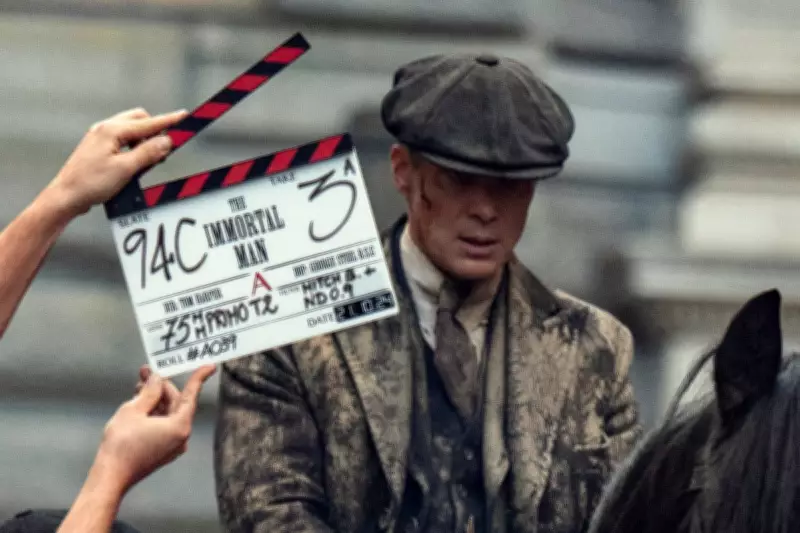
The new Peaky Blinders film features a gripping Nazi plot to destabilise Britain's economy by flooding it with forged banknotes. While this might seem like a fanciful creation of screenwriters, the truth is even more astonishing than fiction. This story is rooted in the real events of Operation Bernhard, one of the largest and most sophisticated counterfeiting operations ever attempted during the Second World War.
Operation Bernhard: A Chilling Nazi Strategy
During the early stages of the war, Nazi officials devised a plan to attack Britain through its currency. They believed that undermining confidence in sterling, a key strategic asset for Britain, could cripple its ability to finance the war effort. The responsibility for executing this ambitious scheme fell to Bernhard Krüger, a meticulous SS officer from the Reich Security Main Office.
Kruger's approach was brutally pragmatic. He recruited the best printers and counterfeiters in Europe directly from concentration camps. Prisoners with expertise in printing, engraving, or graphic design were identified across Nazi-occupied territories and transported to Sachsenhausen concentration camp, located north of Berlin. There, they were housed in a sealed compound known as Block 19.

The Prisoners Behind the Perfect Forgeries
The conditions in Block 19 were notably better than elsewhere in the camp, with prisoners given beds, adequate food, and even newspapers. However, this relative comfort came with a grim reality: their survival depended entirely on their ability to produce flawless forgeries. Failure would almost certainly result in execution.
The team assembled at Sachsenhausen included some of the most skilled craftsmen of the era. Salomon Smolianoff, a Russian-born engraver with a pre-war career in banknote forgery across Europe, was indispensable due to his exceptional engraving skills. Adolf Burger, a Slovak printer arrested for forging documents to help Jews evade deportation, found himself forced to assist the Nazi war effort by counterfeiting British currency. He later documented this bizarre and tense experience in a vivid memoir.
Another key figure was Oskar Stein, whose technical precision helped replicate the intricate designs of British banknotes. Together, these prisoners created what became the most advanced counterfeiting workshop in history, overcoming immense challenges such as reproducing the unique rag-based paper used in pre-war British notes.
The Execution and Impact of the Forgery Scheme
By 1943, the Sachsenhausen team was producing forged notes so convincing that even trained bankers struggled to distinguish them from genuine currency. In total, the Nazis printed an estimated £132 million worth of counterfeit British banknotes, a staggering sum at the time.
The original plan involved German aircraft scattering bundles of forged notes over Britain to trigger panic and erode trust in the pound. However, this dramatic idea was abandoned when German intelligence concluded that Britons might simply keep the money rather than cause widespread alarm.
Instead, the forged notes were used covertly to finance German intelligence operations across Europe. They paid agents, purchased supplies, and were laundered through banks in neutral countries. While some counterfeit notes eventually reached Britain through international financial channels, the envisioned flood of fake currency never materialised.
Britain's Response and the Legacy of Operation Bernhard
By the later stages of the war, the Bank of England became aware of the high-quality counterfeits circulating internationally. In response, the Bank stopped issuing notes of £10 and above in 1943. After the war, Britain introduced redesigned banknotes with enhanced security features, a direct consequence of Operation Bernhard's threat.
As the Third Reich collapsed in 1945, the SS attempted to destroy all evidence of the operation. The forgers were evacuated and most were liberated by American troops, later leading quiet lives. The printing presses, plates, and vast quantities of forged banknotes were transported to the Austrian Alps and dumped into Lake Toplitz, where they remained hidden for years.

In the late 1950s, divers recovered crates from the lake, revealing thousands of Operation Bernhard banknotes preserved in the mud. Recently, one of these forged £10 notes was found in a London specialist shop, Colin Narbeth & Son, where experts can identify subtle flaws that distinguish it from genuine currency.
While the Nazis did not succeed in collapsing the British economy, Operation Bernhard forced a significant rethink of currency security. This extraordinary episode, blending historical fact with cinematic drama, continues to captivate audiences and historians alike.