Ancient Mesopotamian Pottery Reveals Mathematical Understanding Predating Numbers
Mesopotamian Pottery Shows Maths Understood Before Numbers Invented

Ancient Mesopotamian Pottery Reveals Mathematical Understanding Predating Numbers

A recent archaeological study has uncovered compelling evidence that ancient Mesopotamians possessed a sophisticated grasp of mathematical concepts thousands of years before the invention of formal numbers and writing systems. This discovery challenges previous historical timelines regarding the origins of mathematical cognition.

Halafian Culture's Advanced Awareness

The research focuses on the Halafian culture, which thrived in northern Mesopotamia between approximately 6200 and 5500 BCE. These communities were among the world's earliest farming societies, and their artistic expressions on pottery have now been identified as reflecting a high level of mathematical awareness.

Professor Yosef Garfinkel, a Prehistoric Archaeology expert at the Hebrew University of Jerusalem and lead author of the study, stated: "The decoration of pottery and seals in the Halafian culture reflects a high level of mathematical awareness. This should not surprise us, as by the late 6th and early 5th millennia BC early village communities had existed in the Near East for some 4000 years and had reached a high level of economic complexity."

Geometric Patterns in Floral Motifs

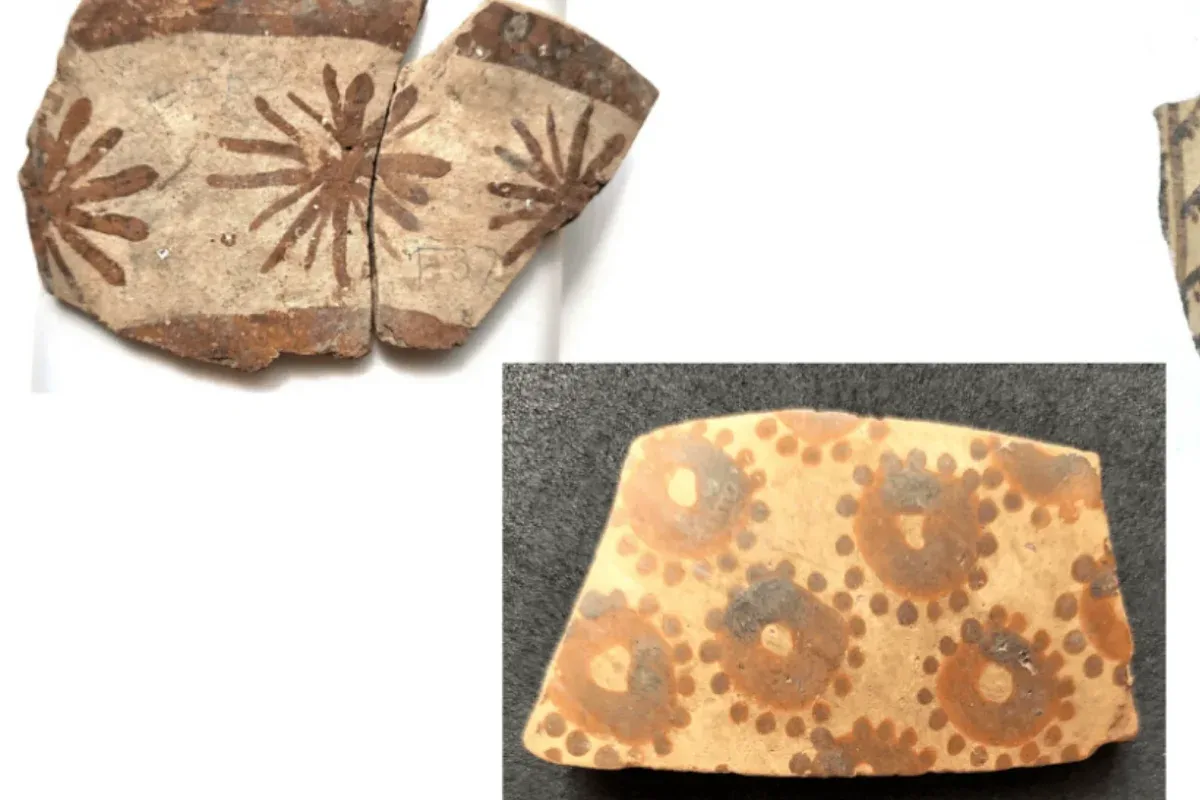
Analysis of thousands of pottery fragments collected from 29 archaeological sites revealed that floral decorations were not merely artistic but embodied fundamental mathematical principles. Many bowls featured flowers with petal counts of four, eight, 16, 32, or 64, forming clear geometric sequences that imply deliberate mathematical reasoning.

These patterns served as the foundational numerics of symmetry and repetition, demonstrating an early cognitive awareness of the symmetry evident in the natural world. The vegetal motifs were categorised into four distinct groups: flowers, shrubs, branches, and trees, each following consistent rules in their depiction.

Redefining Historical Timelines

Until now, the earliest known written numbers emerged around 3400 BC with the Sumerians in what is now Iraq. This new evidence pushes back the understanding of mathematical development by several millennia, suggesting that mathematical thinking evolved alongside early agricultural and economic complexity.

The researchers argue that this mathematical awareness developed from prolonged observation of natural patterns, leading to their representation in material culture. The study, published in the Journal of World Prehistory, highlights how these ancient communities used pottery decoration to encode mathematical concepts that would later form the basis of formal numerical systems.