New Discoveries Rewrite Maya History: From Collapse to Enduring Survival
For decades, the dominant narrative surrounding the Maya civilization centred on its mysterious collapse. Now, a growing number of scholars are asking a different question: how did the Maya survive? This shift in perspective is driven by groundbreaking archaeological findings that challenge long-held beliefs about this ancient culture.
A Childhood Fascination Leads to Revolutionary Insights
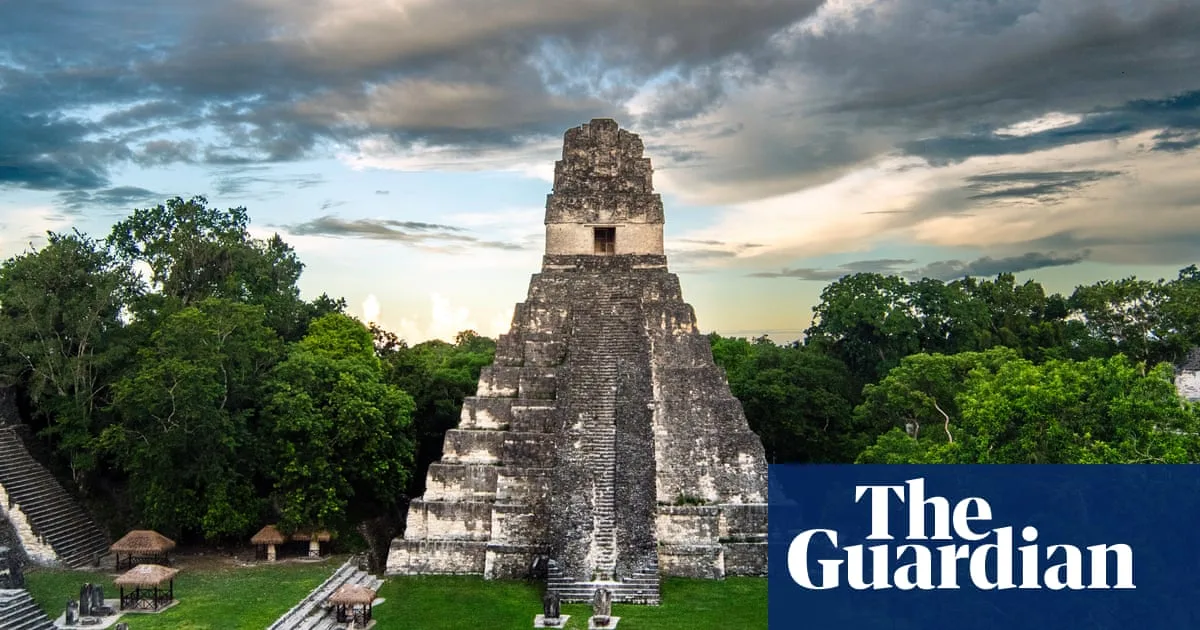
As a seven-year-old visiting Guatemala in 1970, Francisco Estrada-Belli was captivated by the ruins of Tikal. "I was completely mesmerised," he recalls. "It was jungle everywhere, there were animals, and then these enormous, majestic temples. I asked questions but felt the answers were not good enough. I decided there and then that I wanted to be answering them." Today, Estrada-Belli is at the forefront of a new age of discovery in Maya archaeology.
Advances in technology, including DNA analysis, climate science, and Lidar laser mapping, are overturning previous assumptions. Last year, Estrada-Belli and his team published a study estimating that the classic-era Maya lowlands were home to up to 16 million people—more than five times the area's current population and surpassing the peak population of the Roman Empire on the Italian peninsula, all within an area a third of the size.
Reevaluating Maya Society and Sustainability
The comparison with ancient Rome is instructive. Maya cities predated Rome by centuries and featured larger architecture. Both cultures developed sophisticated astronomy, mathematics, writing, and trade networks. However, while Roman ruins lie beneath a modern metropolis, many Maya sites are buried under tropical forests, and their descendants are among the poorest people on Earth.
According to census data, Maya and other Indigenous groups number over 11 million across Central America and the US, with 7.7 million in Guatemala, where they officially make up 44% of the population. Human rights organisations believe this figure may be higher due to historical stigmatisation.
Political Struggles and Historical Reckoning
History remains a key political issue for the Maya. In Guatemala, they demand a full reckoning with the civil war and genocide from 1960 to 1996, which claimed about 200,000 lives, mostly Maya. They also seek recognition as the original inhabitants and legitimate owners of the land. Current disparities include two-thirds of arable land controlled by only 2.5% of farmers, few of them Maya, and 60% of Indigenous children suffering from undernourishment.
In 2023, Maya peoples played a crucial role in the presidential election of Bernardo Arévalo, with Indigenous groups leading protests to protect the vote. Arévalo appointed Liwy Grazioso, an archaeologist and expert in Maya history, as minister of culture and sports. Grazioso aims to build a country where the past and present coexist, and Indigenous peoples are fully recognised. "It's not that the Maya are better, or that their ancient society was somehow superior to ours, but because as humans they are the same," she said.
Technological Breakthroughs and New Narratives
Lidar technology has revolutionised Maya archaeology. By mapping the ground beneath forest canopies, it has revealed thousands of previously unknown structures, transforming estimates of population density. Estrada-Belli describes the classic-era lowlands as a "continuously interconnected rural-urban sprawl" with advanced, sustainable farming methods. "When looking at Central American forests today, we must reckon with the fact that ancient humans affected everything," he noted, contrasting this with modern destructive practices like cattle farming and monoculture.
Researchers are now moving away from the concept of a sudden collapse, instead discussing a "decline, transformation and reorganisation of society." Kenneth E Seligson, an archaeologist, emphasises Maya resilience: "The Maya should really be known as a people of immense resilience. They worked with available resources to develop long-term highly flexible solutions."
Modern Challenges and Hopes for the Future
Forensic anthropology is uncovering modern Maya history, with organisations like the Guatemalan Forensic Anthropology Foundation using DNA and Lidar to identify victims of civil war massacres. This work has supported legal cases, including the genocide conviction of former president Efraín Ríos Montt, though setbacks have occurred due to judicial corruption.
Indigenous leaders like Sonia Gutiérrez advocate for a "plurinational" state and the incorporation of Maya concepts like "tzilaj k'aslemal" (the good life) into the constitution. Despite risks, including potential civil conflict, grassroots organisations like Agims are working towards change. Blanca Subuyui of Agims stated, "We are going nowhere. The struggle will continue, and the changes are now so profound that they are unstoppable."
As archaeologists continue to uncover the past, the Maya story is being rewritten not as one of collapse, but of enduring survival and resilience, offering lessons for both history and the future.