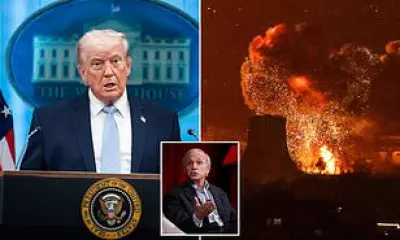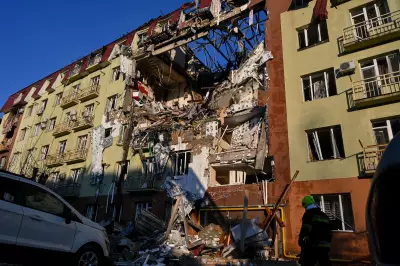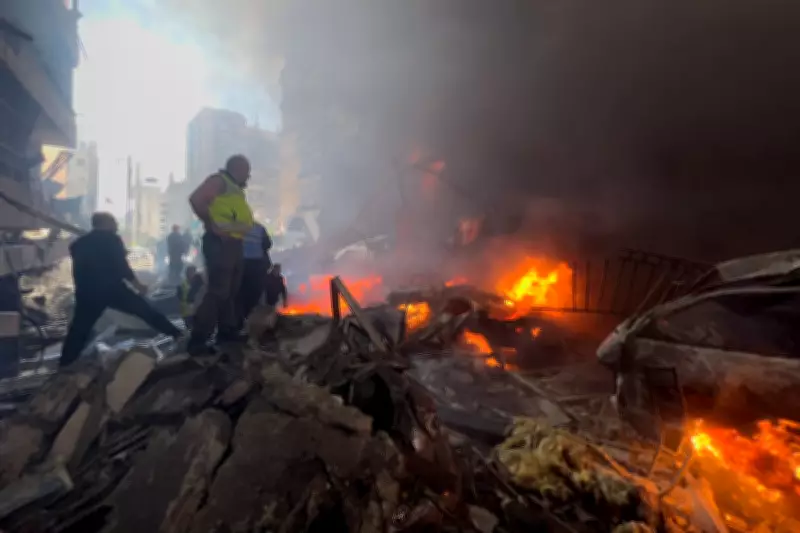
Intense Israeli bombing campaigns across Lebanon have unleashed devastation described by witnesses as a "ring of fire" over Beirut and an "earthquake" nationwide, directly jeopardising a hard-won and deeply fragile truce between the United States and Iran. This precarious pause, brokered by Pakistan, now hangs in the balance, threatening to pull the entire region and the world into a far deeper crisis with profound implications for global security and stability.
Catastrophic Strikes and Mounting Casualties
On Wednesday, Israel launched one of its heaviest aerial assaults yet on Lebanon, striking over one hundred targets within a mere ten-minute window according to Israeli military counts. The Lebanese Civil Defence reported the attacks killed more than 250 people and injured over a thousand, with rescue teams still laboriously digging bodies from the rubble. A British-Palestinian surgeon treating the wounded in a Beirut emergency room characterised the scene as an "absolute massacre," underscoring the human toll far beyond Lebanon's borders.
Global Chokepoints and Expanding Conflict
This conflict has already engulfed critical global transport and energy arteries, including major airports in the United Arab Emirates and Qatar, alongside the strategically vital Strait of Hormuz. Approximately twenty percent of the world's oil and liquefied natural gas shipments pass through this narrow waterway, meaning any sustained disruption could trigger the worst energy supply crisis in recorded history. The theatre of war has stretched across at least thirteen nations, significantly raising the alarming potential for this complex conflict to metastasise uncontrollably.

Gulf diplomats, in increasingly worried communications, have warned that their nations face being forcibly dragged into the fray under retaliatory fire from Iran. In blunt terms, they caution this could compel them to bomb Iran in response, setting off a dangerous chain reaction of military exchanges. More nations drawn into open hostilities promises an uncertain and bleak future that no analyst can reliably predict.
Fragile Truce Under Immediate Strain
The announcement of the US-Iran truce, mediated by Pakistan, initially brought a global sigh of relief. However, the arduous work of building a lasting agreement from this temporary pause already appears near impossible. Yawning, existential chasms separate the core demands and red lines of both sides, including contentious issues like control of the Strait of Hormuz, the future of Iran's nuclear programme, and its ballistic missile capabilities.
Former US President Donald Trump's apocalyptic rhetoric, declaring he would wipe out "a whole civilisation" in Iran shortly before the pause was announced, further pushed diplomatic temperatures to dangerous levels. With so much at stake for international stability, logic would dictate removing any external pressures that could further complicate these delicate negotiations.
Lebanon as the Critical Flashpoint
Israel's continued war with Hezbollah, Iran's primary ally in Lebanon, through its sustained bombing campaign has become precisely such a destabilising external pressure. According to Pakistan, Iran, and Hezbollah, Lebanon was supposed to be included in the cessation of hostilities. Contradicting this, the Israeli Prime Minister shortly afterwards declared it was not, and the Israeli military proceeded to unleash its heaviest strikes yet, including targeting the nephew of Hezbollah's chief.
Iran has already responded by closing the Strait of Hormuz and declaring it will refuse to engage in talks if Israel's offensive on Lebanon continues. This stalemate exists before either side has even approached the negotiating table, let alone sat down to substantive discussions.
Israeli Strategy and Regional Ambitions
Sources briefed on Israel's position indicate Prime Minister Benjamin Netanyahu has little interest in ending the offensive against Hezbollah or Lebanon, a sovereign nation with a richly diverse population where many oppose the militant group. The rationale, according to these sources, is that Israel cannot effectively manage two major battlegrounds simultaneously, so "now is the time to focus on Hezbollah."

A significant portion of the Israeli public is reportedly disappointed with the Iran ceasefire and, particularly regarding Lebanon, "want the job done." In practical terms, this means continuing operations until Hezbollah is perceived as truly demilitarised and destroyed. Israeli officials have repeatedly cited the establishment of a "buffer zone" inside Lebanese sovereign territory as a primary method to achieve this aim.
Defence Minister Israel Katz has threatened to effectively occupy land in southern Lebanon up to the Litani River, a geographical area constituting roughly ten percent of the country. To provide a British comparison, this would be equivalent to occupying the entire landmass of Wales. Regional experts caution this constitutes not merely a buffer zone but a potential extension of Israeli territory, raising grave questions about the long-term costs.
The Staggering Human and Strategic Cost
What is the cost for the Lebanese civilians cowering under relentless bombardment or forcibly displaced from their homes? What is the cost for the future of flailing negotiations that have scarcely begun? What is the cost for the wider region being inexorably dragged into this escalating nightmare? With global energy supplies, international travel networks, and worldwide security hanging in the balance, the ultimate question remains: at what cost for the entire world?
The intense Israeli bombing of Lebanon represents far more than a regional conflict; it is a direct threat to a fragile international peace deal and a catalyst for potential global crisis. The stakes could not be higher for regional stability and worldwide security, making the preservation of any truce an urgent imperative for the international community.