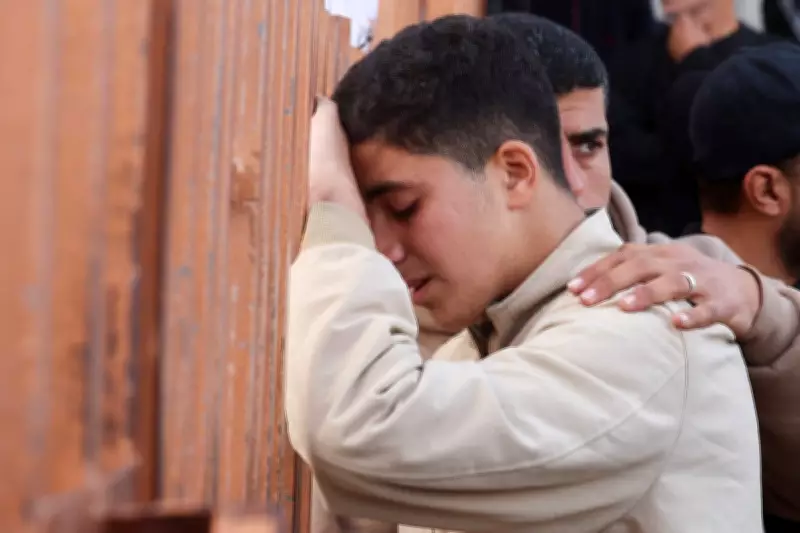
Israeli Airstrikes Claim Nine Lives in Gaza Amid Escalating Tensions
At least nine Palestinians were killed in Israeli airstrikes across the northern and southern Gaza Strip on Sunday, according to Palestinian civil defence and health officials. The strikes targeted areas including a tent encampment for displaced families and the city of Khan Younis, intensifying fears of renewed conflict in the region.
Details of the Deadly Strikes
Medics and health officials reported that an Israeli airstrike killed at least four people in a tent encampment housing displaced families, while another strike in Khan Younis resulted in five fatalities. The attacks have drawn condemnation from local authorities and raised concerns about civilian casualties in the densely populated enclave.
An Israeli military official stated that the Israel Defense Forces (IDF) targeted Hamas "terrorists" in what they described as a "precise" operation conducted in accordance with international law. The official cited "a violation on Saturday in Beit Hanoun where terrorists emerged from a tunnel east of the yellow line" as the justification for Sunday's strikes.

Ceasefire Violations and Military Actions
The IDF asserted that Hamas has committed over six ceasefire breaches, including deploying forces east of the "Yellow Line" that demarcates control zones in northern Gaza. On Saturday, the Israeli military reported identifying armed "terrorists" near its personnel, observing gunmen emerging from a tunnel and entering rubble east of the Yellow Line.
Air Force aircraft subsequently attacked the building, eliminating two gunmen, with the military suggesting additional militants were likely killed. Israel and Hamas have repeatedly accused each other of violating their ceasefire agreement, a key component of Donald Trump's plan to end the Gaza war that began over two years ago.
Since the ceasefire deal commenced, the Gaza health ministry reports at least 600 Palestinians have been killed by Israeli fire, while Israel reports four soldiers killed by militants in Gaza. These figures highlight the fragile nature of the truce and the ongoing volatility in the region.
Humanitarian Crisis and Hospital Suspension
Meanwhile, the aid group Doctors Without Borders, known by its acronym MSF, announced the suspension of some of its operations at Nasser Hospital in Khan Younis, one of the largest functioning hospitals in Gaza. The decision followed reports from patients and staff of armed, masked men roaming parts of the medical facility, posing "serious security threats to our teams and patients."
Nasser Hospital is one of the few remaining functional hospitals in the strip, having treated hundreds of patients and war-wounded individuals. It also served as a hub for Palestinian prisoners released by Israel in exchange for Israeli hostages as part of the ceasefire deal.
MSF stated in a "frequently asked questions" section on its website, updated on February 11, that all non-critical medical operations at Nasser Hospital were suspended due to "security breaches." While the suspension occurred in January, MSF's comments mark a rare public announcement by an international organization about the presence of armed men in or near medical facilities since the war began.
The situation underscores the deepening humanitarian crisis in Gaza, where healthcare infrastructure is strained and security concerns are mounting. As tensions escalate, the international community watches closely, hoping for a de-escalation to prevent further loss of life and suffering in the conflict-ridden territory.