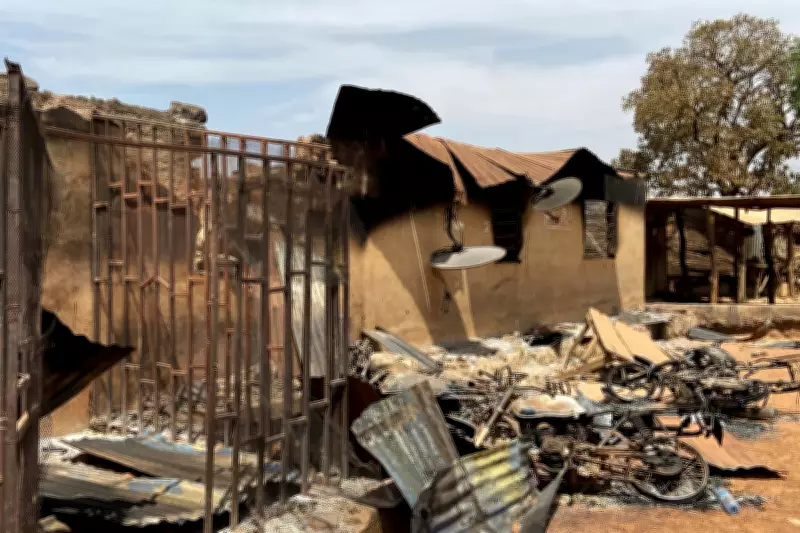
Islamic Militants Intensify Attacks Across West African Border Regions
A new report from the Armed Conflict Location & Event Data project (ACLED) has revealed a dramatic escalation in cross-border violence by Islamic militant groups in West Africa. According to the findings, jihadist organisations have significantly increased their attacks and solidified their presence in the border areas of Benin, Niger, and Nigeria over the past year.
Sharp Rise in Violence and Fatalities
The data indicates that from 2024 to 2025, violent incidents involving jihadi groups in the border regions of these three nations rose by approximately 80%. More alarmingly, the death toll more than tripled during this period, exceeding 1,000 fatalities. This surge marks a dangerous new phase in the region's security landscape, where militants are not merely expanding but entrenching their control.
Héni Nsaibia, ACLED's senior analyst for West Africa, emphasised that "militant groups are taking advantage of long-standing vulnerabilities, exploiting governance gaps and weak regional military coordination." This exploitation has allowed them to capitalise on systemic weaknesses across national boundaries.

Expansion from the Sahel to Coastal Nations
Over the last twelve months, two primary jihadist factions have rapidly advanced from the arid Sahel region south of the Sahara towards Atlantic coastal countries. The al-Qaida-linked Jama'at Nusrat al-Islam wal-Muslimin (JNIM) and the Islamic State Sahel Province (ISSP) have been at the forefront of this expansion.
In Benin, deadly cross-border raids against military forces made 2025 the country's deadliest year on record, according to the report. The small coastal nation has faced unprecedented violence as militants push southwards.
Consolidation and Regional Instability
In Niger, these groups are consolidating their control, exemplified by a lethal assault on an air base in Niamey last month. The country, governed by a military junta that seized power in a 2023 coup, has struggled to contain the jihadi violence that has devastated parts of the Sahel. Since taking control, Niger's military rulers—alongside those in neighbouring Mali and Burkina Faso—have severed ties with France and other Western powers, turning instead to Russia for military support in combating insurgencies.
Nigeria, Africa's most populous nation, is confronting a multifaceted security crisis involving various armed groups. This includes the jihadist organisation Boko Haram and criminal gangs commonly referred to as bandits. Recent U.S. airstrikes against Islamic State targets in Nigeria's northwest in December coincided with a rise in attacks by multiple factions. The United States has deployed troops to Nigeria to advise its military in addressing these security challenges.
Public Claims and Growing Competition
The report highlights that extremist groups in West Africa are increasingly publicising their attacks in the borderlands. JNIM has claimed responsibility for a series of strikes along the Benin-Nigeria border, including its first operations inside Nigerian territory. Simultaneously, ISSP has asserted attacks near the Niger-Nigeria border. These public declarations reflect escalating competition between the groups as they vie for influence and control across the region, according to ACLED analysts.
The situation underscores a critical security threat that transcends national borders, demanding coordinated regional and international responses to address the deepening crisis in West Africa's borderlands.