Iran's Supreme Leader Succession: A Critical Constitutional Process
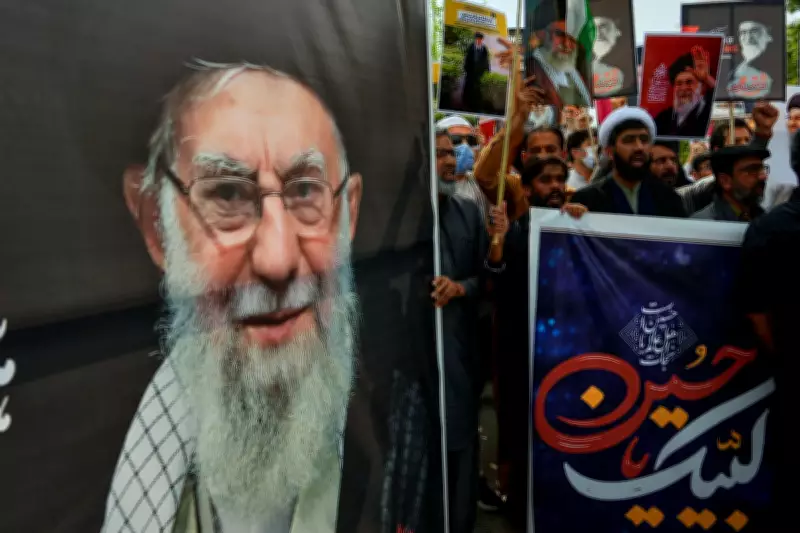
The assassination of Ayatollah Ali Khamenei on February 28, 2026, has triggered the formal process to select Iran's next supreme leader. This marks only the second such transition in the Islamic Republic's forty-seven-year history, with the previous succession occurring in June 1989 when the ailing Ayatollah Ruhollah Khomeini transferred power to Khamenei. The supreme leader serves for life as the highest religious and political authority within Iran, commanding the armed forces and overseeing key institutions including the judiciary and state media.
Interim Governance and Constitutional Framework
In accordance with Article 111 of the Iranian Constitution, a three-person Interim Leadership Council was established on March 1, 2026. This council comprises President Masoud Pezeshkian, Chief Justice Gholam-Hossein Mohseni-Eje'i, and Ayatollah Alireza Arafi, who is also a candidate for the supreme leadership position. The council has temporarily assumed the duties of the supreme leader until the Assembly of Experts, an elected body of eighty-eight clerics, appoints a permanent successor.
The assembly is expected to move swiftly, particularly given Iran's current state of war. A rapid succession aims to signal both domestic dissidents and external adversaries that the ruling system, or nezam, remains firmly intact. During the assembly's inaugural meeting on March 3 to begin the selection process, Israel bombed its building in Qom. Fortunately, the structure had been evacuated beforehand, resulting in no reported casualties.

Contenders and Political Dynamics
Media reports have frequently highlighted Mojtaba Khamenei, the son of the slain leader, as a leading contender despite his lack of senior clerical status. However, his candidacy faces significant obstacles. From a political standpoint, Mojtaba has never held public office, unlike his father who served as Iran's president from 1981 to 1989. Religiously, he remains a mid-ranking cleric, though he teaches theology at the prestigious Qom Seminary. The Assembly of Experts would need to elevate his status to grand ayatollah, mirroring the controversial promotion of his father in 1989.
Israel's Defense Minister, Israel Katz, has declared that Israel would assassinate any successor selected to follow Khamenei. Nevertheless, the Assembly of Experts appears resolute in fulfilling its constitutional mandate to appoint a new supreme leader, undeterred by external threats.
The Assembly of Experts and Electoral Facade
The members of the Assembly of Experts serve eight-year terms and are empowered to elect, supervise, and, if necessary, dismiss the supreme leader. Article 111 grants the assembly authority to remove the leader if deemed incapable or unqualified politically and religiously. However, this power is largely theoretical. Assembly members are first vetted by the Guardian Council before being elected through popular vote by Iranian citizens aged eighteen and older.
Critically, the members of the Guardian Council are appointed by the supreme leader and the chief justice, who is also appointed by the supreme leader. Thus, the supreme leader effectively approves the candidates for the body that oversees him, creating a circular and inherently biased process. The March 2024 election for the Assembly of Experts saw a historically low voter turnout of approximately forty percent, with the Guardian Council disqualifying numerous moderate and reformist candidates who tended to oppose the supreme leader on various issues. Consequently, the assembly has never seriously challenged or supervised the supreme leader, and its proceedings remain strictly confidential.
Historical Precedent: The 1989 Succession
As Khomeini neared the end of his life in 1989, the constitution was amended to allow a lower-ranking cleric like Khamenei to assume the supreme leadership. Khamenei, a seminary student of Khomeini more interested in politics than religion, held the title Hojjat al-Eslam, or "proof of Islam," below the rank of ayatollah. Upon his appointment, his rank was abruptly elevated to grand ayatollah overnight. He was chosen primarily for his loyalty and insider status, despite lacking Khomeini's charismatic and religious authority.

Initially, Grand Ayatollah Hussein-Ali Montazeri was expected to succeed Khomeini. However, he was ultimately passed over and detained by the Revolutionary Guard after questioning Khamenei's qualifications and condemning the regime's repression, including the execution of thousands of political prisoners in 1988. Montazeri was later placed under house arrest in 1997 and released in 2003 under reformist president Mohammad Khatami.
Current Candidates and Religious Credentials
Alongside Mojtaba Khamenei, several senior clerics are being considered for the supreme leadership. Ayatollah Alireza Arafi, a member of the Interim Leadership Council, attained the rank of ayatollah after publishing over twenty books and articles on Islamic jurisprudence and philosophy. However, in 2022, his religious qualifications were questioned when he joined the Assembly of Experts without taking the required written exam, instead being appointed by Khamenei through a legal loophole. This incident suggests Arafi enjoyed Khamenei's favor and may hold an advantage as a candidate.
Another contender, Ayatollah Mohammad Mehdi Mirbagheri, is an Islamic philosopher and theoretician who heads the Qom Academy of Islamic Sciences and has served on the Assembly of Experts since 2016. Ayatollah Hashem Hosseini Bushehri, educated at the Qom Seminary and Friday prayer leader of the city, also stands as a candidate, serving as a deputy chairman of the Assembly of Experts alongside Arafi.
Conclusion: A System Under Pressure
As the conflict persists, the Assembly of Experts faces immense pressure to rapidly decide on succession to preserve the ruling system. The election of Mojtaba Khamenei would continue the trend, established in 1989, of prioritizing political preferences over religious principles. Ultimately, the succession process, regardless of its outcome, has never been free or transparent, reflecting the intricate and controlled nature of power within the Islamic Republic of Iran.