Iran's Regime at a Crossroads: What Follows the Death of Ayatollah Khamenei?
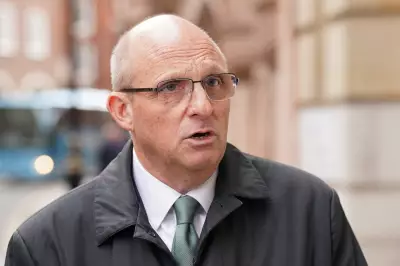
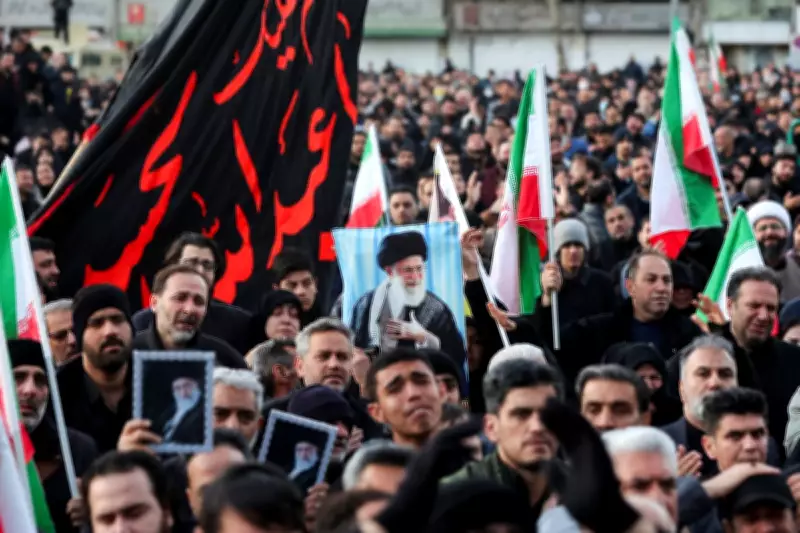
With the passing of Supreme Leader Ali Khamenei, the Islamic Republic of Iran has reached a pivotal moment. His death, confirmed by state media, has effectively decapitated the regime's symbolic and constitutional core. While the system is engineered for resilience, experts argue it now teeters closer to potential collapse than ever before, according to Dr Burcu Ozcelik, a senior research fellow for Middle East Security at RUSI.
The Fragility of Domestic Legitimacy
The Islamic Republic, already battered by years of economic decline and political repression, faces a severe challenge to its coherence. Domestic legitimacy, which has grown brittle under sustained pressure, is likely to come under further strain. Instead of immediate disintegration, there is an emerging expectation that persistent strikes and external pressure could weaken key pillars of the regime. These include the military-security networks, senior clerical authority, and the executive and judicial machinery, potentially creating space for an alternative governing arrangement to emerge from within Iran.
Speculative Scenarios and Internal Infiltration
One intriguing report from The Atlantic suggests that an Iranian network is prepared to act from within. Jaber Rajabi, an exile and former loyal servant of the regime, claimed recently that only about ten top figures need to be eliminated for infiltrators to topple the system. He stated, "If someone from inside the system opens the window, it will open." However, leadership decapitation does not automatically lead to regime collapse. Iran has built-in mechanisms for continuity, allowing it to reshuffle, replace, and reconstitute under pressure. Khamenei's death may be framed within a martyrdom narrative, reinforcing the regime's claim of resistance against the West.

Conditions for Regime Change
For genuine regime transformation to materialise, several conditions must align. A credible transitional leadership is essential, along with demonstrable public buy-in and some degree of international backing. Crucially, a rupture within the coercive apparatus—such as high-level defections or fractures in the security services—would be necessary to accommodate a new post-Khamenei structure. The situation is complicated by unconfirmed reports of senior figures, including the defence minister and Islamic Revolutionary Guard Corps commander, being killed, which could further destabilise the succession process.
Potential Succession and International Dynamics
Ali Larijani, secretary of the Supreme National Security Council, has been touted as a possible interim steward. However, as a non-cleric, he cannot inherit the Supreme Leader's office and carries political baggage from state violence against protests, limiting his acceptability to the US. Any emerging authority in a regime-transformation scenario will likely require buy-in from Washington, given the leverage from recent US-Israeli campaigns. Figures associated with the IRGC or a junta-like takeover are unlikely to gain support from the US, Israel, or many Iranians seeking real change.
Military Pressure and Political Outcomes
Air power alone will not reshape Iran's political order, but sustained pressure can influence the choices available to the regime's remnants and surviving elites. The post-Khamenei leadership will face hard decisions about cooperation with the US. Military outcomes may set conditions, but they do not predetermine Iran's future political settlement. A potential gap between US and Israeli strategies could be decisive, with the US possibly halting once Iran's offensive capabilities are degraded, while Israel might push further.
Risks of Chaos and Humanitarian Concerns
A chaotic Iran poses a nightmare scenario, risking cross-border instability, disruption to energy markets and shipping routes, and a regional security vacuum. This would outlast any air campaign by months or years. Importantly, chaos would not serve the Iranian people, who have suffered greatly under a regime that has inflicted repeated cruelties, particularly targeting women. The path from military pressure to political liberation is neither linear nor guaranteed.

Honest Assessment and Future Prospects
The most honest assessment is that some form of regime transformation may be possible but will not be easily engineered. The current campaign could degrade Iran's coercive power, amplify vulnerabilities, and challenge elite cohesion. Conversely, it might harden the system, especially if IRGC elements assume control, leading to a more paranoid and brutal internal apparatus. As Dr Ozcelik notes, the regime is built to survive, but with Khamenei gone, it faces its greatest test yet.