Iranian Elite Faces Accusations of Hypocrisy Over Children's Western Lives
Members of Iran's ruling elite have been accused of blatant hypocrisy by opposition campaigners, who claim these powerful figures are using state wealth to fund their adult children's luxurious lifestyles in Western countries. This occurs while they preside over increasing economic hardship and political repression within Iran itself.
Key Figures and Their Western Connections
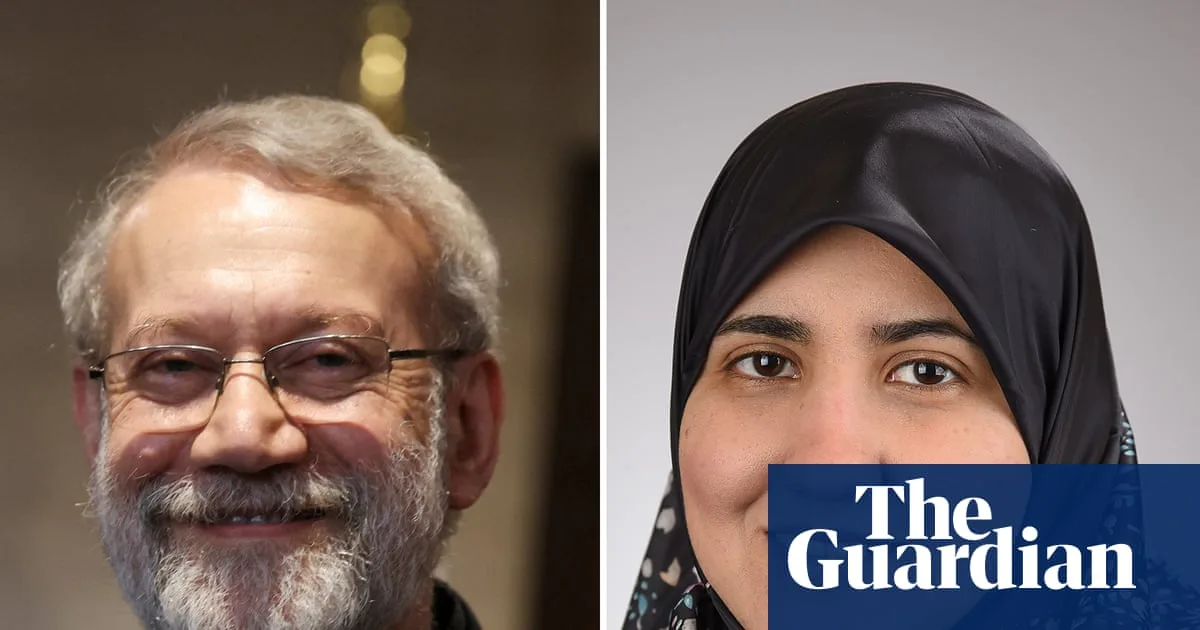
Among those singled out for criticism is Ali Larijani, Iran's top national security adviser. Larijani, a former parliament speaker and senior Revolutionary Guard member, has long been a vocal critic of Western values. However, his daughter Fatemeh Ardeshir Larijani recently worked as an assistant professor at Emory University medical school in Atlanta until her employment was terminated last month following an online petition calling for her deportation.
Larijani's family connections extend further, with two nephews residing in Britain and Canada. His brother, Mohammad-Javad Larijani, an adviser to Supreme Leader Ali Khamenei and former head of Iran's human rights council, has one son, Hadi, who is a professor at Glasgow Caledonian University's technology centre in the UK. Another son, Sina, serves as a director for the Royal Bank of Canada in Vancouver.
Widespread Pattern Among Regime Families
This pattern extends across Iran's political elite. The former Iranian president Hassan Rouhani's niece, Maryam Fereydoun, works for Deutsche Bank in London, reportedly overseeing financial flows from the Middle East. Opposition website Regime Out has urged the bank to dismiss her.
Another prominent example is Eissa Hashemi, an associate professor at the Chicago School in Los Angeles, who is the son of Masoumeh Ebtekar. Ebtekar earned the nickname "screaming Mary" as a spokesperson for the radical students who held 52 diplomats hostage at the US embassy in Tehran for 444 days during the 1979 revolution.
Habibollah Bitaraf, a former energy minister and another leader of the embassy siege that triggered the rupture between Washington and Tehran, also has a daughter living in the United States.
Lavish Western Lifestyles
The contrast between these Western lifestyles and conditions in Iran is stark. Mahdi Zarif, whose father Mohammad Javad Zarif was Iran's foreign minister during the negotiations that led to the 2015 nuclear deal, has been accused in petitions of "living a luxurious life in the United States." According to these documents, he resided in a $16 million home in Manhattan until 2021.
Elias Ghalibaf, the eldest son of Mohammad-Baqer Ghalibaf, a former IRGC commander, presidential candidate and one-time mayor of Tehran, lives in Australia and has been the target of similar petitions.
Growing Public Anger and International Response
Anger at the aghazadehs, as the scions of the elite are known, has intensified following the crushing of protests that some sources claim resulted in tens of thousands of deaths. Alex Vatanka, the Iran programme director at the Middle East Institute in Washington, explained: "People are upset that the aghazadehs are getting dollar stipends to go to the west to study essentially on the state's dime."
Kambiz Ghafouri, an Iranian writer and human-rights activist based in Helsinki, expressed the sentiment more bluntly: "They made Iran a hell for Iranian citizens and sent their children to the west to live happily. If there was a referendum voting on whether people want children of the Iranian authorities sent back to Iran, I think more than 90% would say yes."
Intelligence Considerations and Policy Challenges
Western countries face complex considerations regarding these well-connected individuals. Vatanka noted that intelligence agencies might see value in maintaining connections with them: "There's always an intelligence value, if you are the CIA, MI6 or whoever. Some of these connections might bring nuggets of information that can be useful. They become messengers."
After recent protests, Washington vowed to "revoke the privilege of Iranian senior officials and their family members to be in the United States," though implementation details remain unclear. One Islamic Revolutionary Guard Corps commander who criticized the practice claimed that 4,000 children and relatives of regime officials were believed to be living in Western countries in 2024.
Core Issue of Hypocrisy
Vatanka identified the fundamental problem: "The core of the matter is hypocrisy. You have an Islamist ruling order that for 47 years has been preaching all sorts of ways to behave, and we then see, one after another, children or grandchildren of the members of the elite living a very different life than the one their politically connected families back in Iran are preaching."
This situation unfolds against a backdrop of escalating tensions between Iran and the United States, with Donald Trump deploying military assets to the Middle East and considering potential strikes. Larijani is reportedly tasked by Supreme Leader Ali Khamenei with coordinating preparations for possible conflict with the US, even as his own family members benefit from Western freedoms and opportunities.