UNICEF Warns Iran War Deepens Somalia's Hunger Crisis as Children Face Starvation
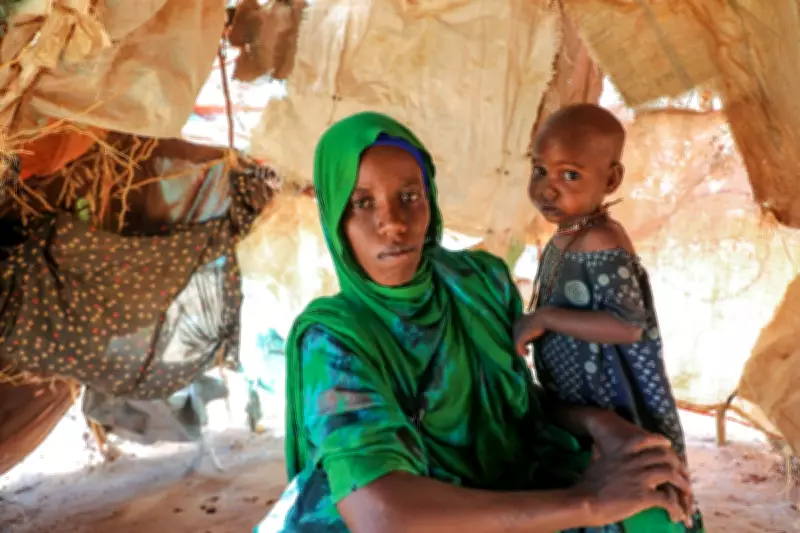
In the crowded displacement camps of southern Somalia, the sound of a crying child is considered a sign of hope. The most severely malnourished children are often too weak to even cry, highlighting the dire situation unfolding in the Horn of Africa nation. For mothers at the Ladan camp in the town of Dollow, daily survival is the only priority, overshadowing distant geopolitical conflicts or the logistical challenges facing aid organizations.
Drought and Displacement Compound the Crisis
The displaced families at Ladan have fled a devastating drought that has ravaged Somalia after four consecutive failed rainy seasons. With their crops destroyed and livestock decimated, many arrive at the camp with nothing but their children. The camp, spread across dusty outskirts with makeshift shelters constructed from plastic sheets and torn fabric, now houses approximately 4,500 households.
"We just want our children to survive," said Shamso Nur Hussein, a 20-year-old widow with three children who fled her village in the Bakool region. Her cooking hearth at the camp—consisting of three stones and ash—remained cold, with no sign of recent use. "Since morning we have only had black tea," she reported during an interview at the camp.

Global Conflict Disrupts Vital Aid Supplies
Aid workers at Ladan report that the raging war in the Middle East, more than 3,000 kilometers away, has significantly complicated their humanitarian efforts. The conflict has disrupted supply chains and caused fuel costs to soar, creating additional barriers to delivering lifesaving assistance.
During a recent visit to Dollow, Catherine Russell, UNICEF's executive director, described the Iran war as a "shock to the system" for the agency's operations in Somalia. "It means that we can’t get supplies in as easily, and that fuel costs are really high," Russell explained. "It’s another problem that we have to try to deal with, and it means that more and more children will suffer."
UNICEF currently has $15.7 million worth of critical supplies—including therapeutic food, vaccines, and mosquito nets—either in transit or being prepared for delivery to Somalia. However, these shipments now face considerable uncertainty. Transport costs could increase by 30% to 60%, potentially doubling on some routes, while delays from rerouting and backlog become increasingly likely.
Healthcare System Collapse Exacerbates the Emergency
Compounding the crisis, more than 400 health and nutrition facilities have closed across Somalia over the past year, primarily due to U.S. funding cuts. These closures have left numerous communities without access to essential medical support, and aid agencies warn that additional shutdowns may follow.
At the hospital in Dollow, mothers sit shoulder to shoulder on narrow beds, holding frail children who are either too weak to cry or emit only soft whimpers. Liban Roble, a nutrition program coordinator, noted a disturbing shift in patient conditions. "Now we are receiving children in extremely critical condition—severely malnourished, weak, and in some cases almost skeletal," he reported.
Roble expressed grave concern about dwindling medical supplies, stating that the hospital only has enough resources to treat malnourished children "until mid-April or the end of April." He warned that without new stock arrivals, "more children will deteriorate and potentially die."
Alarming Statistics Reveal Scale of the Catastrophe
The Somali government issued a stark warning last month, revealing that nearly 6.5 million people—out of a population exceeding 20 million—now face severe hunger as the drought intensifies. This crisis is further aggravated by ongoing conflict and global aid reductions.
According to the latest data from the Integrated Food Security Phase Classification, a global hunger monitoring group, approximately 1.84 million children under age five in Somalia are expected to suffer acute malnutrition in 2026. These humanitarian needs represent just the tip of the iceberg as the Somali government continues its protracted war against the al-Qaida-linked al-Shabab militant group.
"What we’re seeing is that children are really on the edge already," Russell emphasized during her assessment of the situation.

Community Support Systems Stretched Beyond Capacity
At Ladan's nutrition center, health workers diligently weigh children and administer peanut-based therapeutic paste, squeezing it directly into the children's mouths. Nurse Abdimajid Adan Hussein described this intervention as a critical lifeline that prevents rapid deterioration among malnourished children. "Their weakened bodies make them vulnerable to pneumonia, diarrhea and other illnesses," Hussein explained.
Community leaders report that support systems are already failing to meet the overwhelming need. "We used to receive assistance from humanitarian agencies, but that stopped in September 2025," said Abdifatah Mohamed Osman, Ladan's deputy chairman. "Now the little support we get is mainly therapeutic food for malnourished children."
As the crisis deepens, the international community faces mounting pressure to address both the immediate humanitarian emergency in Somalia and the broader geopolitical factors that are exacerbating the suffering of its most vulnerable citizens.