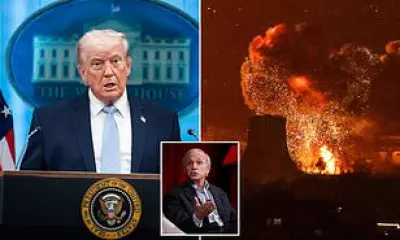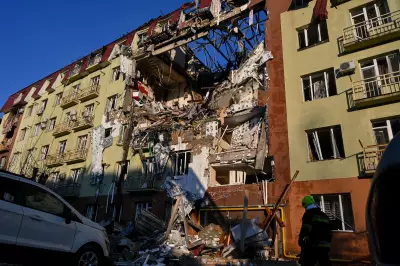
The announcement of a ceasefire between the United States and Iran has been met with widespread relief, yet experts caution that this represents merely a fragile pause rather than a resolution to the ongoing crisis. Talks are scheduled for Friday in Islamabad, providing a critical opportunity to step back from the immediate threat of a wider regional war. However, this moment should not be misinterpreted as an end to hostilities, especially as reports emerged on Wednesday that Iran has not reopened the Strait of Hormuz, a vital global shipping lane.
A Pause, Not a Peace
More accurately, the ceasefire should be viewed as a temporary halt—a chance to explore pathways toward a difficult but necessary political settlement. Despite claims of success from all involved parties, the reality is that no side emerged as a clear winner from the conflict. Former President Donald Trump framed the war as both a military victory and a step toward regime change in Iran, but this perspective is deeply flawed.
The conflict was ill-conceived, built on the assumption of a quick and decisive outcome. Instead, it proved far more costly and damaging to US credibility internationally. It failed to achieve regime change; rather, it led to the promotion and consolidation of new, untested hardline leadership within Iran's existing political system. The structure of the Islamic Republic remains intact, demonstrating its remarkable capacity to absorb shock and reinforce its authority.

Iran's Damaged but Defiant Position
Equally, it would be misleading to suggest Iran has emerged victorious. The country and its military capabilities have suffered significant damage, yet in Tehran, degradation does not equate to defeat. Iran retains substantial operational capacity and continues to pose threats across multiple domains. Its leverage over the Strait of Hormuz, combined with its advanced missile and drone capabilities, ensures it remains capable of inflicting damage and shaping events beyond its borders.
However, these strategic gains have come at a steep cost. Tehran now faces monumental political and economic challenges from its traumatised population, alongside growing anger from neighbouring states, which risks further isolating Iran within the region.
Regional Repercussions and Escalation Risks
The effects of the conflict were immediate and far-reaching across the Middle East. Gulf states were exposed both economically and strategically, enduring daily barrages of Iranian missiles and drones. Israel faced the prospect of escalation across multiple fronts, while Lebanon and Iraq remained vulnerable to spillover violence. This was not a contained conflict but an interconnected regional war with global implications.
Without a ceasefire, Washington was confronting increasingly dangerous escalation choices. Options included targeting Kharg Island or launching military operations to reopen the Strait of Hormuz. The US also faced the possibility of acting on Trump's threat to target civilian infrastructure—a move that would constitute a war crime. Each of these paths carried significant political and strategic costs, potentially dragging the US into a prolonged and costly conflict.
The Islamabad Agenda: Nuclear Programme and Trust
It is this convergence of costs that helps explain why a ceasefire has emerged at this critical juncture. However, it also underscores how challenging it will be to transform this pause into a lasting agreement. The most contentious issues will now be addressed in Islamabad, with trust being as central as substance to the negotiations.
Key questions include whether the US can offer credible assurances against renewed strikes and whether Iran is prepared to accept limits on its ability to threaten shipping in the Strait of Hormuz. Sanctions relief will be equally pivotal, as any viable agreement must make de-escalation politically sustainable for both sides. External actors, including China, Europe, and the UK, are likely to be needed as guarantors to bolster any potential deal.

Iran's nuclear programme will remain a core issue in these negotiations. Building on talks held six weeks ago in Geneva, Tehran will need to demonstrate a willingness to compromise—whether through downblending enriched uranium, which makes it less suitable for weapons use, or by allowing international inspectors back into the country. Simultaneously, Iran will demand that Washington recognise its right to enrichment. The extent to which the US is prepared to link meaningful sanctions relief to these steps will be critical in determining whether any agreement can hold and be defended domestically.
The Risk of Sidelining Regional Concerns
Just as importantly, there is a genuine risk that the wider regional dimension could be sidelined during the Islamabad talks. Iran has pushed for the ceasefire to extend to Lebanon, viewing it as part of the same confrontation. Israel, however, has made clear that its campaign against Hezbollah is not covered by the truce and has continued operations.
Gulf states are seeking assurances that they will not remain exposed to repeated pressure on their infrastructure and shipping routes. They have called for compensation and have legitimate demands that their security be guaranteed. Israel remains deeply sceptical of any arrangement that leaves Iran's missile, nuclear, and regional military capabilities intact. If the talks in Islamabad focus too narrowly on US-Iranian priorities, they may stabilise the immediate crisis while leaving the broader regional order vulnerable to renewed disruption.
A Narrow Window for Diplomacy
With US forces still building up in the region and the risk of renewed escalation hovering over the talks, there remains a real possibility that the ceasefire could collapse. This could manifest through new threats, further pressure on the Strait of Hormuz, incremental strikes, or the extension of negotiations beyond their initial timeframe.
The ceasefire should be understood not as the end of the crisis but as the start of a new and uncertain phase. What emerges from Islamabad may still fall short of a durable peace, but the alternative—a return to escalation—is far worse. The diplomatic window is narrow, and what matters now is whether the parties are willing to keep it open through genuine compromise and sustained engagement.