Iran Vows to Halt All Middle Eastern Oil Exports Amid Escalating Conflict
Iran has issued a stark warning that it will prevent every single litre of oil from being shipped out of the Middle East if military attacks by the United States and Israel persist. This threat comes directly after Iran launched a deadly airstrike on Bahrain, which resulted in civilian casualties and heightened regional tensions.
Trump's Fiery Rhetoric and Military Threats
US President Donald Trump responded with aggressive language, threatening Tehran with 'death, fire and fury' should the Iranian regime continue to obstruct oil exports through critical waterways. Speaking at a news conference, Trump explicitly warned that US attacks could increase dramatically if Iran attempts to block tanker traffic through the Strait of Hormuz, a vital chokepoint handling approximately one-fifth of global oil supply.
'We will hit them so hard that it will not be possible for them or anybody else helping them to ever recover that section of the world,' Trump declared. In a subsequent post on Truth Social, he reiterated this stance, stating that any Iranian action to stop oil flow would result in retaliation twenty times harder than previous strikes.

Civilian Toll and Regional Attacks
The conflict has already exacted a severe human cost. Since the end of February, when the US and Israel initiated a barrage of air and missile strikes across Iran, at least 1,332 Iranian civilians have been killed and thousands more wounded. In a recent escalation, an Iranian attack on Bahrain killed one woman and injured eight others after a residential building in Manama was hit. Bahrain condemned the assault as a 'sinful Iranian aggression.'
Further complicating the situation, Turkey reported that NATO air defences intercepted a ballistic missile fired from Iran that entered Turkish airspace, marking the second such incident in the war. Israel has also expanded its campaign, launching new attacks in central Iran and striking Beirut, Lebanon, in response to cross-border fire from Iran-backed Hezbollah.
Market Volatility and Economic Implications
The heightened rhetoric and military actions have triggered significant volatility in global markets. Brent crude futures experienced wild swings, soaring by as much as 29% to their highest levels since 2022 before falling over 10% the following day. Global stock markets mirrored this turbulence, rallying and nosediving in rapid succession.
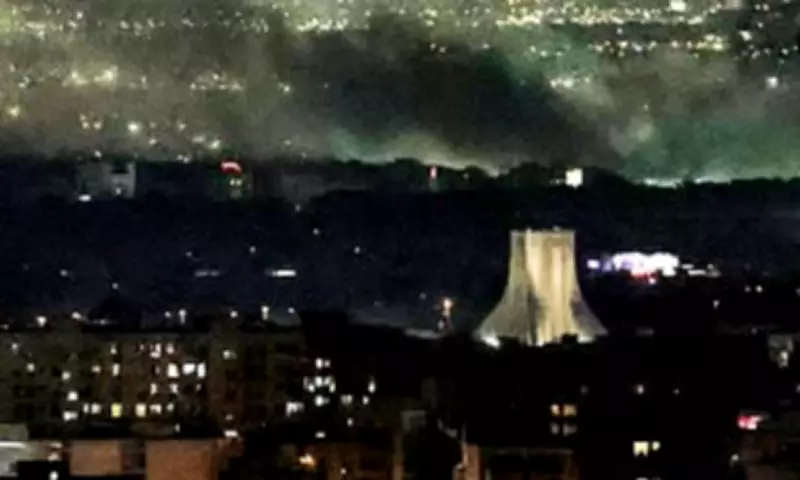
This instability is partly driven by the effective closure of the Strait of Hormuz, which has left tankers stranded for over a week and forced producers to halt pumping as storage facilities reach capacity. The war has also impacted domestic energy supplies in Iran, with Tehran choked in black smoke after an oil refinery was struck, raising concerns from the World Health Organisation about potential contamination of food, water, and air.
Political and Diplomatic Standoff
Iran's appointment of Mojtaba Khamenei as its new supreme leader has been interpreted as a signal of defiance, dampening hopes for a swift resolution to the conflict. Iranian officials have firmly rejected negotiations with the US, with Foreign Minister Abbas Araqchi citing a 'bitter experience' from past talks that he claims ended in American attacks despite progress.
'I don't think talking to the Americans anymore would be on our agenda any more,' Araqchi stated in an interview, adding that Iran is prepared to continue missile attacks as long as necessary. Meanwhile, Trump has expressed confidence in a rapid end to hostilities, predicting the conflict would conclude well within an initial four-week timeframe, though he has not detailed what victory would entail.
International Responses and Humanitarian Concerns
The conflict has prompted varied international reactions. Australia has granted humanitarian visas to five Iranian women's soccer players who sought asylum fearing persecution, and has pledged to send military surveillance aircraft to the Middle East along with missiles to the United Arab Emirates for defence against Iranian attacks.

In the US, rising gasoline prices have become a pressing political issue, with 67% of Americans anticipating further increases and only 29% approving of the war, according to a recent Reuters/Ipsos poll. Voters cite escalating costs as a top concern ahead of the November midterm elections, where Trump's Republicans aim to maintain control of Congress.
To address potential oil shortages, Trump announced after discussions with Russian President Vladimir Putin that the US would waive oil-related sanctions on 'some countries,' which may include further easing of restrictions on Russian oil. This move could complicate efforts to penalise Moscow for its actions in Ukraine, with alternative options being considered such as releasing strategic reserves or limiting US exports.