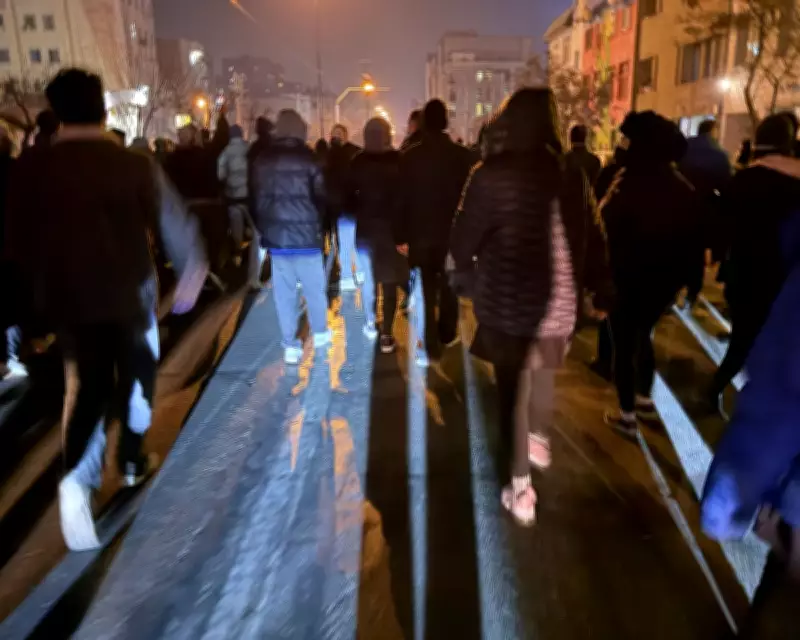
In a striking act of defiance, Iranians killed in recent anti-government protests are being laid to rest in boisterous funerals that feature loud pop music and exuberant dancing. These euphoric scenes represent a deliberate snub to the culture of piety enforced by Iran's theocratic regime, according to analysts who interpret the mood as carrying a powerful message of rebellion.
Transforming Grief into Celebration
Instead of adhering to sombre traditional mourning ceremonies led by Shia clerics, bereaved relatives are transforming burials into vibrant celebrations of their loved ones' lives. This shift is seen as an intentional rejection of the religious subculture associated with the authorities responsible for the crackdown. Many funerals have reportedly been staged only after families were forced to pay large sums to retrieve bodies from official morgues, with some reports indicating that bodies were released only after relatives signed statements falsely claiming the deceased belonged to the pro-regime Basij militia.
Sociological Insights on Rebellion
Hosein Ghazian, a US-based Iranian commentator, explains that today's mourners do not want their grief to bear any trace of the religious mourning emblematic of their oppressors. By choosing to display joy rather than outward grief, they convey a political message of persistence against brutal oppression. Footage shared on social media shows women without traditional Islamic head coverings, whooping and dancing to popular songs, challenging the regime's conservative mores in public settings.

Personal Stories of Defiance
The funeral of Milad, a 17-year-old who died from injuries sustained when security forces fired on a protest in Tehran's Naziabad neighbourhood, featured dancing to his favourite romantic ballad. His family, who faced an initial demand of £5,000 to retrieve his body, honoured his vibrant life through celebration. Similarly, Shaghayegh described her 19-year-old cousin's funeral in Narmak, where the family prepared as if for a wedding, with loudspeakers and communal cooking, celebrating his life amidst tears.
Cultural and Symbolic Significance
Dancing, while an important part of Iranian culture, is typically restricted to private settings under the regime's religious rules. The public nature of these funerals boldly challenges these norms, with scenes of women dancing and singing in repudiation of Islamic tenets that forbid such acts. Saeed Paivandi, a sociologist at the University of Lorraine in France, notes that these ceremonies represent resistance against the imposition of religious norms on all aspects of life, using music and dance as anti-values in state culture.
Inspiration from a Folk Hero
An inspiration for this movement may be Majidreza Rahnavard, executed in 2022 for his role in protests, who requested that his death be celebrated with music rather than mourning. His words have been embraced by regime opponents as a legacy to emulate, further fueling the trend of joyful funerals as acts of defiance.
Estimates suggest that up to 30,000 or more were killed in the protests that began in late December, spreading across Iran. The celebratory funerals not only honour the dead but also serve as a poignant symbol of ongoing resistance against theocratic oppression.