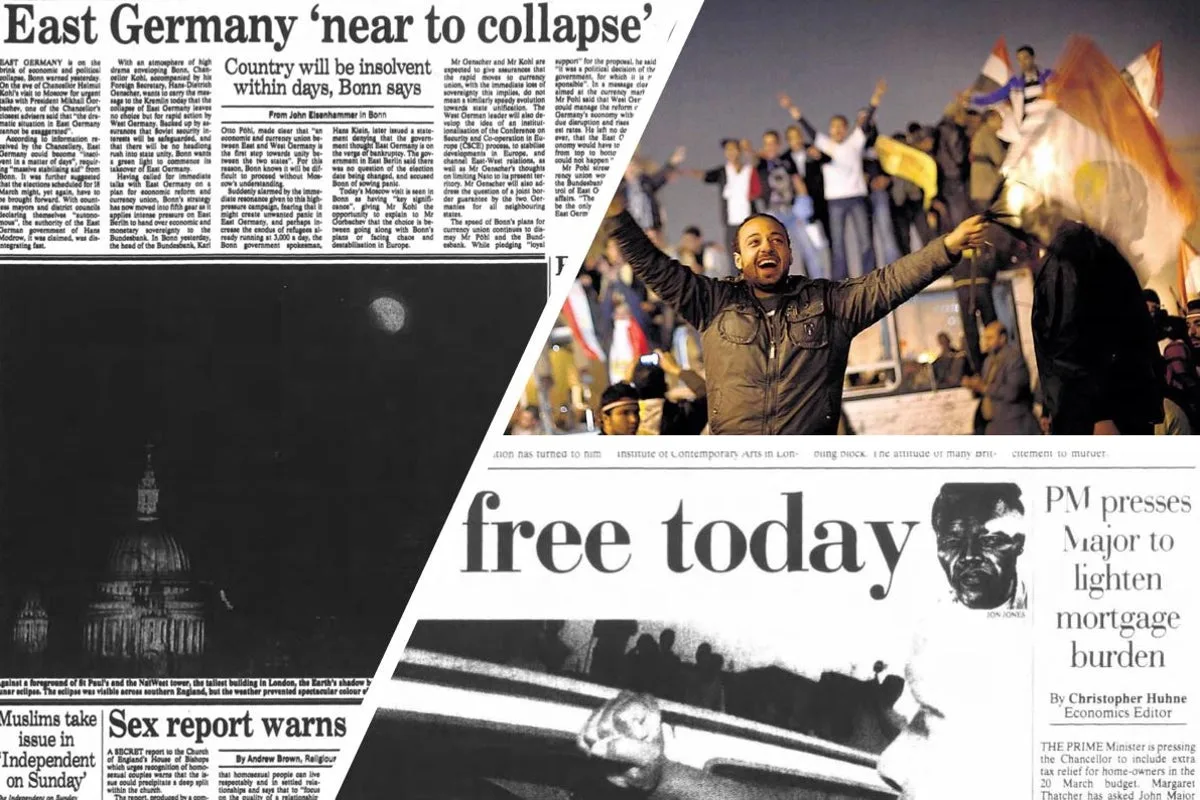
This Week in History: Mandela's Freedom to East Germany's Collapse
History's Turning Points: Mandela, East Germany, and More

This week in history, from 9 to 15 February, witnessed a cascade of world-altering events that reshaped nations and defined eras. The Independent's front pages serve as a vivid chronicle of these turning points, capturing moments of liberation, collapse, conflict, and compromise. From the fall of regimes to the rise of new hopes, this retrospective delves into the stories that made headlines and history.

Ayatollah Khomeini's Fatwa Against Salman Rushdie

On 15 February 1989, Iran's supreme leader Ayatollah Khomeini issued a chilling death sentence against novelist Salman Rushdie over his book The Satanic Verses. Tehran radio broadcast the declaration, calling for the execution of Rushdie and all involved in the publication, forcing the author into hiding and sparking intense debates about free speech and police protection in Britain. It would take nearly a decade, until 1998, for Iranian leadership to begin distancing itself from this controversial fatwa.

East Germany's Imminent Collapse

By 10 February 1990, West German officials were warning that East Germany stood on the brink of economic and political collapse. Advisers to Chancellor Helmut Kohl stressed that the crisis scale "cannot be exaggerated" and predicted state insolvency within days. This alarm preceded urgent talks in Moscow with Soviet leader Mikhail Gorbachev, as the divided nation's future hung in the balance. Negotiations accelerated swiftly, leading to Germany's formal reunification in October 1990.

Nelson Mandela's Historic Liberation

11 February 1990 marked a defining moment for South Africa and the world, as Nelson Mandela walked free after more than 10,000 days in prison. President F.W. de Klerk's decision to unban the ANC and open negotiations set the stage for this profound political transition. The Independent captured the scene emotively, describing "the myth finally made man, walked out of prison with a smile on his face, but iron in his soul." Mandela addressed jubilant crowds, urging continued struggle as reform talks began, paving the way for South Africa's first democratic elections in 1994 and his subsequent presidency.

NATO's First Strikes in Bosnia

On 11 February 1994, NATO moved toward military action for the first time, as Bosnian Serb forces defied an ultimatum to halt shelling around Sarajevo. Western governments warned of potential escalation into open war, with the crisis unfolding under a UN mandate but without backing from Russia or China, highlighting deep diplomatic tensions. Within weeks, NATO carried out limited air strikes, marking a critical turning point in international intervention during the Bosnian war.

IRA's Offer on Arms Decommissioning

12 February 2000 saw the IRA propose a new plan to put weapons "beyond use" following the suspension of the Northern Ireland Assembly. The government described this as a development of real significance, though it fell short of a clear disarmament commitment. This move represented the furthest step yet on the arms question since the Good Friday Agreement, with full decommissioning eventually completed in 2005 under international supervision, helping stabilise the peace process.

Mubarak's Resignation Amid Egypt's Uprising

Egyptians celebrated in Cairo on 12 February 2011, as President Hosni Mubarak resigned after 18 days of mass demonstrations, ending three decades in power. This event, known as the "Friday of Departure," was part of the wider Arab Spring protests sweeping the region. Authority transitioned to a military council, ushering in a turbulent period that led to elections in 2012 and, after further unrest, the military's return to power in 2013.

Oscar Pistorius Charged with Murder

Paralympic champion Oscar Pistorius appeared in court on 15 February 2013, accused of murdering his girlfriend Reeva Steenkamp at his South African home. The case shocked global audiences and dominated headlines, with Pistorius denying intent and claiming he mistook Steenkamp for an intruder. After a series of trials and appeals, he was convicted of murder in 2015 and sentenced to a lengthy prison term.

Questions Over Gaza Strike Intelligence

An investigation featured on The Independent's front page on 13 February 2020 reported that Israeli air strikes on Gaza were conducted using outdated intelligence. Testimony from Israeli Air Force personnel revealed serious structural problems and a culture of "destroy, destroy, destroy," which they said led to unnecessary civilian deaths. This scrutiny foreshadowed similar criticisms raised during later military actions, adding to ongoing debates over conduct in the region.

These events, spanning decades and continents, illustrate a world in relentless motion. From political revolutions to personal tragedies, The Independent's archives offer a window into the moments that shaped our modern era, reminding us of the fragile balance between conflict and peace, oppression and freedom.