Gaza's Dire Reality: Ceasefire Fails to Halt Suffering as Global Focus Shifts
Five months after a ceasefire was declared in Gaza, the humanitarian situation remains catastrophic, with airstrikes continuing to claim civilian lives and daily existence becoming a relentless struggle for survival. As the world's attention fixes on Iran, Palestinians in the besieged territory face a reality where the past feels erased, replaced by fear, deprivation, and overwhelming grief.
A Life Stripped of Normality
Ahmed Baroud, a 56-year-old father of five displaced in Deir al-Balah, describes a landscape of constant threat. "Drones never stop buzzing overhead, gunfire and shelling continue almost daily and naval boats fire towards fishermen," he said, painting a picture of unending tension. The contours of prewar life have vanished, leaving a population grappling with a darker, more brutal existence.
Health authorities reported that six people were killed and four injured early on Sunday by an Israeli airstrike on al-Mawasi area in western Khan Younis. This incident underscores that almost 30 months after the war began, violence persists despite the announced ceasefire.

Economic Strangulation and Desperation
The economic toll is severe, with many blaming the US and Israeli campaign against Iran for exacerbating shortages. "The situation has become even more strained since the war on Iran began," said Baroud, noting skyrocketing prices for essentials. Ibtisam al-Kurdi, a 64-year-old from Jabaliya now displaced in Gaza City, lost both her sons in the conflict. She highlighted the struggle to obtain firewood for cooking due to closed crossings and scarce, expensive gas.
"We can no longer afford vegetables or meat and we rely daily on canned food and legumes, with a constant fear that famine may return," al-Kurdi added. Her plea echoes across the territory: "I hope that all of this will come to a complete end … that the bombardment will stop, and that our children will no longer have to live in constant fear of the sounds of drones and explosions."
Daily Life Amid Ruins
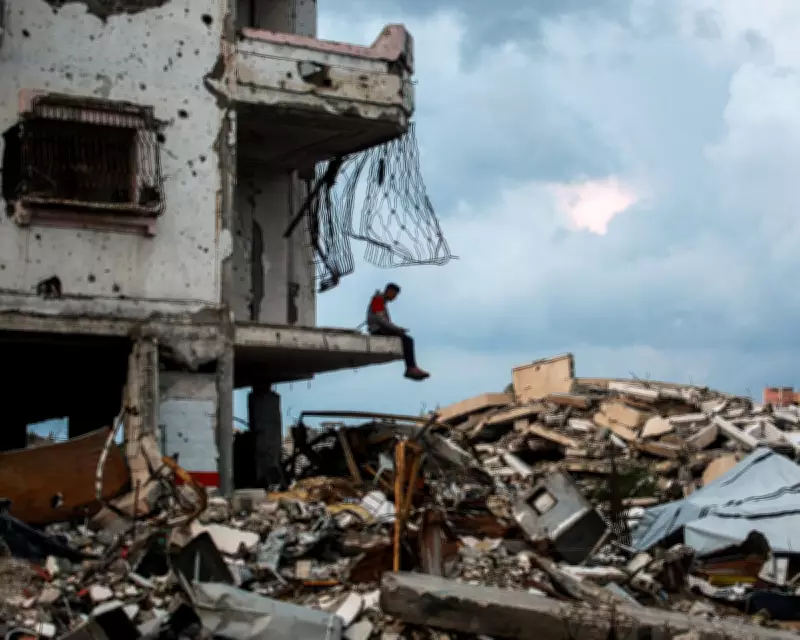
Everyday scenes in Gaza's streets and markets are drained of colour, filled with exhausted faces queuing for food amid rubble. Muddy waters flood displacement camps after heavy rains, soaking mattresses and floors in waterlogged tents. Conversations have shifted from ordinary dreams to stark survival; a student's ambition is now to earn money so siblings don't beg or to secure clean drinking water.
On makeshift minibuses used for transport, stories of loss unfold endlessly. One man recounted building his dream home just before the war, only to see it bombed and his family killed. Beside him, a woman mourns her children while struggling to raise grandchildren. Ibrahim Kaheel, 34, displaced in Gaza City, said, "After the war on Iran, food prices rose significantly and goods became scarce in the markets, and some prices are still continuously increasing."
Health Crisis and Infrastructure Collapse
More than 680 Palestinians have been killed since the October ceasefire, including 26 in the last week. Aid groups warn that broken infrastructure and inconsistent electricity have turned untreated sewage into a public health risk. Unrwa reports that Kerem Shalom remains the only operational cargo crossing, creating a major bottleneck for supplies.
Kaheel described water shortages: "Water, which used to be available, now only reaches us two days a week due to a malfunction in the municipal supply line. It is often not suitable for drinking, yet we are forced to drink it." His mother suffers from cancer, and medication is hard to obtain.
Overwhelmed Medical System
Doctors in Gaza face a dire lack of basic diagnostic tools, such as biopsy needles, leaving cancer patients undiagnosed and untreated. According to UN figures, before the Rafah crossing reopened on 19 March for limited movement, over 11,000 cancer patients needed treatment outside Gaza. The Gaza health ministry says more than 20,000 patients and wounded await medical travel abroad.

Cogat, the Israeli army unit handling humanitarian operations, stated there has been a significant increase in medical evacuations since 2025, with the Rafah crossing opened for patient departures to Egypt. It claimed "a significant, stable and continuous volume of aid" is entering Gaza, ensuring sufficient food for an extended period, but on the ground, residents tell a different story of scarcity and suffering.
As cold temperatures linger into spring, and rain compounds misery in displacement camps, Palestinians in Gaza continue to navigate a reality where hope is a scarce commodity, and the world's gaze is elsewhere.