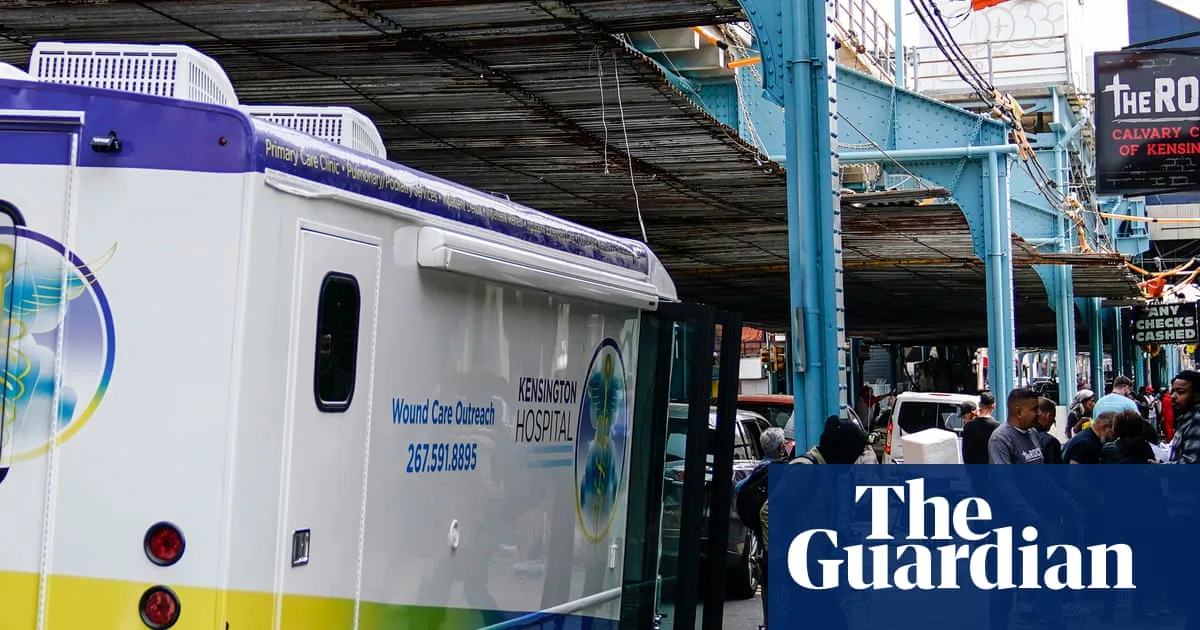
The staff at Sunshine House, a harm reduction hub in Philadelphia's Kensington neighbourhood, often reverse at least one overdose a day. However, the emergence of the veterinary sedative medetomidine, also known as 'rhino tranq', has introduced new risks. The drug, which has been circulating for 18 months, is associated with extreme and fast-acting withdrawal symptoms.
Roz Pichardo, founder of Sunshine House, says the drug has made things worse for everyone. 'No one knows how it works,' she notes, adding that medetomidine causes organ failure even in younger people. Narcan can reverse fentanyl overdoses, but it does not repair organ damage caused by medetomidine.
Chris Simpson, a regular visitor to Sunshine House, describes the withdrawal effects as far worse than any other drug. He experiences vomiting, heart palpitations, and dizziness. Others report 'brain zaps' and hospitalisation due to heart attacks. Pichardo knows of up to 20 people who have died from the drug in the past year.

Kensington has long been an epicentre of the drug trade, evolving from heroin to fentanyl and then xylazine. After Pennsylvania banned xylazine last year, dealers replaced it with medetomidine, which is 200 times more potent. The Drug Enforcement Administration reports that medetomidine is now present in about 70% of drug stamps.
Earl, a 33-year-old homeless man who lost both legs due to drug use, says, 'This shit's fucked up. They're preying on us.' The drug scene in Kensington remains bleak, with dealers offering free samples and users often found in unresponsive stupors.